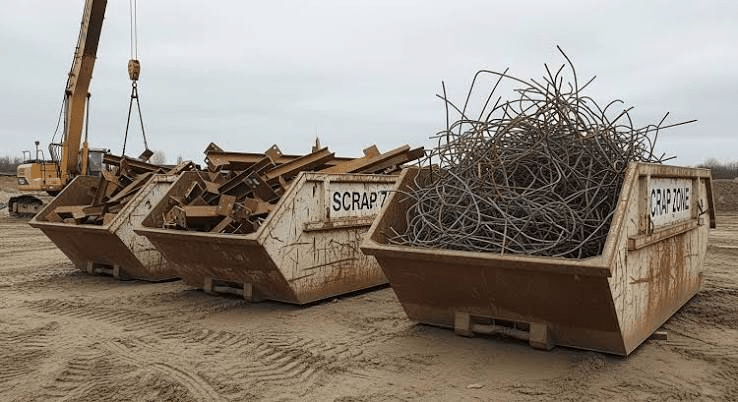
Metal Recycling on a Renovation or Demolition Job: A Contractor’s Guide
Every renovation produces a pile nobody planned for. The drawings show what goes in. The schedule shows when it goes in. What comes out of the walls, ceilings, and mechanical rooms in the meantime tends to get handled on the fly, and on most jobs that means it lands in the same dumpster as the drywall.
That is a missed opportunity, because a large share of what comes out of a building is metal. Ductwork, conduit, studs, piping, railings, door frames, fixtures, and every piece of mechanical equipment behind the walls. Metal recycling turns that portion of the debris into material that goes back to work instead of into a landfill, and on a job of any size, it also thins out the dumpsters that were going to be paid for anyway.
This guide covers what metal recycling looks like on an active job site, where the metal comes from at each phase, how to keep it out of the general debris stream, and how to set up collection so it never slows the crew down.
Why Metal Recycling Belongs in the Job Plan
Metal recycling on a construction job is mostly a logistics decision. The metal is coming out of the building no matter what. The only question is whether it gets its own path or rides along with everything else.
When metal goes into the general debris container, two things happen. The container fills faster with heavy, awkward material, which means more swaps. And the metal drops out of circulation permanently, even though steel, copper, aluminum, and brass can be recovered and reused without losing their usefulness.
When metal recycling gets its own path, the general debris stream gets lighter, the metal goes where it can actually be used, and the site stays cleaner because there is one obvious place for anything metallic to go. The change is small in practice. It just has to be decided before demo starts rather than halfway through.
Where Metal Recycling Material Comes From, Phase by Phase
Metal comes off a job in waves, and knowing when helps with scheduling metal recycling pickups.
Selective demolition
The first pass through a space produces the widest mix of metal recycling material. Ceiling grid, light fixtures, door hardware, handrails, shelving, casework brackets, and anything the previous tenant left bolted to a wall. It arrives all at once, and it is rarely clean.
Mechanical, electrical, and plumbing tear-out
This phase produces the heaviest metal recycling loads on most jobs. Ductwork and diffusers, rooftop units, air handlers, boilers, water heaters, pumps, electrical panels, transformers, cable trays, conduits, and long runs of copper and steel pipe. Some of these hold fluids or refrigerant, which matters for how they are handled.
Structural and framing work
Steel studs, track, lintels, joists, decking offcuts, rebar cutoffs, and miscellaneous plates and angles. Framing waste is clean, consistent, and easy to keep separate, which makes it the simplest metal recycling stream on the job.
Fit-out and punch list
Even late in a job, metal recycling material keeps showing up. Cut ends of conduit, leftover strut, packaging strapping, broken hardware, and the temporary supports that come down before turnover. The volume is smaller, but a container that stays on site through closeout catches all of it.
Keeping Metal Separate From General Debris
The single most important habit in metal recycling on a job site is separation at the point of removal. Once metal is buried in a mixed debris pile, somebody has to dig it back out, and on a live job, that never happens.
A designated metal recycling container, placed where the crew is actually working, solves most of it. If the container is a long walk from the demo area, metal ends up in whatever bin is closest. Position it near the loading area or the main haul route and move it as the work moves.
Clear labeling helps more than most people expect. Subcontractors rotate through a job, and a new electrician on day one has no idea which container is which unless it says so. A sign that reads metal only, no trash, no wood, does most of the work.
Wire and cable deserve their own pile. Pulled cable tangles through everything and slows sorting later, so bundling it separately keeps the rest of the metal recycling load clean. Dedicated wire recycling handles the copper inside insulated cable, and it goes faster when the wire arrives as bundles rather than woven through a load of studs.
Items That Need Attention Before Pickup
Most metal recycling material can go straight into a container. A few categories need to be identified before the truck arrives.
Anything holding refrigerant is the first one. Rooftop units, split systems, chillers, walk-in coolers, and drinking fountains with cooling all contain refrigerant that has to be recovered before the unit is processed. Flagging these when booking means they get routed through appliance recycling handling rather than dropped into a crusher.
Anything holding oil or fuel comes next. Compressors, hydraulic units, transformers, generators, and fuel tanks should be called out so the right handling is arranged in advance.
Batteries are the third metal recycling exception. Emergency lighting packs, exit sign batteries, backup power units, and fire alarm panel batteries all come out during the demo, and none of them belong in a mixed metal recycling container.
Data-bearing equipment is the last one, and it is easy to forget on a construction job. Access control panels, security DVRs, building automation controllers, and any computers or copiers left behind by a previous tenant should be set aside so the data is dealt with before the hardware is broken down.
Setting Up Metal Recycling Collection for the Job
A short setup before demo day is all it takes to keep metal recycling running in the background.
- Walk the space and estimate where the heaviest metal will come from, usually the mechanical rooms and ceiling plenum.
- Choose a metal recycling container location with truck access that will not block deliveries or the crane pad.
- Decide whether one container covers the job or whether MEP tear-out needs a second one for the heavy phase.
- Flag refrigerant units, fluid-filled equipment, batteries, and data-bearing devices when booking so handling is arranged up front.
- Brief the subs on which container is metal only and what stays out of it.
- Schedule swaps around the demo calendar rather than waiting for the container to overflow.
- Plan a final pickup after the punch list, so the last of the metal leaves with the site.
None of that adds meaningful time to a preconstruction meeting, and it prevents the mid-job scramble that happens when a full container is blocking the dock on a Monday morning.
Matching the Container to the Load
Metal recycling containers get chosen based on weight more than volume, which is the opposite of general debris. A container full of steel duct, pipe, and framing hits its weight limit long before it looks full. A container of aluminum storefront and light fixtures fills up while weighing very little.
That is why it helps to describe the load when arranging metal recycling. A steel-heavy MEP tear-out may want a smaller, sturdier container swapped more often. A demolition producing mostly aluminum and light-gauge material can run a larger box, which is swapped less frequently. Since steel recycling tends to dominate the weight on most jobs, most sites end up planning around the steel and letting the lighter material ride along.
Providers such as EACR Inc. run metal recycling collections for contractors, property managers, manufacturers, schools, hospitals, and municipalities using their own fleet, which makes it simpler to line up container swaps with a demo schedule rather than working around a subcontracted hauler’s availability.
What Happens After the Container Leaves
Once a metal recycling load arrives at the facility, it is weighed and sorted. Magnets pull out ferrous material such as steel and iron. The remaining non-ferrous metals, including aluminum, copper, and brass, get separated by type, since each one follows its own route back into manufacturing.
Equipment that arrived intact gets dismantled as part of the metal recycling process. Insulation comes off the wire, refrigerant is recovered from any sealed unit that was flagged, batteries are pulled and handled separately, and what remains is clean, sorted material ready to go back into use. A provider working toward zero landfill is aiming for nothing from that load ending up buried, which is a useful standard when comparing metal recycling options for a job.
At the end you get documentation showing what was collected, which is handy for owners and project managers who want to report on how much material was diverted from the landfill during construction.
Metal Recycling Questions Contractors Ask
Does the metal need to be clean? No. Painted, rusted, insulated, and greasy material is normal. Keep wood, drywall, and general trash out of the container and the rest sorts at the facility.
Can mixed metals go in one container? Yes. Steel, aluminum, copper, and brass can share a metal recycling container. Sorting by type happens at the facility, not on site.
What about small jobs? Metal recycling scales down. A tenant fit-out or a single mechanical room replacement may only need one pickup at the end rather than a container for the duration.
Do we need to cut things down? Only enough to fit and move safely. Long duct runs and pipe can be cut to manageable lengths, but full teardown is part of the process on the facility side.
The Short Version
Metal recycling on a renovation or demolition job comes down to one decision made early: give the metal its own container and its own path. Place it where the crew works, label it clearly, flag anything with refrigerant, fluids, batteries, or data, and schedule swaps around the demo calendar. The metal was always going to come out of the building. Handled through metal recycling, it leaves as usable material instead of dead weight in a debris box.