Mackenzie Shirilla Case Details: In-Depth Guide
Background of the Fatal 2022 Strongsville Crash
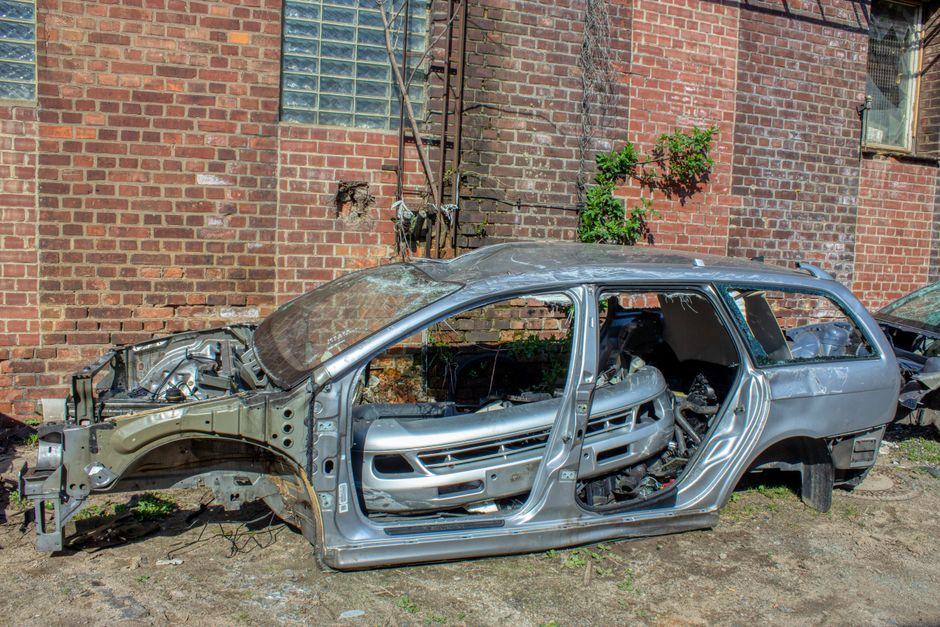
The incident occurred during the early morning hours of July 31, 2022, in Strongsville, Ohio. Mackenzie Shirilla, then 17 years old, was driving a 2018 Toyota Camry carrying her 20-year-old boyfriend, Dominic Russo, and a 19-year-old friend, Davion Flanagan. Around 5:35 a.m., the vehicle accelerated through a business park on Alameda Drive, ultimately crashing directly into the exterior brick wall of the PLIDCO building.
Emergency responders arrived roughly 45 minutes after the impact. Dominic Russo and Davion Flanagan were pronounced dead at the scene from severe blunt-force injuries. Shirilla survived the high-impact collision and was transported to an area hospital for emergency treatment.
Initial assumptions of a tragic, accidental wreck shifted as Cuyahoga County investigators recovered telemetry data from the vehicle’s Event Data Recorder (EDR). The diagnostics revealed that Shirilla fully depressed the accelerator pedal to 100 percent, accelerating the sedan to over 100 mph (160 km/h) in a 35-mph zone just seconds before impact. Crucially, the black box revealed zero brake engagement.
Surveillance cameras in the commercial park captured the vehicle navigating through an intersection without erratic swerving or loss of trajectory control. Additionally, GPS tracking records showed Shirilla had driven through that exact commercial corridor three days prior, which prosecutors categorized as a reconnaissance trip.
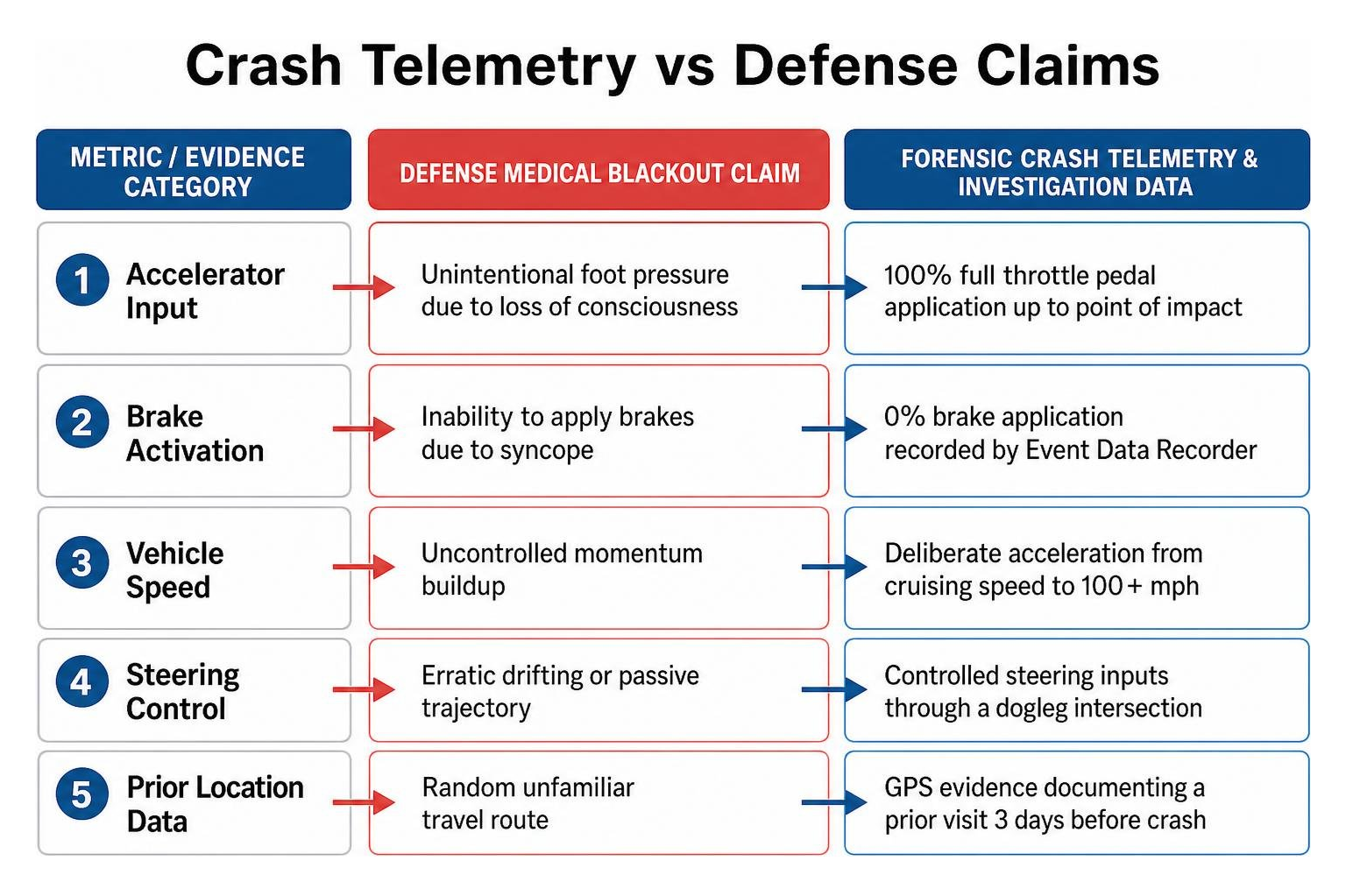
| Metric / Evidence Category | Defense Medical Blackout Claim | Forensic Crash Telemetry & Investigation Data |
|---|---|---|
| Accelerator Input | Unintentional foot pressure due to loss of consciousness | 100% full throttle pedal application up to point of impact |
| Brake Activation | Inability to apply brakes due to syncope | 0% brake application recorded by Event Data Recorder |
| Vehicle Speed | Uncontrolled momentum buildup | Deliberate acceleration from cruising speed to 100+ mph |
| Steering Control | Erratic drifting or passive trajectory | Controlled steering inputs through a dogleg intersection |
| Prior Location Data | Random unfamiliar travel route | GPS evidence documenting a prior visit 3 days before crash |
Understanding the Mackenzie Shirilla Trial and Conviction
Shirilla was arrested on November 4, 2022, following months of comprehensive technical reconstructions and witness interviews. Her case originated in juvenile court due to her age at the time of the collision, but it was subsequently transferred to adult court in Cuyahoga County.
Shirilla waived her right to a jury trial, electing to have her case decided via a bench trial before Judge Nancy Margaret Russo in the Cuyahoga County Common Pleas Court. During the August 2023 proceedings, prosecutors detailed the toxic relationship between Shirilla and Dominic Russo, presenting video recordings and text messages demonstrating volatile domestic altercations in the weeks leading up to the collision.
In August 2023, Judge Russo delivered a guilty verdict on all 12 felony counts:
- Four counts of Murder (under Ohio Revised Code 2903.02)
- Four counts of Felonious Assault
- Two counts of Aggravated Vehicular Homicide
- One count of Drug Possession
- One count of Possessing Criminal Tools
Judge Russo remarked during sentencing that Shirilla acted with purpose and described her conduct as a calculated path of death and destruction. Shirilla was sentenced to two concurrent life terms with the possibility of parole after 15 years served. With 301 days of jail-time credit applied, her official parole eligibility is set for late 2037.
Defense Arguments and Omitted Trial Evidence
Throughout the original bench trial and subsequent post-conviction filings, the defense maintained that the prosecution failed to prove specific criminal intent. The defense team contended that the state overreached by charging Shirilla with intentional murder rather than vehicular manslaughter or reckless vehicular homicide.
The key arguments advanced across her initial defense and subsequent appellate filings include:
- Improper Juvenile Bindover: Asserting that the initial juvenile court erred in transferring the proceeding to adult court without sufficient evidence of adult-level mens rea.
- Domestic Altercation Precedent: Contending that the court misinterpreted prior relationship strife, omitting context that Russo had allegedly interfered with the vehicle’s controls in separate driving incidents weeks earlier.
- Absence of Premeditated Lethal Means: Steve Shirilla argued publicly on platforms like True Crime This Week that his daughter had access to other means if she intended harm, and would not have involved a bystander like Flanagan.
- Ineffective Assistance of Counsel: Asserting that her original trial attorney failed to call essential medical witnesses and introduce crucial route-tracking evidence.
Postural Orthostatic Tachycardia Syndrome Defense
A central pillar of Shirilla’s defense revolves around her medical diagnosis of Postural Orthostatic Tachycardia Syndrome (POTS). POTS is an autonomic nervous system disorder characterized by abnormal heart rate spikes, lightheadedness, and syncope (fainting).
The defense argued that Shirilla experienced a sudden loss of consciousness or severe cognitive impairment behind the wheel, explaining her lack of memory regarding the collision. In appellate motions, her legal team argued that trial counsel committed a critical error by failing to retain and present an expert medical witness to educate the court on how POTS-induced syncope could cause physical rigidity on the accelerator without active driver awareness.
Unpresented Route Evidence in the Mackenzie Shirilla Defense
To counter the prosecution’s theory that Shirilla intentionally chose a secluded commercial park to execute a deliberate crash, her post-conviction team highlighted unintroduced route evidence.
According to these filings, a local grocer had left a package of produce at a 24-hour pickup point in the vicinity of Alameda Drive that morning. The defense argued this point established a legitimate, benign reason for her driving route, refuting claims that she had driven to the industrial park solely to cause a fatal collision.
Incarceration at Marysville and Ongoing Legal Appeals
Mackenzie Shirilla is currently serving her sentence at the Ohio Reformatory for Women in Marysville, Ohio, under inmate identification W111780. Within the facility, she has maintained a position in the prison food service department, earning a standard monthly inmate stipend.
Her correctional tenure has seen several disciplinary citations reported by the Ohio Department of Rehabilitation and Correction. In 2024, Shirilla received an infraction for possessing altered institutional clothing and unauthorized magazine materials. In 2025, she faced administrative review following an unauthorized, explicit video call session.
The release of the 90-minute documentary The Crash brought renewed national media scrutiny to the families involved. Following the release, Shirilla’s father, Steve Shirilla, faced significant professional fallout. After public controversy surrounding his statements and defense of his daughter in the documentary, he was placed on administrative leave and ultimately did not return to his teaching post at Mary Queen of Peace School in Cleveland.
Ohio Supreme Court Appeal Dismissal
Shirilla’s initial state-level post-conviction efforts faced severe procedural hurdles. Her petition for postconviction relief was rejected by the Eighth District Court of Appeals because it was filed one day past the statutory deadline.
Her legal team appealed this dismissal to the Ohio Supreme Court, arguing that the one-day procedural error should not preclude review of substantial constitutional claims regarding ineffective assistance of counsel. In June 2026, the Ohio Supreme Court declined to review the appeal, leaving the lower court’s dismissal in place and exhausting her standard state-level remedies.
Federal Habeas Corpus Petition Filed by Mackenzie Shirilla in 2026
Following the closure of state appellate paths, Shirilla’s attorneys turned to the federal judicial system. On July 28, 2026, a federal court habeas corpus filing was submitted to the U.S. District Court for the Northern District of Ohio.
A writ of habeas corpus enables state inmates to challenge their detention if they demonstrate that their conviction resulted from violations of the United States Constitution. Shirilla’s federal petition requests that her murder convictions be vacated or that a new trial be ordered, citing the denial of effective legal representation, the exclusion of POTS medical expert testimony, omitted route justifications, and constitutional deficiencies in her transfer from juvenile jurisdiction.
Frequently Asked Questions About the Case
What specific charges resulted in the life sentence?
Mackenzie Shirilla was convicted on 12 felony counts in Cuyahoga County Common Pleas Court: four counts of murder, four counts of felonious assault, two counts of aggravated vehicular homicide, one count of drug possession, and one count of possessing criminal tools. The murder counts merged for sentencing, resulting in two concurrent terms of 15 years to life.
When is the first possible parole eligibility date?
According to records from the Ohio Department of Rehabilitation and Correction, Shirilla’s first parole board hearing is scheduled for September 2037, with her official minimum parole eligibility date set for October 29, 2037.
Why was Steve Shirilla placed on leave from his school?
Steve Shirilla was placed on administrative leave from Mary Queen of Peace School following community reaction and administrative concerns over remarks he made during the true-crime documentary The Crash. The Diocese of Cleveland later confirmed that he would not return to his teaching position.
Conclusion
The Mackenzie Shirilla trial remains one of the most polarizing vehicular murder cases in modern legal history, illustrating the intersection of advanced vehicle telematics, medical defense theories, and true-crime media interest.
As her federal habeas corpus petition proceeds through the Northern District of Ohio, the case continues to raise complex questions regarding juvenile justice, trial defense standards, and digital forensics. At PARK Ave Magazine LLC, we examine high-profile legal matters with an objective eye, offering our readers comprehensive cultural and investigative analysis. While navigating complex modern topics, we also provide insights into lasting lifestyle and financial choices, such as exploring the ultimate luxury investments worth considering for balanced long-term portfolios. We will continue monitoring federal court developments as rulings on Shirilla’s petition emerge.