Laura Aversano on Ancestral Memory, Spiritwalking and Finding Light in Darkness
For Laura Aversano, the spiritual world has never been distant or abstract. It has been part of her reality since childhood, woven into her family history, personal experiences and the work she has built over several decades.
Aversano describes herself as an ancestral empath, conduit, medium and medical intuitive. Although these titles may appear to represent separate practices, she sees them as inseparable parts of her identity.
“They’re intertwined,” she said. “I can’t separate them.”
Born into what she describes as a lineage of seers, Aversano grew up surrounded by relatives who experienced spiritual perception in different ways. Her mother is a seer, and she says similar abilities are present in many other family members.
“It really runs in the family,” she said. “It’s expressed differently, but it runs in the family.”
A Childhood Beyond the Visible
Aversano began communicating with what she calls “the other side” when she was still a child. By the age of six, she was already speaking about extrasensory perception and mentioning figures such as Edgar Cayce before fully understanding who they were.
She remembers sitting with childhood friends, holding their hands and asking whether she could read their thoughts or sense something about them.
“I would say, ‘Let me hold your hand and see what I can see,’” she recalled.
At the time, these moments did not feel extraordinary. They were simply part of the way she experienced the world. Her mother recognized her abilities and supported her, allowing Aversano to approach these experiences with curiosity rather than fear.
Looking back, Aversano understands how unusual it was for a child to speak so confidently about mediumship and extrasensory perception.
“I was talking about extrasensory perception at age six and Edgar Cayce before I knew what they meant,” she said.
From Personal Illness to a Spiritual Calling
A significant turning point came when Aversano became seriously ill after returning home from an international studies program. Traditional medicine was unable to explain what was happening, so her mother brought her to a psychic healer.
The experience changed the direction of her life.
Aversano says her spiritual gifts became considerably stronger during that period. What had previously appeared as childhood perceptions began to develop into a more defined calling.
Over time, she built a practice that now reaches clients in seven countries, primarily through personal referrals. Many people who contact her do not fully understand what she does before their first conversation.
According to Aversano, clients are often simply told, “You just have to call Laura.”
Some seek her guidance while experiencing illnesses that have been difficult to explain. Others already have a diagnosis but want to explore its possible emotional, environmental, ancestral, psychological or spiritual origins.
Aversano describes her process as a form of body tracking and spiritual tracking. She attempts to trace an experience through a person’s present circumstances, family history and spiritual world.
Her practice also includes people navigating relationship challenges, grief and severe trauma. When working with couples, she says she may perceive childhood patterns that continue to influence the way they communicate and respond to each other.
Regardless of what brings someone to her, Aversano believes people carry layers of personal and family history that are not always immediately visible.
Living Between Worlds
Aversano defines a spiritwalker as someone who can serve as an intermediary between different worlds and bring back insight or medicine from those spaces.
“It means somebody who’s able to act as an intermediary between many worlds and impart medicine from those,” she explained.
She also compares the role to that of an urban shaman or urban medicine woman. It is someone who remains connected to contemporary life while maintaining an active relationship with spiritual realities.
Her novel, Spiritwalker: The Beginning, introduces readers to that experience through fiction.
The book is loosely inspired by the way someone with Aversano’s abilities may experience life. It includes client stories similar to situations she has encountered, a psychic mother inspired by her own mother and descriptions of the physical toll spiritual work can sometimes have on the body.
The title character was named after Aversano’s mother, although the character’s larger family story is fictional.
Aversano views the book primarily as a teaching tool.
She hopes it helps readers understand how deeply people are connected to their ancestors, their family histories and one another.
“Our physicality carries so much family history,” she said. “We need to learn to take care of our bodies, and we need to learn to be grateful.”
She also hopes the story challenges the belief that people exist entirely separately from one another. From her perspective, the distinctions emphasized during physical life do not have the same relevance in the spirit world.
“When we die, the spirits don’t look at your color, your gender or your blood,” she said.
From Page to Screen
The world of Spiritwalker may eventually extend beyond the book.
Aversano is working with Emmy-nominated producer Sam Sokolow on the potential development of a television show inspired by her life and spiritual work. A pilot script has already been written.
She recognizes that transforming a pilot into a television series is a challenging process, particularly as the media industry continues to change. Still, she hopes the project can introduce her teachings to a broader audience.
The purpose, she emphasized, would not be supernatural spectacle. Like the book, the potential television series would be a teaching tool.
Aversano wants the project to explore healing, spiritual connection and the ways human beings remain connected across physical and ancestral boundaries.
“Everybody thinks we’re all separate,” she said.
For Aversano, the deeper message is that separation is often an illusion. The stories may involve spirits, intuitive insight and experiences beyond the visible world, but their purpose is to encourage people to recognize their shared humanity.
Writing for the Collective
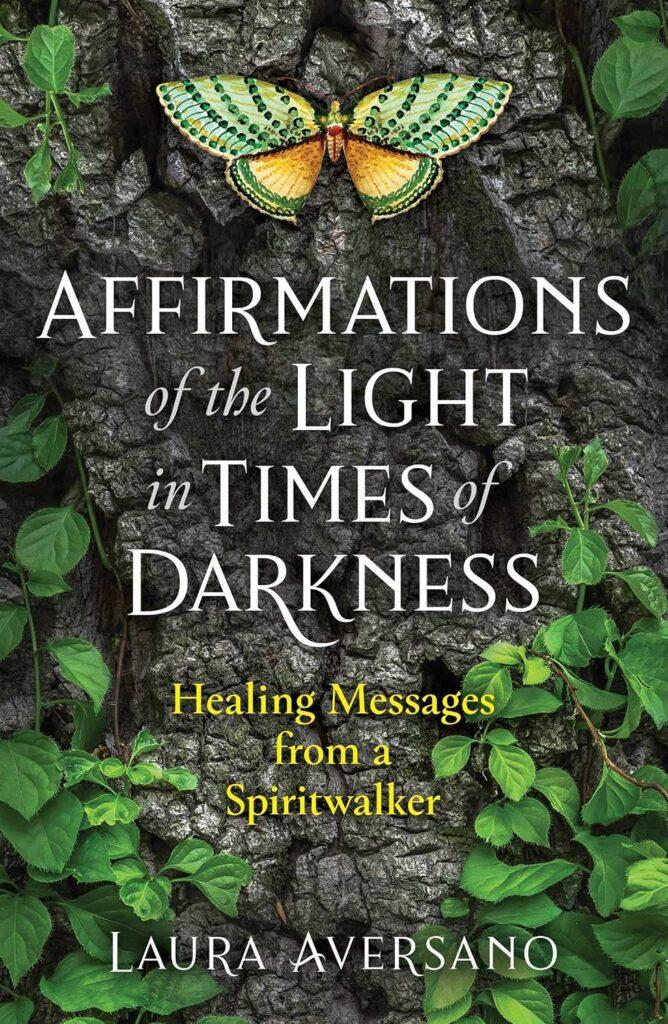
While Spiritwalker tells its story through fiction, Affirmations of the Light in Times of Darkness offers a more direct experience of Aversano’s spiritual writing.
The book developed from pieces she had originally shared through her blog and social media. An editor discovered her writing during a period of significant personal change and found it transformational. That discovery led to an invitation to collect the writings in a book.
Aversano did not initially write the pieces with one specific audience in mind.
Sometimes she wrote in response to her own experiences. At other times, the words came after working with a client or observing something happening in the wider world.
“I’m writing for the collective,” she said.
Although the book is presented as a collection of affirmations, Aversano says readers often tell her the passages feel like something more. A reader may open to a page, read a short passage and then need time to process its meaning.
The writings address loneliness, shame, grief, trauma, abuse, relationship struggles, forgiveness and the many ways people experience darkness.
“They take people through a process, whether it’s a page or a paragraph, of bringing them from the darkness into the light,” she said.
Instead of following a strict sequence, each passage offers its own point of entry. Readers can approach the book according to what they are experiencing at a particular moment.
Aversano recommends opening the book intuitively, especially during times of emotional need.
“Just open a page,” she said. “Read what’s offered. Take it in. Absorb it.”
When asked to identify one message that felt particularly meaningful, Aversano found it difficult to select only one. The book contains many messages, each of which may reach someone differently.
Still, she offered one central piece of guidance.
“Trust the process.”
Two Books, One Healing Journey
Although Spiritwalker: The Beginning and Affirmations of the Light in Times of Darkness take different forms, Aversano sees them as part of the same healing journey.
Spiritwalker is intended for readers who want to understand the life of someone who moves between spiritual realities. Affirmations of the Light in Times of Darkness is for readers undergoing transformation and searching for language that can accompany them through that experience.
Aversano does not believe that one book is the correct starting point for everyone.
“If they’re wanting to understand the life of a spiritwalker, then read Spiritwalker,” she said. “If they’re undergoing transformation, then read the affirmations book.”
Both books ultimately ask readers to look more closely at what they carry, what they may have inherited and how they relate to the people and world around them.
In Conversation With Laura Aversano
For readers who are just discovering you, how would you describe who you are and the work you do?
I am a medical intuitive, an ancestral empath or conduit and a medium. These different parts of my work are intertwined. I cannot separate them.
When did you begin discovering these abilities in yourself?
When I was a child. I would communicate with the other side, and I had a mother who was very supportive. At six years old, I began talking about extrasensory perception and practicing abilities related to mediumship. I would hold my friends’ hands and ask whether I could read their minds or see what I could perceive.
What does being a spiritwalker mean to you personally?
It means being someone who is able to act as an intermediary between many worlds and impart medicine from those worlds. Spiritwalker is also another way of describing an urban shaman or urban medicine woman.
How would you describe Spiritwalker: The Beginning to someone who has never encountered your work?
It is very loosely based on how a spiritwalker, or someone like me, lives. It is fiction, but there are client stories that are similar to how I work. The mother in the book is psychic, like my mother, and the title character was named after her. It is primarily a teaching tool.
What do you hope readers understand after reading Spiritwalker?
I hope they understand how connected we are ancestrally. Our bodies carry so much family history. We need to learn to care for them and be grateful. I also want people to understand that we are not as separate as we think we are.
What inspired Affirmations of the Light in Times of Darkness?
The publisher found me through my writings. One of the editors was experiencing life changes and found the work transformational. The pieces had originally been shared through my blog and Facebook. Sometimes I write for myself, sometimes after working with a client and sometimes in response to something the world is experiencing. I write for the collective.
Who is the affirmations book for?
It is for people moving through their own inner processes and the way they experience the world around them. It can be loneliness, shame, trauma, abuse, relationship issues, forgiveness or many other experiences. The book encompasses all of them.
How should readers use the book?
As a daily practice. Open a page when you are in need and read what is offered. Take it in and absorb it.
How do Spiritwalker and Affirmations of the Light in Times of Darkness complement each other?
They are both about the healing journey. If someone wants to understand the life of a spiritwalker, they can read Spiritwalker. If they are undergoing transformation, they can read the affirmations book.
What is the simplest spiritual practice people can begin with?
The simplest is gratitude. The most challenging is forgiveness.
What do you wish people understood about you beyond the supernatural elements of your work?
People have come up to me and said that I am supernatural, but I tell them, “I’m just me.”
What have you learned after decades of helping people?
I learn something new every day. We will never have all the answers.
Gratitude, Forgiveness and the Limits of Knowing
After decades of spiritual work, Aversano does not claim to have arrived at a final set of answers. Instead, the work has taught her to remain open to what she does not yet understand.
Her advice begins with gratitude.
She believes gratitude can reconnect people to their bodies, relationships and physical surroundings. It can remind them of what remains present, even during periods of fear or transformation.
Forgiveness is more challenging. It asks people to confront wounds, memories and experiences that may have shaped them for years.
“The simplest is gratitude,” she said. “The most challenging is forgiveness.”
Aversano also believes modern life has pushed many people into survival mode, weakening their sense of community and connection.
“When we’re living in survival mode, community takes a step back,” she said. “Interrelationship takes a step back.”
Her work, writing and potential television project all seek to restore some of that awareness.
Despite the extraordinary experiences associated with her life, Aversano does not see herself as separate from others.
“I’m just me,” she said.
It may be the clearest description of how she approaches a life that has always included both the visible and the unseen. To Aversano, spiritwalking is not a performance created for an audience. It is the way she has experienced the world since childhood and the foundation of the healing work she continues to share through her clients, teachings and books.
Learn more about Laura Aversano, her work and her books at lauraaversano.com.