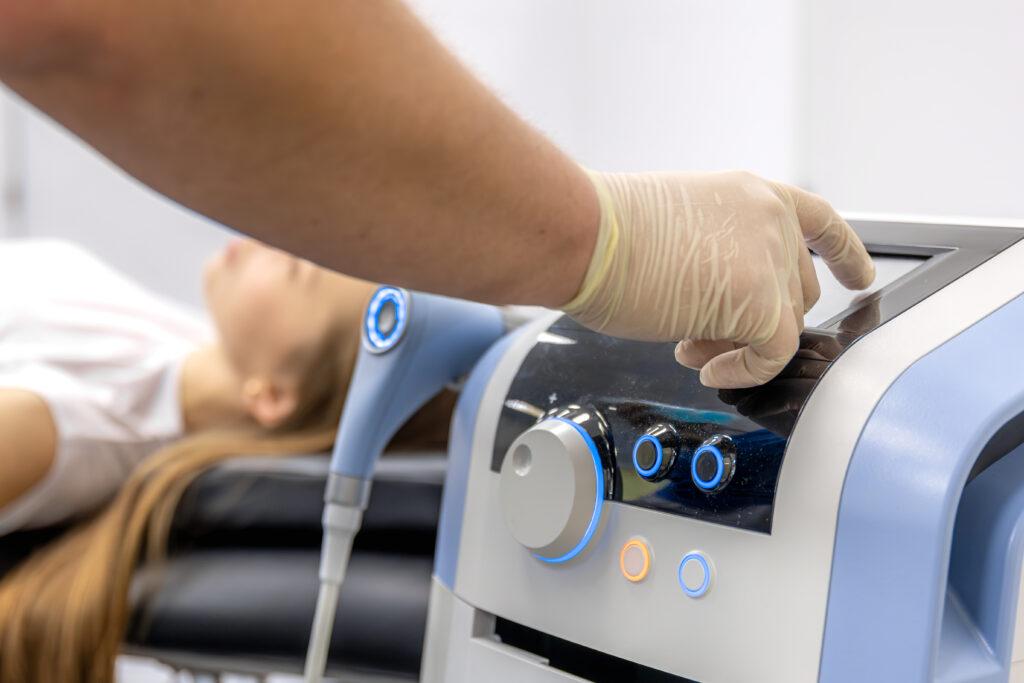
Laser Lipo vs Traditional Liposuction: Which Body Contouring Method Is Right for You?
When it comes to body contouring, the conversation almost always comes down to two options: laser lipolysis and traditional liposuction. One promises a non-invasive, walk-in-walk-out experience. The other delivers dramatic, immediate fat removal backed by decades of clinical use.
But which one actually fits your needs? The answer depends on what you’re trying to achieve, how much fat you want to address, and what kind of recovery timeline works for your life. This guide breaks down the science, the results, and the real differences — with clinical evidence, not marketing claims.
Laser Lipo vs Traditional Liposuction: Complete Comparison
| Factor | Laser Lipolysis (Non-Invasive) | Traditional Liposuction |
| Method | Low-level laser induces fat release | Physical suction removes fat cells |
| Invasiveness | Non-invasive, no incisions | Invasive, requires incisions |
| Anesthesia | None required | Local or general anesthesia |
| Pain Level | Minimal to none | Moderate to significant (post-operative) |
| Recovery Time | No downtime; resume activities immediately | 1–3 weeks light activity; 3–6 weeks full recovery |
| Results Timeline | Gradual; visible in 2–4 weeks, full at 8–12 weeks | Immediate contour change; final results at 1–3 months after swelling subsides |
| Fat Reduction Volume | Small to moderate (circumference reduction) | Large volume (liters of fat removed) |
| Skin Tightening | Mild (no collagen stimulation in non-invasive LLLT) | None inherent; may cause skin laxity in some patients |
| Sessions Required | 6–12 sessions per area | Single procedure |
| Cost (Per Area) | 150–150–350 (home device) / 800–800–2,000 (clinic course) | 3,000–3,000–15,000 |
| Scarring | None | Small scars at incision sites |
| Compression Garments | Not required | Required for 1–3 months |
| Significant Risks | Temporary redness, mild dryness | Infection, bleeding, anesthesia complications, contour irregularities, seroma,embolism (rare) |
Who Should Choose Laser Lipolysis?
Non-invasive laser lipo is best suited for individuals who meet the following criteria:
- Within 10–15 lbs of their ideal body weight with localized fat deposits resistant to diet and exercise
- Seeking body contouring, not weight loss — laser lipo targets stubborn areas, not overall weight reduction
- Unable to take time off work for surgical recovery — there is zero downtime
- Averse to invasive procedures — no needles, no incisions, no anesthesia
- Using it as a post-surgical touch-up — to refine small residual areas after liposuction
- Looking for a gradual, natural-looking change rather than an overnight transformation
Realistic Expectations
Based on clinical data, laser lipolysis produces circumference reductions of approximately 3–5 inches total across treated areas after a full course of treatment. This is meaningful for body contouring, but it is not equivalent to the volume reduction achievable with surgical liposuction.
Who Should Choose Traditional Liposuction?
Traditional liposuction is more appropriate when:
- Large areas of fat need to be addressed — significant abdominal, flank, or thigh volume that cannot be reduced through non-invasive means
- Immediate, dramatic results are the priority — the contour change is visible as soon as post-operative swelling subsides
- You have adequate recovery time — willing and able to take 1–3 weeks off from normal activities
- Skin quality is good or you are also considering a skin excision procedure (abdominoplasty)
- BMI is moderate — liposuction is a contouring procedure, and candidates should ideally be within 30% of their ideal body weight
Common Myths Debunked
Myth 1: “Laser lipo gives the same results as liposuction.”
Reality: No. The two procedures operate on fundamentally different principles. Laser lipolysis triggers fat cells to release their contents for natural metabolic processing — think of it as melting butter and letting your body carry it away gradually. Traditional liposuction physically extracts fat cells from the body — like scooping butter out with a spoon. The volume of fat reduction achievable with surgery is significantly greater.
Myth 2: “Fat that’s suctioned out will move to other areas.”
Reality: Fat cells removed during liposuction are permanently gone — they do not migrate. However, if you gain weight after the procedure, the remaining fat cells throughout your body can expand. Since treated areas have fewer fat cells, new fat may appear preferentially in untreated areas, creating the illusion that fat “moved”.
Myth 3: “After laser lipo, I don’t need to watch my diet.”
Reality: Laser lipolysis assists in metabolizing a portion of stored fat, but it does not alter your body’s fundamental energy balance. If caloric intake consistently exceeds expenditure, remaining fat cells will expand and new fat accumulation will occur. Clinical studies show that maintaining results requires a balanced diet and regular physical activity.
Myth 4: “You can remove as much fat as you want with liposuction.”
Reality: There are strict safety limits on the volume of fat that can be removed in a single session — typically capped at 2,000 mL to avoid risks of fluid imbalance, anemia, and hemodynamic instability. Liposuction is also a contouring procedure, not a weight loss solution. Patients with substantial excess weight need to combine it with dietary changes.
Myth 5: “Laser lipo is completely risk-free.”
Reality: While non-invasive laser lipolysis has an excellent safety profile — with no significant adverse effects reported across multiple clinical trials — it is not entirely without considerations. Temporary skin redness, dryness, and mild warmth at the treatment site are the most commonly reported effects. Home-use devices also carry the risk of improper use if manufacturer guidelines are not followed.
Aftercare: What to Do Post-Treatment
After Laser Lipolysis
- Hydrate: Drink 8–10 glasses of water daily to support lymphatic clearance of released fatty acids
- Light exercise: A brisk 20-minute walk within hours of treatment helps accelerate fat metabolism
- Avoid heavy meals: Refrain from eating for 30 minutes post-treatment; maintain a calorie-conscious diet
- Be consistent: Complete the full treatment course (typically 6–12 sessions) for optimal results
- Skin care: Apply a light, non-comedogenic moisturizer if skin feels dry
After Traditional Liposuction
- Compression garments: Wear as directed for 1–3 months to reduce swelling and support skin retraction
- Pain management: Follow your surgeon’s prescribed pain medication regimen
- Limited activity: Avoid strenuous exercise for 3–6 weeks; walking is encouraged from day one
- Wound care: Keep incision sites clean and dry; monitor for signs of infection
- Follow-up appointments: Attend all scheduled check-ups with your surgeon
- Hydration and nutrition: Support healing with adequate protein intake and fluid consumption
FAQ
Is laser lipo painful?
Most patients report minimal to no discomfort during non-invasive laser lipolysis. You may feel a mild warming sensation at the treatment site. No anesthesia is required.
How many laser lipo sessions do I need?
Clinical protocols typically involve 6–12 sessions over 2–4 weeks, with each session lasting 15–30 minutes. Results are cumulative and improve with each treatment.
Can laser lipo help me lose weight?
No. Laser lipolysis is a body contouring tool designed for circumference reduction in specific areas. It is not a weight loss treatment. The ideal candidate is already near their target weight with localized stubborn fat.
Does traditional liposuction result in permanent fat loss?
Yes. Fat cells removed during liposuction do not regenerate. However, remaining fat cells can expand if you gain weight, so maintaining a stable weight through diet and exercise is essential for long-lasting results.
Can I combine laser lipo with traditional liposuction?
Yes. Some practitioners use non-invasive laser lipolysis as a post-surgical refinement tool to address small residual fat deposits after liposuction. They can also be used in sequence — laser lipo for initial gentle contouring, followed by surgery if more dramatic results are desired.
How long do laser lipo results last?
Results can be long-lasting if you maintain a stable weight and healthy lifestyle. Since laser lipo reduces fat cell contents rather than removing the cells entirely (unlike surgical liposuction), the treated fat cells can refill if caloric intake consistently exceeds expenditure.