How Vietnamese Human Hair Manufacturers Are Supporting the Next Generation of Premium Hair Brands?
A premium hair collection takes shape long before a customer ever sees it. Material origin sets the starting point, production skill shapes the result, and consistency decides whether the tenth order still matches the first. Hair brands selling at high price points carry that weight with every restock. As demand for human hair extensions and wigs grows across the United States and Europe, more of these brands now build their supply around Vietnamese human hair manufacturers, whose factories hold sourcing, processing, and finishing under one roof.
Premium Hair Brands Are Looking Beyond Finished Products
Buyers at the premium end no longer judge a supplier by one sample. A finished wig carries the record of every choice made before it, from the donor hair selected to the knotting method used on the lace base. Brand founders now ask to see that record.
The same questions surface in sourcing calls. Founders want to know where the hair originates, whether unit 500 will match unit 5, and how the factory documents its process. They ask how quickly a specification can change, and whether the supplier will still take a mid-size account three years from now.
Commercial reality drives the shift. A premium hair brand sells trust as much as product, and one uneven batch reaching a salon client can undo years of positioning. Marketing budgets rarely repair that kind of damage. Product developers have started treating the manufacturer as part of the brand rather than a vendor standing behind it.
Vietnamese Human Hair Provides a Defined Material Foundation
Vietnamese-origin human hair gives a brand something specific to say about its material. That specificity matters in premium categories, where a vague sourcing story weakens the price tag. Hair gathered in Vietnam follows a traceable route from local collectors to the factory floor, which lets a brand describe its raw material with regions, dates, and handling steps instead of adjectives.
Origin alone settles nothing about quality. Two labels can buy hair from the same province and sell products that behave differently on a client’s head. The difference appears during processing. Workers sort strands by texture and density, classify them by length, and check that cuticles run in a single direction before anything reaches a weft or a lace cap. Cuticle alignment reduces tangling, and it survives only when the hair stays in order at every station. Wash chemistry, drying temperature, and color work then decide how a set holds up after twenty washes.
APOHAIR builds its product lines around Vietnamese-origin human hair and ties that sourcing to controlled processing inside its own factory. The material sets a floor. Method sets the ceiling.
Manufacturing Control Turns Raw Materials Into Brand-Ready Products
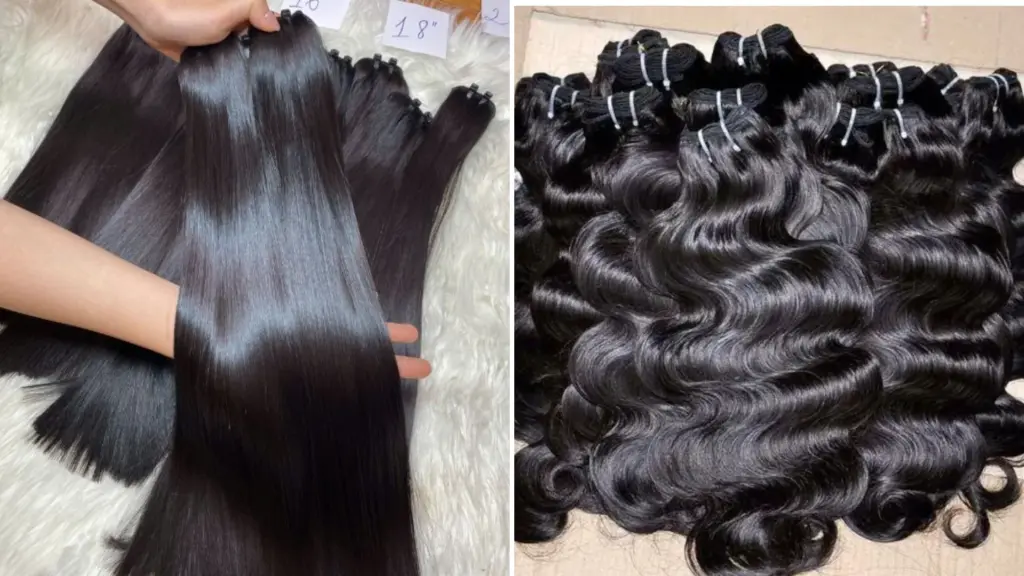
Control over the production line converts collected hair into a product a brand can put its name on. The route passes through several checkpoints. Incoming hair is inspected and sorted, and short or damaged strands come out. Washing and drying follow, then color work, then shaping into straight, wavy, or curly textures. Construction comes next, where hair is sewn onto wefts, tied onto lace, or bonded into keratin tips. A final inspection covers color, length, and texture before packaging.
Each stage introduces variance. Brands feel that variance in three ways. Samples fail to match bulk production, repeat orders drift in tone, and lead times stretch whenever a change is requested. A factory that owns each stage can trace a fault to the station that caused it and correct it within days.
Companies such as APOHAIR, a Vietnamese human hair manufacturer, demonstrate how direct production links material sourcing to finished-product development. Its Ninh Binh Province facility covers roughly 33,000 square meters and handles processing, construction, and quality control on a single site, which shortens the distance between a written specification and the bench where the work is done.
Custom Manufacturing Helps Brands Create Distinct Product Lines
Differentiation in this category comes from specification, not from packaging design. Two labels can source from the same country and sell products that feel unrelated, because they order different things. Length range, density, texture pattern, color depth, weft width, lace type, cap construction, and tip format all sit under the brand’s control once a factory builds to order.
That flexibility carries commercial weight. A salon chain serving a mature clientele may want shorter lengths at higher density. A brand aimed at a younger market may want longer, lighter sets in warmer tones. Neither one can buy from a stock catalog and still claim a distinct position.
Manufacturing flexibility enables a brand to develop products aligned with its positioning and defend that position over time. It also changes the pace of product development. When a factory produces to specification, a brand can test a short run, read the response, and adjust before committing to a full collection.
APOHAIR Demonstrates the Role of Vietnamese Hair Manufacturing Partners
APOHAIR offers a working example of the manufacturer-as-partner model. The company has produced human hair extensions and wigs in Vietnam for more than twenty years, selling to businesses rather than consumers. Its hair comes from Vietnamese collectors, and production runs through a single facility in Ninh Binh Province staffed by more than 500 workers.
A wholesale structure shapes what the company produces. Buyers order in volume against a written specification, so agreement between orders matters more than any single unit. The factory builds wig formats on lace bases and wholesale human hair extensions on wefts, tapes, and keratin tips. Both lines pass the same color, length, and texture check before packaging.
Certification supports the position. The factory holds ISO 9001:2015 for quality management and SA 8000 for social accountability, which gives a brand partner audited grounds to stand on instead of assurances.
The pattern reaches past one company. Vietnamese manufacturers with factory-based production and export experience now sit inside the supply chains of hair brands across North America and Europe.
Premium positioning in hair rests on more than an attractive finished product. It rests on a material with a known origin, a factory that can hold a specification, and a partner willing to move when a collection changes. Brands that treat sourcing as a strategic decision tend to hold their pricing longer than those shopping on unit cost. Vietnamese manufacturers such as APOHAIR now fill that role for a growing number of beauty businesses, supplying both the material and the production discipline behind the label.