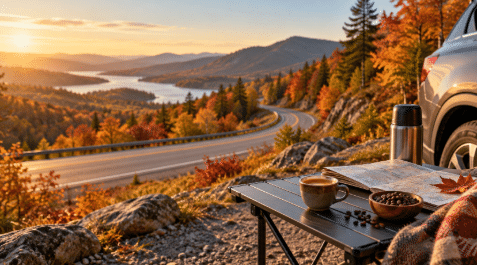
How to Make Better Espresso on a Fall Road Trip
Better road-trip espresso starts before the engine does. Fresh coffee, measured portions, clean water, dependable power, and a sensible brewing stop matter more than chasing a complicated recipe. A little preparation keeps the process consistent when colder weather, shorter daylight, and a changing route make improvisation less convenient.
A Reliable Cup Starts Before Departure
A fall drive can move from an early cold start to a sunny afternoon and back into darkness before dinner. Instead of assuming every fuel stop will provide good coffee, decide in advance when and where you are likely to brew. A planned scenic turnout, rest area, campground, or hotel parking stop is easier to use than a roadside shoulder chosen at the last minute.
The best brewing location is level, legal, well away from moving traffic, and protected from strong wind. Place the machine, cup, and coffee on a stable surface, then finish the full brewing and cleanup routine before returning to the road. Coffee preparation should never compete with driving, navigation, or vehicle control.
Estimate how many people will drink espresso and how many stops the route allows. A single-serving portable setup works well for one or two travelers, but several drinks require repeated filling, loading, extraction, and cleaning. Packing for a realistic number of servings prevents the common problem of carrying plenty of coffee but not enough water, power, cups, or space for used grounds.
Protect Flavor Between Stops
Road-trip coffee improves when each serving begins with a known amount of coffee. Pre-weighed ground coffee removes the need to balance a scale on an uneven picnic table, while whole beans and a travel grinder preserve more aroma at the cost of extra equipment and preparation. Capsules can reduce loose grounds and measuring, provided they are compatible with the brewing device.
Whichever format you choose, keep it sealed from air, moisture, direct sun, and strong vehicle odors. A small airtight container is usually more practical than repeatedly opening a large bag. Store it somewhere accessible so luggage does not need to be unpacked every time you stop.
A road trip is not the ideal time to change several brewing variables at once. Use a familiar coffee, dose, and water volume, especially for the first cup of the day. If the espresso tastes weak, sour, bitter, or unusually slow, change one variable at a time. Consistency makes it easier to identify whether the problem comes from the coffee, preparation, water, or equipment.
Water Determines More Than Volume
Good espresso depends heavily on water, yet roadside water availability can be unpredictable. Carry clean drinking water in a sealed bottle and keep a separate allowance for rinsing coffee-contact parts. Strongly flavored mineral water can change the cup, while distilled or heavily purified water may not extract coffee in the same way as balanced drinking water. A familiar bottled or filtered water is the simplest choice when consistency matters.
Measure the brewing water instead of filling by eye. Overfilling can create spills inside a vehicle or on an unstable surface, while too little water may produce a smaller, stronger drink than intended. In cold weather, do not leave water containers where they may freeze overnight, and never pour water into charging ports or electrical components.
Match the Brewer to the Route
A manual brewer can be compact, but it depends on having separately heated water. A battery-powered model reduces that dependency by heating its own water, although heating consumes much more stored energy than extracting with preheated water. The useful question is not which system has the longest feature list, but which one matches the water, power, luggage space, and brewing frequency of the route.
For travelers who want espresso without relying on roadside cafés, the OutIn Nano 2 combines built-in water heating with a cordless, travel-friendly design. Its 5,000 mAh 3S battery system is rated at 54 Wh, and 45W USB-C PD charging allows the device to be recharged from compatible equipment. An 85 ml tank supports small servings, while the included ground-coffee basket and compatibility with Nespresso® Original Line capsules provide two practical packing options. Those specifications make it easier to plan the kit, but actual battery use still depends on water temperature, serving size, conditions, and how the machine is used.
The espresso maker is only one part of the setup. Before departure, gather everything needed for the chosen recipe and store it together rather than across several bags.
- Measured coffee or compatible capsules
- Clean drinking water plus a small rinse allowance
- A stable cup and a cloth for drips
- The correct charging cable and compatible power source
- A sealed container for used grounds or capsules
- A protective case or clean compartment for the machine
Power Planning for a Full Day
Charge the machine fully before leaving and confirm that the cable, connector, and power source work together. A charger’s advertised wattage does not guarantee that every connected device will receive that amount; the device, cable, charger, and power protocol must all be compatible. Test the combination at home instead of discovering a mismatch during the trip.
Vehicle USB ports vary widely. Some are intended mainly for phones and may provide less power than a portable espresso maker can accept for fast charging. A compatible USB-C PD car charger or power source may be more useful, but it should be properly rated and used according to the manufacturer’s instructions. Keep cables away from pedals, seat rails, wet gear, and hot surfaces.
If a hotel, campsite, or rest stop already provides safe hot water, using it can reduce the energy required from the machine’s battery. Only use water temperatures and operating procedures supported by the device. Do not improvise with containers that are not designed for hot liquids, and avoid brewing inside a moving vehicle even when a passenger is handling the equipment.
Cold Mornings Change the Routine
Cool air and cold stored water can increase the energy and time required to reach brewing temperature. Battery performance can also vary with temperature, so keep rechargeable equipment in the passenger compartment rather than leaving it overnight in a very cold trunk. Allow a device that has become unusually cold to return to an appropriate operating temperature before charging or using it, following its manual.
Wind matters as much as temperature at an outdoor stop. It can cool the cup quickly, move loose grounds, and make a small setup less stable. Brew behind a safe windbreak, keep lightweight items contained, and warm the cup with hot water when practical. These small adjustments often improve the drinking experience more than adding another piece of equipment.
Leave the Equipment Ready for the Next Stop
Old coffee oils and trapped grounds can make the next espresso taste stale or bitter. After brewing, remove the used coffee, rinse the basket or capsule holder as directed, wipe the outlet and cup, and let wet parts dry before sealing them in a case. When running water is unavailable, contain the mess and complete the full cleaning routine at the next suitable stop rather than leaving coffee residue inside the machine for the rest of the trip.
Used grounds and capsules should leave with you when no disposal bin is available. Pack a small leak-resistant waste container and a reusable cloth, then empty and wash them later. This keeps the vehicle clean and prevents a quick roadside coffee from leaving litter behind.
Conclusion
Better espresso on a fall road trip comes from a reliable routine: choose safe brewing stops, portion coffee before departure, carry enough clean water, test the charging setup, and clean the equipment after every use. A portable self-heating machine can make the process less dependent on cafés and kettles, but preparation still determines how smooth each stop feels. Pack for the route you are actually driving, keep the recipe familiar, and let the coffee add to the journey rather than complicate it.
FAQs
Should you grind coffee before leaving?
Grinding shortly before brewing generally preserves more aroma, but pre-grinding can make roadside preparation faster and cleaner. For a short trip, portion the ground coffee into airtight containers as close to departure as practical. For a longer trip, a compact grinder may be worthwhile if the added space and cleanup fit the routine.
How can you keep espresso warm at an outdoor stop?
Use a small insulated cup or warm the cup with hot water before extraction. Keep the cup covered from wind and drink the espresso soon after brewing. A large cold cup absorbs heat quickly, so matching the cup size to the serving is more effective than carrying an oversized mug.
Can espresso replace a rest break during a long drive?
No. Coffee may feel alerting, but it does not replace sleep, recovery, or a proper break from driving. If you feel tired, stop somewhere safe and rest instead of relying on another espresso to continue. Plan coffee as part of the stop, not as a substitute for it.