How to Make an Open-Plan Home Feel Mid-Century Modern
An MCM tv stand and MCM sideboard can establish a mid-century direction without turning an open-plan home into a themed set. Both pieces should connect living and dining zones while preserving light, movement, and the room’s everyday flexibility.
Start with low profiles, warm wood, clean lines, and furniture that earns its floor space. The MCM tv stand handles media needs, while the MCM sideboard gives the dining zone storage and a useful surface.
The strongest rooms mix periods and materials. They repeat a few clear ideas instead of copying every finish, leg shape, and decorative reference. Personal objects and contemporary comforts can remain part of the same story.
Define the Zones Before Choosing a Style
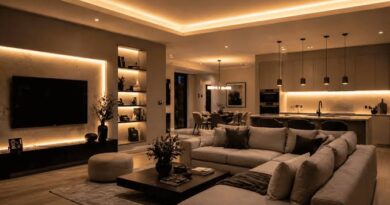
An open plan needs boundaries that people can understand without walls. Position seating to create the living zone, then place dining furniture beyond the main circulation route. The MCM tv stand should face the primary seats without becoming the first object seen from every entrance.
Use the MCM sideboard to reinforce the dining edge rather than divide the room in half. A rug, pendant, or change in furniture orientation can do more zoning work than another cabinet. Keep the route between zones open and easy to follow. Check the view while someone walks behind the dining chairs.
- Mark the uninterrupted path through the room.
- Center each zone on one useful activity.
- Place storage against the quietest available walls.
Build the Period Through Form
Mid-century modern design grew around practical objects, clear construction, and changing household needs. You do not need vintage originals to capture that logic. Focus on proportions and function before adding recognizable colors or decorative motifs.
Start With Low Horizontal Lines
A low media cabinet usually works because its long shape keeps the screen wall grounded. Repeat that horizontal rhythm through the sofa, a low coffee table, or wide artwork. Avoid stacking tall objects around the screen, which can make the living zone feel crowded.
Show Some Floor Underneath
A MCM tv stand on legs reveals more flooring and makes a broad cabinet feel lighter. That lifted profile also connects well with dining chairs and tables that use tapered or slender supports, even when the pieces come from different collections.
Mix Curves With Straight Edges
Open plans contain many rectangles from cabinets, rugs, windows, and screens. Introduce an oval table, rounded lamp, or curved chair back to soften the grid. The dining cabinet can remain rectilinear because nearby shapes provide the contrast.
Keep Construction Legible
Choose furniture whose doors, drawers, legs, and pulls make sense at a glance. Simple construction supports the period’s functional character. An MCM tv stand with practical cable routes and an MCM sideboard with accessible storage feel more convincing than decoration applied without purpose.
Connect the Zones With a Limited Palette
Color should carry the eye across the room without making every area identical. Choose one dominant neutral, one wood family, and one or two accents. Repeat them in different quantities so the living and dining zones relate but remain distinct.
Work With Wood Temperature
Walnut and medium oak often support a mid-century palette, but exact matching is unnecessary. Compare undertones under the home’s real lighting. If the MCM tv stand looks warmer than the MCM sideboard, bridge them with leather, woven fibers, or artwork that contains both tones.
Repeat One Accent Strategically
Use rust, olive, ochre, or deep blue in small intervals rather than across every object. A cushion near the screen and a vase near the dining area can create continuity. Keep large upholstery quieter when the architecture already carries strong color.
Plan Visual Weight by Zone
The table below gives a simple way to distribute common elements. Treat the measurements as planning targets, then adjust for doors, accessibility needs, and the actual scale of your furniture. Give the darker cabinet a quiet background and place stronger color near the lighter zone.
| Element | Living Zone | Dining Zone |
| Main wood piece | MCM tv stand | MCM sideboard |
| Primary light | Floor or table lamp | Pendant or ceiling light |
| Soft boundary | Rug and sofa orientation | Rug or table alignment |
| Clear route | About 36 inches where feasible | Keep chair pullback unobstructed |
Give Storage a Clear Division
Mid-century rooms look calm because useful objects have defined places, not because residents own nothing. Divide storage by activity. Entertainment equipment belongs in the living zone, while dining supplies and household overflow should stay closer to the table. Keep seldom-used objects outside both daily access zones.
Contain Technology
Keep controllers, streaming devices, chargers, and spare cables inside the MCM tv stand. Use ventilation and cable openings as intended by the manufacturer. The cleaner screen wall allows the furniture’s proportions to read without turning visible electronics into decoration. Labeling spare cables can also prevent repeat purchases.
Support Meals and Flexible Work
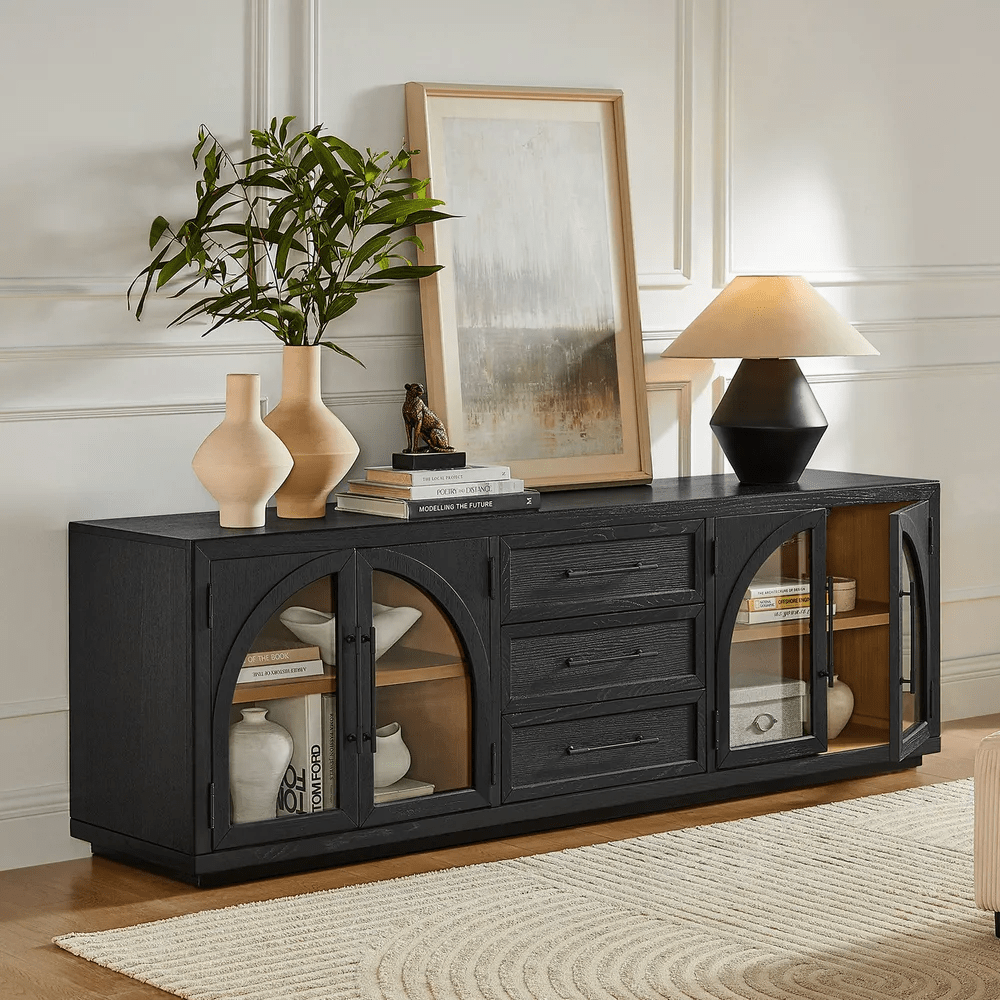
A MCM sideboard can hold table linens, serving pieces, and work supplies used at the dining table. Separate categories with shallow trays or boxes. The MCM sideboard should shorten routines, not become a deep cabinet where unrelated items disappear.
Edit the Room for Daily Life
A period look fails when every surface becomes a display. Leave working areas available for a drink, a laptop, or a serving tray. The MCM tv stand and MCM sideboard should support ordinary use before they carry ceramics, books, or framed objects.
Use Fewer Larger Objects
One lamp, one piece of art, and a small group of objects often read more clearly than many small accessories. Keep the center of the MCM tv stand visually quiet around the screen. Give the dining cabinet one taller vertical element.
Test the View From Both Zones
Sit at the sofa and dining table, then look across the full space. The MCM sideboard should not appear packed while the living area feels empty. Adjust art, plants, and lighting until the visual weight changes gradually from one zone to the next.
- Remove accessories that do not support a use or memory.
- Repeat one color in each zone, not on every surface.
- Recheck the room after evening lights replace daylight.
Keep the Result Lived In
An open-plan home feels mid-century modern when practical forms, warm materials, and open movement work together. Preserve the distinction between media storage and dining storage, then let shared color and proportion connect the two areas.
Avoid chasing a complete matching set. A few well-chosen pieces, including an MCM tv stand and MCM sideboard, can carry the direction while contemporary seating, personal art, and daily objects keep the home believable. The arrangement should continue working as daily routines evolve.