How to Keep a Cocktail Pool Clean: Easy Steps for Fresh Backyard Swimming
A cocktail pool is smaller than a traditional pool, but it still needs regular care to stay clear and safe to swim in. The good news is that cleaning one takes far less time and effort than maintaining a full-size pool. With a simple routine covering water circulation, filtration, and the area around the pool, you can keep the water fresh all season without turning it into a chore.
What Are Cocktail Pools and How Do You Keep Them Clean
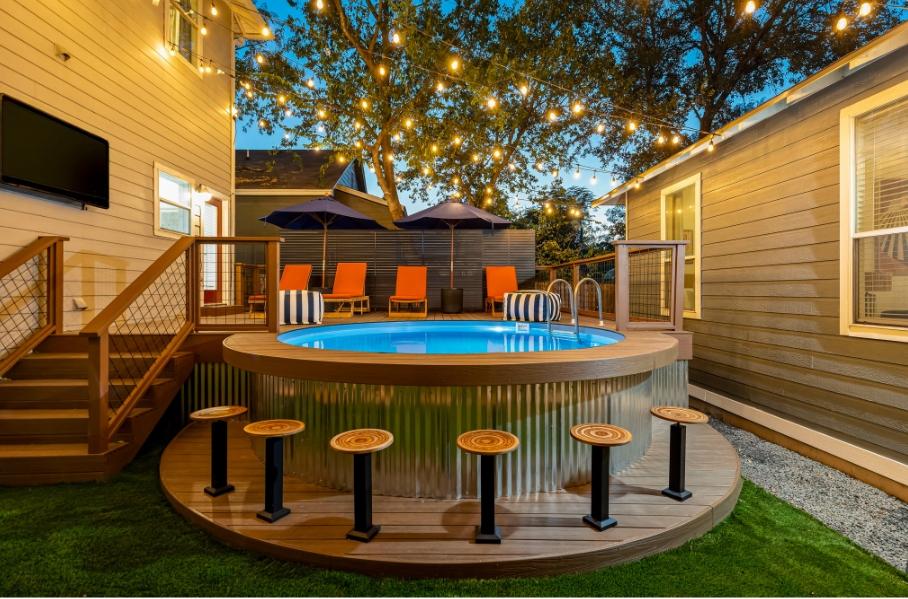
Cocktail pools are compact, deep plunge-style pools built for relaxing rather than swimming laps. They fit well in small or medium backyards where a full-size pool just wouldn’t work, and they’ve become popular for homeowners who want the feel of a real pool without the size or the price tag. StainlessSwim builds these as custom cocktail pools using galvanized steel walls and vinyl liners, which makes the shell itself easy to wipe down and low-maintenance compared to concrete.
Because a cocktail pool holds less water than a standard pool, it actually needs a bit more attention to chemical balance. Smaller volumes of water react faster to heat, debris, and bather load, so skipping a few days of upkeep shows up quicker than it would in a bigger pool. The upside is that testing, brushing, and skimming a cocktail pool takes only a few minutes at a time.
Keep the Water Moving With the Right Pump Schedule
Still water is where problems start. Algae, bacteria, and cloudiness all develop faster when water sits without circulation, so running your pump on a consistent schedule is one of the most important habits you can build. The pump pulls water through the filter, removes debris, and helps chemicals like chlorine spread evenly instead of settling in one spot. Without that steady movement, chlorine tends to break down faster in one area while leaving other parts of the pool under-treated, which creates the perfect conditions for algae to take hold. Even a day or two of stagnant water can be enough to turn clear water cloudy, especially during hot weather when bacteria multiply fastest.
Set your pump to run during the warmest part of the day when bacteria growth is at its highest. Many pool owners use a timer so they don’t have to remember to turn it on and off manually, which also helps avoid the temptation to skip a day. A timer also makes it easier to split the running time into two shorter cycles instead of one long stretch, which can be more efficient if your pool sees heavy use in the afternoon and evening. Over time, this small bit of automation takes the guesswork out of maintenance and keeps the water consistently balanced without adding anything extra to your daily routine.
How long to run the pump each day
For most cocktail pools, running the pump for 6 to 8 hours a day is enough to keep water properly filtered. Larger pools or ones that get heavy use may need closer to 10 hours, while smaller, lightly used pools can sometimes get by with less. A simple way to check is to look at the water after a full pump cycle. If it looks clear and there’s no film on the surface, your current schedule is working. If it doesn’t, add an hour or two and see if that solves it before assuming there’s a bigger issue.
Keep the Pool Filter Working Properly
The filter is what actually removes the dirt, oils, and small particles that the pump pushes through the system. If the filter gets clogged, water flow slows down, and even a good pump schedule won’t keep the pool clean. Most cocktail pools use a sand filter or a cartridge filter, and both need regular checks to keep working the way they should. Without that filtration step, all the circulation in the world won’t matter, since the same trapped particles just keep cycling back into the water instead of being pulled out. Over time, a neglected filter also puts more strain on the pump itself, which can shorten its lifespan and lead to more expensive repairs down the road. Knowing which type of filter your pool uses, and what a healthy one looks like, makes it much easier to catch small problems before they turn into cloudy water.
For a sand filter, watch the pressure gauge. When the reading rises noticeably above its normal level, it’s time to backwash the system to clear out trapped debris. For cartridge filters, pull the cartridge out and rinse it with a hose every couple of weeks, and replace it once it starts looking worn or the pleats stay dirty even after rinsing. Skipping this step is one of the fastest ways to end up with cloudy water, no matter how well you’re circulating it.

Keep the Deck and Pool Area Clean
What happens around the pool affects what ends up in it. Leaves, grass clippings, dirt, and sunscreen residue all make their way into the water from the deck or surrounding patio, adding to the filter’s workload and speeding up algae growth. A quick sweep or hose-down of the deck a couple of times a week keeps most of that debris from ever reaching the water. It also helps to rinse off before swimming, since body oils and lotions are a common source of buildup on the waterline. Wiping down the waterline tile or liner with a soft brush once a week prevents the ring of grime that’s much harder to remove once it sets in. This part of the routine is even simpler with a StainlessSwim cocktail pool, since the galvanized steel walls and vinyl liner are built to wipe clean without much effort, so the waterline never becomes a real chore to maintain.
Common Cocktail Pool Cleaning Mistakes to Avoid
A few habits tend to cause more cleaning problems than they solve, and most of them come down to skipping small steps that seem unnecessary in the moment. On their own, these shortcuts rarely cause a noticeable issue right away, which is exactly why they’re easy to keep repeating without thinking twice. Over a few weeks, though, they tend to stack up, and what starts as a minor oversight can turn into cloudy water, a strained filter, or a pump working harder than it needs to. Catching these early makes it much easier to keep the water clear without extra work down the line, since fixing a small habit is always simpler than fixing the water after the damage is already done.
- Adding chemicals without testing first. Guessing the dose can throw off the water balance and make it harder to clear rather than easier. Testing first, then adjusting, saves both time and product.
- Cutting pump time to save on energy. Running the pump for only a few hours a day might work for a short stretch, but it usually leads to cloudy water and more frequent shock treatments, which end up costing more in the long run.
- Waiting until the water looks dirty to check the filter. By the time the problem is visible, the filter has likely been struggling for days.
- Letting debris sit on the deck. Wind and rain wash it straight into the pool if it’s not cleared, undoing whatever progress the filter has made.
Most of these mistakes share the same root cause: reacting to a problem instead of preventing it. A little consistency with testing, pump time, and filter checks goes a lot further than trying to fix cloudy water after the fact. Building these small checks into a regular routine takes far less effort than dealing with a pool that’s already turned cloudy or algae-prone.
Conclusion: Keep Your Cocktail Pool Clear With Small Regular Steps
Keeping a cocktail pool clean doesn’t require a complicated routine. A steady pump schedule, a filter that’s checked regularly, and a deck that’s kept free of debris cover most of what your pool needs. None of these steps take much time on their own, and once they become part of your weekly routine, maintaining the pool starts to feel automatic rather than like a task on your to-do list. Stick to these basics, and your cocktail pool will stay clear and ready for a swim whenever you want one.
If you’re still deciding on a pool, it’s worth choosing one that makes this routine even easier to keep up with. StainlessSwim builds custom tank pools with galvanized steel walls and vinyl liners, a combination that holds up well over time and doesn’t demand extra upkeep beyond the basics. Backed by quick installation and a design built to fit smaller backyards, a StainlessSwim pool gives you a low-maintenance way to enjoy all the benefits of a cocktail pool without added hassle.