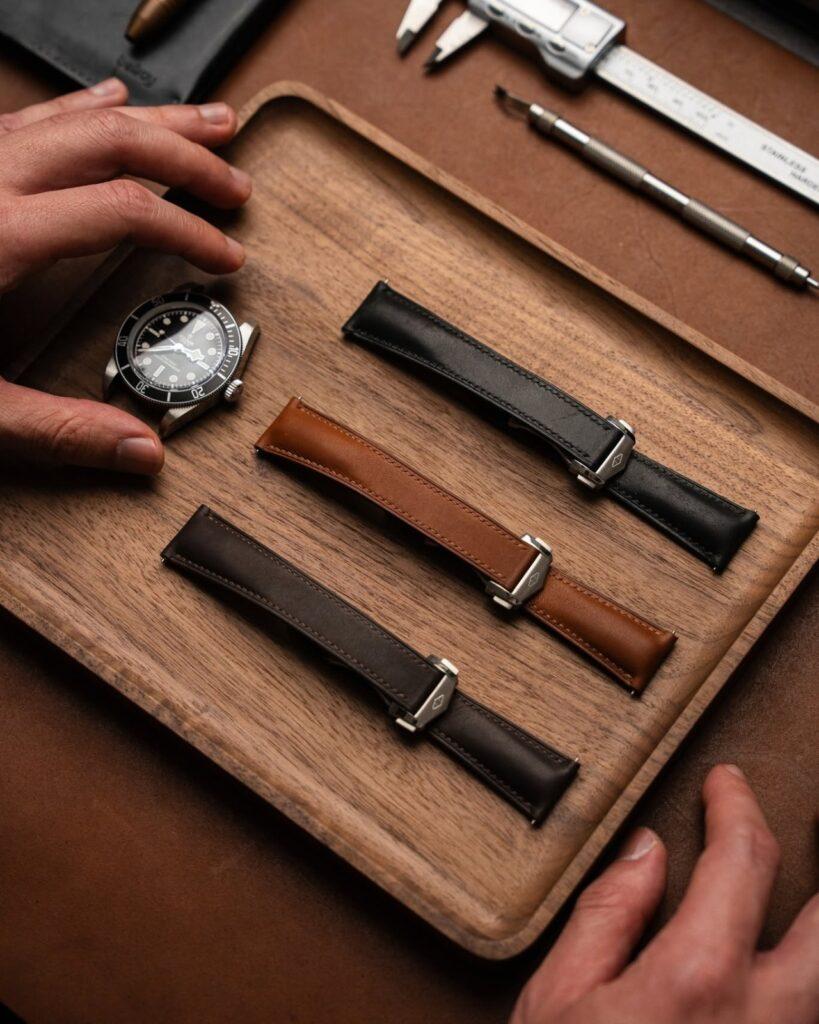
How to Fit and Adjust a Deployant Clasp
Knowing how to fit a deployant clasp is only half the job. A common problem is that the clasp closes properly, yet the watch still sits too tight, too loose or off to one side. Often the clasp itself isn’t the cause. The real issue is the strap length, the hole position or how much strap the folding mechanism takes up.
When adjusted properly, the watch should sit centred on the wrist, the clasp should rest comfortably underneath, and the folding sections should close flat without forcing.
How Do You Get the Fit Right?
Measure your wrist, fit the clasp, and choose the strap hole that holds it securely without discomfort. Check that the watch sits centred and the clasp folds flat against the wrist. If the strap is designed to be trimmed, cut a little at a time, and only once you’re sure of the fit. The clasp should close snugly without pinching, pulling or forcing the strap out of position.
Why Does a Deployant Clasp Change Strap Length?
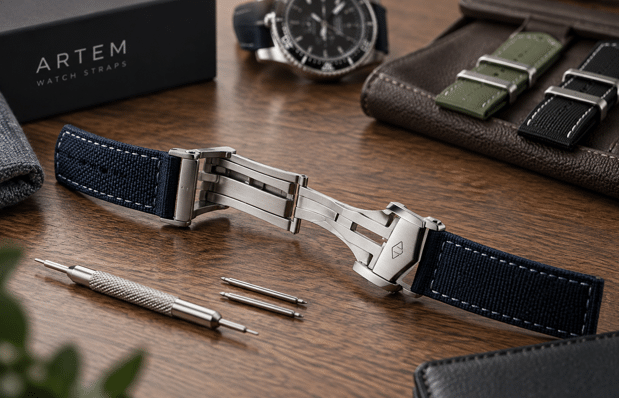
A pin buckle and a deployant clasp use strap length differently. With a pin buckle, the strap tail passes through the buckle and into the keepers. With a folding clasp, part of the strap is taken up inside the mechanism itself.
That’s why a strap that fits well with a pin buckle can end up too short, too long or off-centre once a clasp is fitted.
A folding clasp also takes up more room around the wrist than a pin buckle. The strap sections usually need to be shorter once a deployant is fitted, and the length of each section determines where the clasp sits and whether the watch stays centred on top of the wrist.
How Do You Fit a Deployant Clasp to the Strap?
Before you start, make sure the clasp width matches the clasp end of the strap, not the lug end. Many straps taper, so the two widths are often different.
To fit a deployant clasp:
- Open the clasp fully and look at both attachment points so you know where each strap section goes.
- If needed, remove the old pin buckle, being careful not to damage the spring bar.
- Attach the buckle end of the strap to the fixed side of the clasp, making sure the spring bar is properly seated.
- Feed the other strap section through the adjustable side of the clasp.
- Check the clasp is the right way round before closing it. The folding sections should open away from the wrist and move freely.
- Put the watch on and check that the case sits centred on the wrist.
- Close the clasp, then move your wrist gently to check for pressure, pinching or excessive movement.
When choosing a clasp, compatibility with the strap’s width, taper and construction matters more than looks.
What if the Deployant Clasp Is Too Loose?
If the strap is too loose, start by adjusting the holes or clasp positions.
Don’t cut the strap straight away. If trimming is needed, work out the correct length first and remove only a little at a time.
Check the fit after each adjustment. Trimming is permanent, so it’s better to work in stages than to try for the final length in a single cut.
How Does a Butterfly Clasp Work?
A butterfly clasp works on the same principle but has two folding sections that meet in the middle.
Both sides should close smoothly with no twisting or pulling on the strap. If the mechanism closes properly but the fit still feels wrong, check the strap length and position before deciding the clasp is the problem.
A well-fitted butterfly clasp sits comfortably under the wrist and keeps the watch centred on top.
Frequently Asked Questions
How tight should a deployant clasp be?
Tight enough to hold the watch in place without squeezing the wrist. You should be able to move your wrist normally, and the watch shouldn’t slide around or press into the wrist at the clasp.
Will any watch strap take any deployant clasp?
No. Compatibility depends on strap width, taper, thickness and construction. Don’t go by the lug width; check the width at the clasp end.
Why is my strap too short with a deployant clasp?
The adjustment position may be set too short, the strap itself may be too short, or the folding mechanism may be using more length than the buckle it replaced.
Should a strap be trimmed for a deployant clasp?
Only if the strap and clasp are designed for it. Trim to the correct length, removing a little at a time.
Why does my deployant clasp sit off to one side?
The two strap sections are probably not proportioned correctly for your wrist. Adjusting the strap length or the attachment position will bring the clasp back to a more comfortable spot.