How to Choose the Right Commercial Concrete Coating Service in Florida
Florida floors face conditions many coating guides overlook. Strong sunlight can fade finishes near storefront windows. Humidity can slow curing and push moisture through a slab. Restaurants, healthcare spaces, and service businesses need surfaces that stay clean and slip resistant during washdowns, and most need work done without a long closure.
This guide gives you a plain-language, Florida-focused checklist. It explains the main concrete floor coating options, how to match them to your space, and how to vet a contractor before anyone touches your slab.
What a commercial concrete coating actually does
A coating protects the concrete underneath, reduces routine maintenance, and can make a space easier to clean and safer to walk on. The right system can also improve appearance, which matters for retail, hospitality, and customer-facing spaces.
Safety rules should shape the finish. OSHA requires walking and working surfaces to be kept clean and, as much as feasible, dry, with hazards corrected or guarded. ADA guidance calls for slip resistant surfaces but does not set one minimum coefficient of friction value. Choose texture and traction based on use; anti-slip additives and aggregate can add grip in wet or greasy areas.
Your main concrete floor coating options
Epoxy base systems
Epoxy is a durable, common base layer for interior floors, but it cures more slowly than some alternatives. Some product data sheets list roughly 12 hours before foot traffic at about 68 degrees Fahrenheit and about 7 days for full cure. In decorative flake systems, complete flake coverage and a UV stable topcoat help limit yellowing.
Polyaspartic systems and topcoats
Polyaspartics are valued for UV stability and fast return to service. Some manufacturer data lists cure times as short as a few hours, with UV resistant, color stable protection and skid resistant texture options. Industry references also note wide temperature ranges and useful single-coat build. Performance still depends on formula, slab condition, and jobsite environment.
Polyurethane and polyurea topcoats
Urethane and polyurea topcoats are often used for wear and chemical resistance on interior floors. These fast systems are not ideal DIY projects because mixed material has a short usable pot life. Professionals should test slab moisture first, since high moisture vapor can cause failures.
Decorative flake and solid color systems
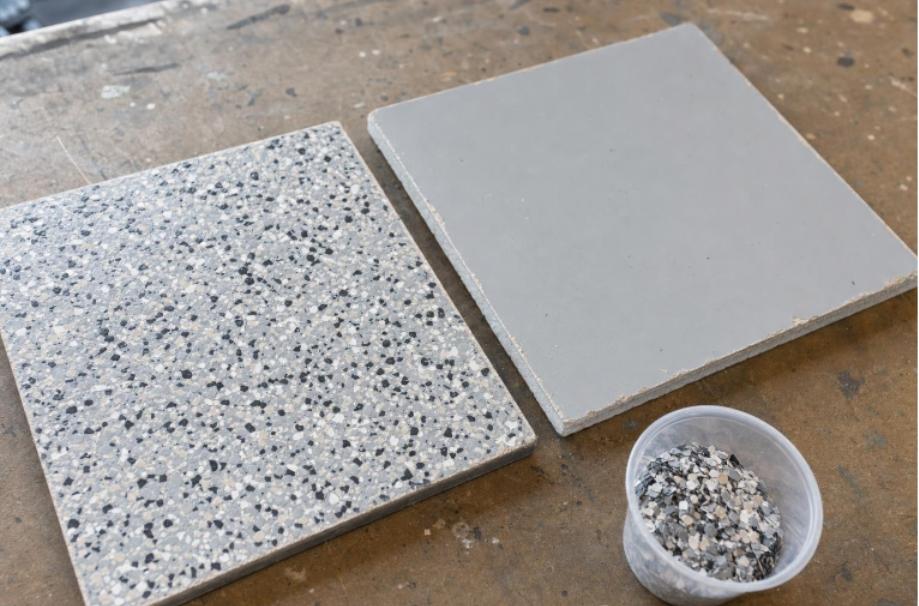
Flake systems broadcast vinyl chips into a base coat for a textured, hard-wearing look. Solid color floors create a clean, uniform surface. Both usually rely on a clear topcoat, and a UV stable clear is worth prioritizing near windows, doors, and bright storefront areas.
Cure and traffic windows come from product data and manufacturer guidance. Treat them as examples tied to specific products and site conditions, not universal timelines.
Non-negotiables before anyone installs
Two steps separate a lasting floor from an early failure: moisture testing and surface preparation.
Moisture testing. For many commercial coatings, in-situ relative humidity testing under ASTM F2170 should be part of the process. Some product data sheets call for a moisture vapor barrier primer when slab relative humidity exceeds 75 percent, though thresholds vary by system. Ask for written test results and the installer’s mitigation plan.

Surface preparation. Concrete needs the right mechanical profile before a coating will bond. Contractors often use the ICRI concrete surface profile, or CSP, scale. Diamond grinding is common. Be cautious of proposals that rely only on acid etching with no grinding or profiling detail.
The importance of proper concrete assessment and preparation cannot be overstated. When concrete is damaged or compromised, whether from structural settling, moisture intrusion, or prior failed coatings, the underlying issues must be resolved before a new coating can succeed. Materials like epoxy and polyurethane are effective surface protections, but they can only work when applied to a properly prepared substrate.
Understanding what lies beneath the concrete surface, including moisture vapor transmission rates and structural integrity, helps contractors select the right mitigation strategy. A thorough assessment during the proposal phase prevents costly failures later, which is why experienced contractors invest time in testing before making promises.

How to read a Florida coating bid
- System layers and build: for example, a base coat, flake broadcast, and UV stable clear coat.
- Cure and return-to-service windows: stated as ranges tied to temperature and humidity, not fixed promises.
- Slip resistance plan: the texture or aggregate choices for wet areas, described without claiming a single friction number.
- Downtime plan: how the schedule fits around your business hours.
- Maintenance expectations: cleaning products and methods that are compatible with the finish.
Find vetted local installers
Contractor due diligence matters as much as product choice. In Florida, you can verify a contractor’s license online or through the DBPR mobile app by name or license number. DBPR notes some work, including certain flooring jobs, may not require a state license and could be licensed locally instead, so confirm requirements with your local building department.
Also confirm insurance. In Florida’s construction industry, employers with one or more employees must carry workers’ compensation coverage, and contractors are responsible for ensuring subcontractors are covered too. Ask for proof of active workers’ comp and general liability, recent references from similar commercial projects, and a written surface prep and moisture mitigation plan.
Use the same checklist when you compare local commercial concrete coating services in Florida. For a local reference point, Raz-Barry Construction serves Daytona Beach and surrounding Volusia and Flagler County communities and works with epoxy, polyaspartic, polyurea, and stone resin systems, along with floor and coating removal.
Quality signals and red flags
Good bids tend to share a few quality signals: a moisture mitigation primer when relative humidity is high, a UV stable topcoat near doors, windows, and outdoor exposure, an anti-slip additive for wet or greasy areas, and documented recoat and maintenance guidance based on manufacturer instructions.
Watch for these red flags:
- Acid etch only, with no grinding.
- No moisture testing results provided.
- One-day promises with no conditions or preparation detail.
- Warranty claims that the manufacturer does not clearly support.
A quick checklist to screenshot
Use this list before signing a coating proposal.
- Verify license status through DBPR and confirm local requirements.
- Confirm active workers’ comp and general liability.
- Require moisture testing under ASTM F2170 and a stated CSP profile.
- Choose a UV stable topcoat where sunlight reaches the floor.
- Schedule the work around realistic cure windows and your business hours.
- Get a written maintenance and cleaning plan.
FAQ
Do Florida contractors need a state license for coatings?
Not always. Verify through DBPR, then confirm local requirements with your building department because some flooring work may be licensed locally rather than by the state.