How to Choose a Leather Backpack for Work, Travel, and City Life
In New York, one bag may need to do three jobs in a day: hold a laptop through morning meetings, fit in an overhead bin for an afternoon flight, and look appropriate at a downtown restaurant. That is a lot to ask of an accessory. Shopping for luxury backpacks for city life is therefore less about how a bag looks on a model and more about the measurements, materials, and construction details you can check yourself.
Consider those factors in order. Start with size, then assess materials and hardware. Style matters, but it should come after the practical requirements.
Start with size, and use real numbers
Capacity is the first consideration. For everyday city use, roughly 16 to 24 liters is often enough for a laptop, a folder, and gym clothes without becoming awkward on a crowded train. Shape matters as much as volume. A slim, structured bag stays close to your back and fits more easily under a cafe table.
Compare your laptop with the sleeve’s actual measurements rather than relying on a label such as “fits most 16-inch laptops.” For reference, Apple lists the 16-inch MacBook Pro at about 14.01 inches wide and 9.77 inches deep. The sleeve should provide a little clearance on each side, with enough padding to protect the device without holding it tightly in place.
Style, and where to start looking
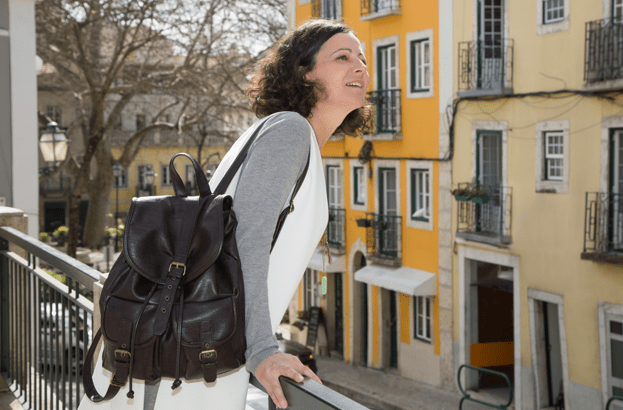
For the widest range of settings, understated colors such as black, espresso, and navy work well with office clothing and casual travel outfits. Minimal exterior straps and restrained hardware also make a backpack look less sporty in a client meeting. A well-constructed leather backpack can replace a briefcase in many offices, provided it holds its shape and is not overfilled.
When comparing options, begin on the manufacturer’s official website and select the correct country or region. This helps you review the right dimensions, materials, warranty terms, and available leather backpack styles. Longchamp and other established leather-goods brands publish product details on their regional sites, but it is still worth confirming measurements in person when possible.
The carry-on math, simplified
If you regularly fly from JFK, LaGuardia, or Newark, check the bag against the rules of the airlines you use most. Delta, for example, specifies a maximum carry-on size of 22 x 14 x 9 inches. Limits can vary by airline, aircraft, route, and ticket type, so confirm the current rules before traveling.
Those limits have two practical consequences. First, favor a zip-top or another secure closure because an open bag can spill when turned sideways. Second, consider a pass-through sleeve on the back panel. It lets the backpack sit on a rolling suitcase and reduces the weight you carry through a long terminal.
Leather that develops character
Full-grain leather retains the hide’s natural outer surface, including variations that can develop into a patina. Corrected top-grain leather is sanded or finished for a more uniform appearance. A pebbled texture tends to conceal small marks from turnstiles, taxi doors, and desk corners, while smooth leather usually shows scratches more readily.
Read material claims carefully. Leather Working Group certification generally concerns the tannery and its production practices, not the quality of a finished bag. If responsible sourcing matters to you, check whether the manufacturer states that all the leather in the bag comes from certified facilities. Also review the care instructions because protective coatings and treatments affect how leather ages.
What good construction looks like in the hand
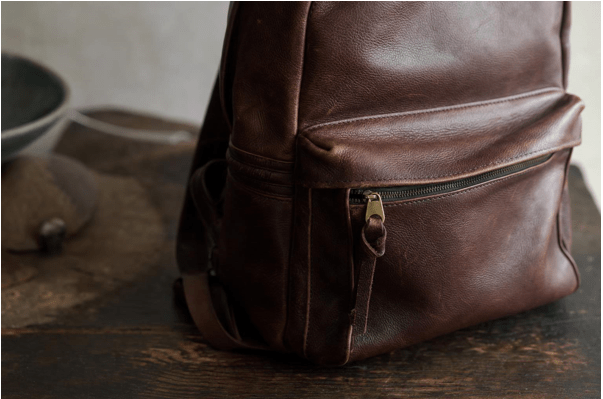
Open the bag and inspect the stress points where the straps meet the body. Look for layered reinforcement, dense stitching, and anchors that do not pull away when the bag is lightly loaded. Test each zipper under slight tension, check that the pulls feel secure, and confirm that the leather edges are finished consistently.
Comfort matters during a long walk from Grand Central. Padded, contoured straps distribute weight better than narrow leather bands, while a breathable back panel can make summer commutes more comfortable. A pocket facing your back provides convenient storage for a phone or wallet in a crowd. Keep the trade-off in mind: extra pockets improve organization but also add weight and bulk.
Weather, salt, and a simple care routine
Leather needs some protection during a New York winter. Choose treated leather or carry a lightweight rain cover, and store liquids in a sealed pouch. If the bag becomes soaked, empty it and let it air-dry away from radiators, hair dryers, and direct sunlight. Remove road salt promptly with a soft, slightly damp cloth after testing an inconspicuous area.
Maintenance should follow the manufacturer’s guidance because finishes vary. Wipe away dust as needed and apply a suitable conditioner sparingly, usually a few times a year rather than every week. Store the backpack lightly stuffed to keep its shape, and use a breathable dust bag instead of a sealed plastic one.
The short version
Measure before you focus on appearance. Confirm the laptop sleeve dimensions, compare the exterior size with airline limits, choose a finish that suits the wear it will receive, and inspect the stitching and hardware. Bring those requirements with you when shopping online or in a store. A bag chosen this way is more likely to work across commutes, business trips, and everyday city use.