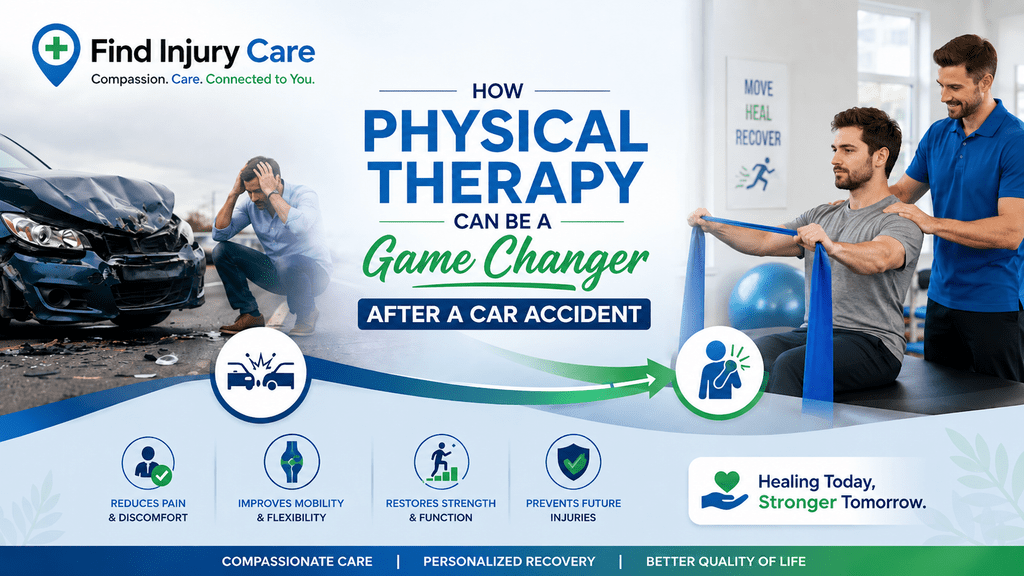
How Physical Therapy Can Be a Game Changer After a Car Accident
I went digging through actual clinical research and legal resources before writing this, because “physical therapy helps after accidents” gets said constantly without much explanation of why, or what the numbers actually say. Turns out there’s a lot more substance behind it than the average blog post lets on. Here’s what turned up, sources included.
The Injury Numbers Are Higher Than People Assume
Roughly 85% of people involved in a car accident end up with some form of pain or injury afterward that’s from a clinical guide put together by MovementX. Most of it falls under Whiplash Associated Disorder, or WAD, which covers a pretty long list: headaches, neck pain, stiffness, shoulder and back pain, numbness, dizziness, sleep trouble, even cognitive fog in some cases.
Without treatment things drag. MovementX’s numbers show recovery stretching past three months for a lot of people, and 23% still aren’t fully back to normal a year later. Physioactif, which specializes specifically in cervical trauma, paints a somewhat better picture though 60 to 70% of whiplash patients recover fully within two to three months, but that’s with proper care in the picture, not without it.
What Happens Without Treatment
About 50% of people with grade I or II whiplash, the most common kind, still have neck pain and disability six months out if they skip proper treatment. That’s per Physioactif’s data. Start PT in the first few weeks and that number drops under 20%.
Bayside Physical Therapy’s numbers land in a similar place roughly half of untreated whiplash patients are still dealing with pain a year later. OC Sports and Rehab cites a broader range, somewhere between 14 and 42% developing chronic neck pain, and calls early targeted treatment one of the more reliable ways to bring that number down.
These aren’t identical figures across sources, and that’s normal in whiplash research since outcomes shift depending on the study population and severity mix. But they’re all pointing the same direction. Early treatment changes what happens later.
Actual Clinical Results
Worth mentioning one specific study here. Triple F Sports references research out of the journal Spine from 2018 patients on a structured PT program for eight weeks saw a 35% improvement in neck mobility along with a meaningful pain reduction.
Not a marketing number. A measured clinical outcome.
Why Resting It Off Doesn’t Work
Standard advice for whiplash used to be rest, maybe a neck collar, wait it out. OrthoRehab’s take on this: that thinking has shifted, research now backs early guided movement over prolonged immobilization.
Bayside goes a step further and says a cervical collar can actually make symptoms worse and stretch the recovery out longer. Makes sense once you sit with it soft tissue heals through movement, not by staying frozen in one position.
Active PT is where that logic actually plays out. Heat packs and massage count as “passive” treatment, useful early for pain control, sure, but the real work is targeted exercise rebuilding strength, restoring range of motion, retraining muscles that got overworked compensating for the injury.
Why This Matters Even More If You’re in New York
New York runs on no-fault insurance, meaning your own policy covers medical treatment no matter who caused the crash. In Motion Physical Therapy notes every auto policy in the state has to include at least $50,000 in Personal Injury Protection covers reasonable, necessary treatment including PT, no copays while benefits are active.
There’s a catch though, and it trips people up constantly. You’ve got 30 days from the accident to file the No-Fault application, Form NF-2. CT Physical Therapy Care, out in Queens, puts it plainly: miss that window because you figured the pain would just fade, and the insurance company can and often will deny the whole claim.
Doesn’t stop there either. Medcare Therapy Services says providers get 45 days from each treatment date to submit bills, and lost wage claims need filing within 90 days. Separate deadlines entirely from the three-year statute of limitations on a personal injury lawsuit people mix those two up constantly, assuming they’ve got years when the no-fault clock is already ticking.
CT Physical Therapy Care flags one more trap. See a doctor day one, don’t start PT until day 45, and adjusters will often use that gap as proof the injury wasn’t serious, or wasn’t even from the accident. The timeline itself becomes evidence, fair or not.
Finding the Right Provider
A New York Physical Therapist handling auto accident cases regularly understands both sides of this, the clinical piece and the documentation piece. No-Fault Doctors runs a network connecting patients with specialists across New York and New Jersey their providers are trained on the insurance angle too, so treatment doesn’t get stuck in paperwork fights.
That documentation isn’t just box-checking for its own sake. Advanced Care Physical Therapy’s point: a proper evaluation documents exactly how symptoms affect daily life, driving, working, sleeping, lifting, and that becomes part of the record insurers, and courts if it comes to that, rely on later.
An Injury Doctor New York patients see early on matters here too, beyond the initial diagnosis. That first visit is what generates the prescription authorizing PT under no-fault benefits. Start that chain early and you’re protecting both the recovery and the claim.

The Bottom Line
Not just about a stiff neck loosening up. Start early and the numbers shift a lot — odds of chronic pain sticking around drop noticeably compared to waiting around. In New York specifically, timing also decides whether treatment gets covered at all. If you need help finding the right specialist quickly, a resource like Find Injury Care can point you toward a provider who already knows how to navigate the no-fault process instead of leaving you to figure it out on your own.
Got into an accident recently, even something that felt minor at the time? Don’t just sit around hoping it fades. The research says early action works, and New York’s insurance system is quite literally built around that same expectation.
Sources
- MovementX: The Comprehensive Guide to Post-Car Accident Physical Therapy Treatment
- Physioactif: Physical Therapy for Whiplash: Recovery
- Bayside Physical Therapy: How Physical Therapy Can Help with Whiplash After a Car Accident
- OC Sports and Rehab: Car Accident Physical Therapy: Recover From Whiplash, Back Pain & Injuries Faster
- Triple F Sports: Auto Accident Physical Therapy: Top 6 Recovery Secrets (citing Spine, 2018)
- OrthoRehab: How Physical Therapy Helps With Whiplash Recovery After a Car Accident
- In Motion Physical Therapy: How Does No-Fault Insurance for Physical Therapy in New York Work?
- CT Physical Therapy Care: NY No-Fault Insurance & Physical Therapy: The 30-Day Rule
- Medcare Therapy Services: No-Fault Physical Therapy on Long Island, NY
- No-Fault Doctors: Physical Therapists in New York and New Jersey
- Advanced Care Physical Therapy: No-Fault Physical Therapy in Western New York
One thing worth saying plainly: this isn’t medical or legal advice. It’s information pulled together from public sources and clinic reporting. Check with a licensed provider, and a lawyer if it comes to that, about your own situation.