How Commercial Facilities Can Build A Smarter Hygiene Plan
Key Takeaways
- A strong hygiene plan should be practical, targeted, easy to verify, and tailored to the facility.
- Focus on consistent cleaning practices that protect workers and support daily operations.
- Keep hygiene procedures simple enough for teams to follow and maintain consistently.
A clean-looking facility is not always a low-risk facility. In offices, schools, warehouses, restaurants, healthcare settings, and retail spaces, the most important hygiene work often happens on shared surfaces, in busy transition areas, and at times when staff are under pressure to reopen quickly.
For larger treatments or complex spaces, businesses comparing disinfectant fogging services Bristol can review CNS Cleaning Company’s information on electrostatic spraying and fine-mist disinfection. Based in Bristol, Pennsylvania, CNS Cleaning Company works with commercial facilities and has practical experience serving offices, warehouses, factories, and other shared environments where broad-area coverage, safe procedures, and limited downtime matter.
Why Facility Hygiene Plans Need A Fresh Look
Modern hygiene planning isn’t just about cleaning more often; it involves tailoring efforts to building risks, traffic, hours, and occupants. A busy lobby needs frequent attention to doors and controls, while a warehouse break room requires cleaning at shift changes. Leaders must balance appearance, sanitation, safety, cost, speed, and occupant confidence. A targeted plan enables teams to focus on the areas of greatest need rather than relying on a generic checklist that treats all rooms equally.
Start With A Simple Facility Risk Review
Before selecting product, equipment, or service frequencies, walk through the site and identify where people gather, touch common surfaces, eat, operate equipment, or move between departments. Review the building during its busiest period, not only after closing.
Review These Risk Factors
- The number of people using each area every day.
- How frequently the same surfaces, tools, or devices are touched.
- Food preparation, patient care, sensitive electronics, or specialized equipment.
- Ventilation, odors, humidity, and other indoor air concerns.
- Recent illness reports, spills, or contamination events.
- Hard-to-reach surfaces that routine tools may miss.
- Available cleaning windows that do not disrupt operations.
Build A Basic Risk Map
- Mark entrances, restrooms, break rooms, shared workstations, counters, rails, and equipment.
- Separate routine cleaning zones from areas that may need targeted disinfection.
- Note surfaces requiring special handling, such as touchscreens, food-contact areas, or medical devices.
- Assign a cleaning frequency based on actual use, not assumptions.
- Review the map quarterly and whenever the building’s occupancy or workflow changes.
Know The Difference Between Cleaning, Sanitizing, And Disinfecting
Cleaning removes dust, soil, residue, and some germs. Sanitizing reduces specific germs to safer levels per standards. Disinfecting uses appropriate products for the required duration to destroy microorganisms on surfaces. Visible dirt can hinder the effectiveness of disinfectants, so cleaning precedes disinfection. Staff must follow instructions for dilution, surface compatibility, protective gear, and contact time to ensure disinfectants work properly. EPA guidance highlights the importance of labels, registration numbers, and proper usage instructions.
Choose The Right Method For The Space
Manual Surface Cleaning
Manual cleaning remains essential for visible soil, spills, and routine high-touch work. It gives staff a close view of surface condition and is often the best approach for counters, fixtures, shared devices, and areas requiring detailed attention. Its limitation is time, particularly in large or complicated facilities.
Electrostatic Application
Electrostatic equipment applies charged droplets that may help the solution coat multiple sides of suitable objects and surfaces. It can be useful in offices, schools, shared equipment rooms, and spaces with many touchpoints. However, it supports rather than replaces cleaning. Surface preparation, approved chemistry, trained application, and required dwell time still determine whether the process is appropriate.
Fine-Mist Or Fogging Application
Fine-mist application can help cover broad areas and difficult-to-reach surfaces in warehouses, factories, and large offices. It is not a universal answer. Before treatment, operators should protect sensitive equipment, remove food where required, control access, confirm ventilation needs, and follow all product-specific re-entry instructions.
Plan Around High-Touch Areas
High-touch areas deserve the most consistent attention because they experience repeated contact throughout the day. Prioritize:
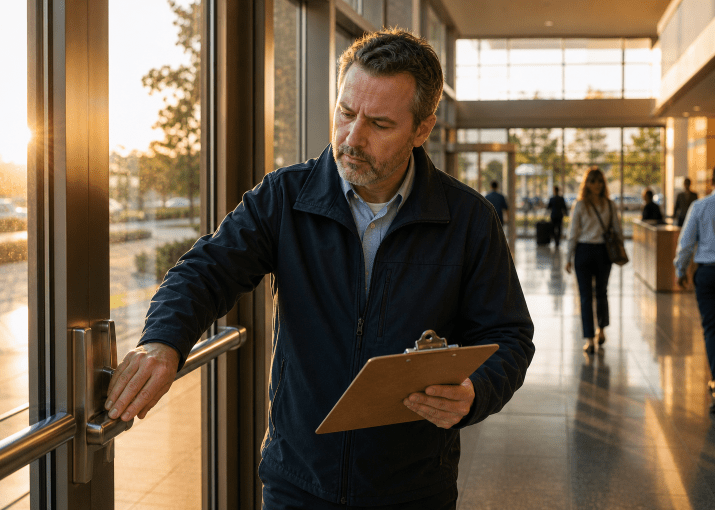
- Door handles, push plates, elevator buttons, and handrails.
- Shared keyboards, phones, scanners, touchscreens, and tools.
- Reception counters, checkout stations, and waiting-area furniture.
- Break room appliances, tables, faucets, cabinet pulls, and vending controls.
- Restroom fixtures, dispensers, stall hardware, and sinks.
- Fitness equipment, locker room fixtures, carts, and warehouse equipment.
Frequency should follow use. A lightly used conference room may need routine service after meetings, while a crowded entrance, kitchen, or shared production station may need attention several times during a shift.
Use Approved Products And Follow The Label
Product selection should never be based on marketing claims alone. Confirm that the product is appropriate for the intended surface and use, then follow the stated dilution, application, contact-time, storage, and disposal requirements. Never mix chemicals unless the label specifically permits it, and keep safety data sheets available to employees and contractors.
Provide gloves, eye protection, masks, or other protective equipment when required. Ventilation also deserves attention, especially when chemicals are applied in enclosed areas. Facilities can use EPA indoor air quality information to support a broader approach that considers ventilation, filtration, and source control alongside surface hygiene.
Create A Practical Cleaning Schedule
- During the day: Address spills, restrooms, entrances, and frequently touched surfaces.
- At shift changes: Clean shared tools, counters, equipment, and employee spaces.
- After closing: Complete broader cleaning and planned disinfection work.
- Weekly: Inspect vents, storage areas, overlooked surfaces, and hard-to-reach locations.
- After an incident: Follow a documented response plan for illness, contamination, or a high-risk event.
Checklists should identify the room, surface, product, assigned worker, completion time, and any exceptions. This documentation helps managers find missed areas, supply problems, and recurring complaints before they become larger issues.
Reduce Downtime Without Cutting Corners
Schedule larger treatments during low-traffic periods, divide large facilities into zones, and use clear signage to control access. A warehouse may treat one aisle or break room at a time, while an office can schedule expanded work after employees leave. Before reopening, verify drying, ventilation, and re-entry requirements, and keep a backup plan for essential areas that must return to service quickly.
When To Bring In A Trained Service Provider
Outside support may make sense when a facility is large, difficult to close, dealing with a contamination concern, or working around sensitive electronics, food areas, or medical equipment. It can also help when internal teams need specialized equipment training, consistent documentation, or coordinated service across several locations.
Measure Whether The Plan Works
Appearance matters, but it should not be the only measure of success. Track missed areas found during inspections, completion rates, recurring restroom or odor complaints, supply shortages, labor time by zone, equipment issues, and occupant feedback. When appropriate, ATP testing or another approved verification method can provide an additional layer of insight.
Common Questions About Facility Disinfection
Does Disinfection Replace Routine Cleaning?
No. Dirt and residue can interfere with disinfectant performance. Routine cleaning remains the foundation of a successful program.
Is Fogging Right For Every Building?
No. The right method depends on the product, room design, surface types, ventilation, occupants, and label instructions.
What Should Be Documented?
Record the date, location, product, application method, contact time, operator, safety steps, and reopening time when relevant.
A Simple 2026 Action Plan
- Inspect the facility and identify high-touch zones.
- Separate routine cleaning from targeted disinfection.
- Choose approved products and methods that fit the space.
- Train staff on labels, protective equipment, and re-entry procedures.
- Use daily, weekly, and incident-response checklists.
- Review results monthly and update the plan as building use changes.
Conclusion
A strong hygiene plan is practical, targeted, and easy to verify. The best plan is not the one with the longest checklist or the most chemicals. It is the one that fits the facility, protects workers, supports daily operations, and helps people feel safer while they work, learn, shop, dine, or receive care.