How Can I Achieve End-to-End Automation for Web, Mobile, and API?
First, accept what end-to-end actually means
End-to-end automation is one of those ideas everyone agrees with until they try to implement it.
Most teams start with good intentions. They automate a few web flows. Someone adds API tests. Mobile automation comes later, usually under pressure. On paper, it looks like progress. In reality, the pieces never quite line up.
When something breaks in production, teams scramble to explain what should have caught it. There is no single test to point at. Just a collection of passing results that did not tell the full story.
That is usually the moment people realize they do not actually have end-to-end automation. They have automation in parts.
If you want, I can do the same surgical rewrite for any specific paragraph that a detector flags. We don’t rewrite everything. We target only the hot spots.
Stop splitting automation by technology
One of the earliest mistakes happens during ownership.
Web automation sits with one group.
Mobile automation sits with another.
API automation is treated as a separate technical effort.
On paper, this looks organized. In practice, it breaks flows.
Real user journeys do not care about these boundaries. They start somewhere and end somewhere else. When automation is split by technology, no one owns the full path.
You need ownership by flow, not by tool.
Write the flow in plain language first
Before writing a single test, write the journey like you would explain it to a new hire.
A user logs in.
They create something.
That action triggers backend processing.
Another system updates state.
The user sees confirmation.
If this description is unclear, automation will reflect that confusion.
This step feels basic, but it is usually skipped. Teams jump straight into scripting and then wonder why tests feel disconnected.
APIs should control the system state
APIs are not just for testing APIs.
They are the most reliable way to control data and state in end-to-end automation.
Use APIs to set up preconditions instead of clicking through screens.
Use APIs to validate outcomes instead of trusting UI messages.
Use APIs to clean up data so tests remain repeatable.
When UI and mobile tests depend on fragile setup, flakiness is guaranteed. APIs give you leverage.
Web and mobile should assert the same outcomes
Web and mobile flows often drift apart over time.
One checks the happy path.
The other checks edge cases.
Both “pass.”
Meanwhile, the backend behaves inconsistently.
End-to-end automation framework works better when web and mobile are treated as different entry points into the same system behavior. The UI steps differ. The outcomes should not.
Assertions should focus on what changed in the system, not how the interface looked while it changed.
Orchestration matters more than scripting
Chaining scripts together is not orchestration.
End-to-end automation should feel intentional. Each step has a reason.
A typical flow might:
- Prepare data through APIs
- Perform actions through web or mobile UI
- Validate results through APIs or backend checks
When this structure is explicit, failures tell a story. You know where the flow broke instead of guessing.
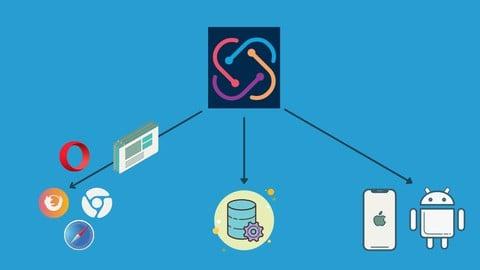
Platforms and end to end test automation tools that allow flows to be modeled once and executed across layers help reduce glue code. ACCELQ is one example where teams define business flows and run them across web, mobile, and API without stitching unrelated scripts together.
The value is not abstraction. It is clarity.
Integrate end-to-end tests into CI carefully
Running every end-to-end test on every commit is a good way to make everyone hate them.
Pick a small set of high-value flows that run frequently.
Run broader scenarios less often.
Tag tests by cost and risk.
End-to-end automation should provide feedback, not punishment.
This is ongoing work, not a milestone
End-to-end automation is never “done.”
Systems change. Integrations shift. Channels expand. Tests must evolve or be removed.
Teams that succeed treat these tests like product code. They review them. They delete low-value ones. They adjust as reality changes.
Final thought
End-to-end automation is not about coverage numbers or tool choices.
It is about confidence.
When a test fails, you understand why.
When a test passes, you believe it.
When you ship, you stop guessing.
If your automation does not give you that, it is not end-to-end yet.