Home Theater Blackout Shades: How to Reduce Glare for Better Movie Nights
A home theater can have a great screen, good speakers, and comfortable seating and still feel disappointing when sunlight hits the room at the wrong angle. Glare is especially noticeable during daytime movies and dark scenes where reflections make the picture look flatter.
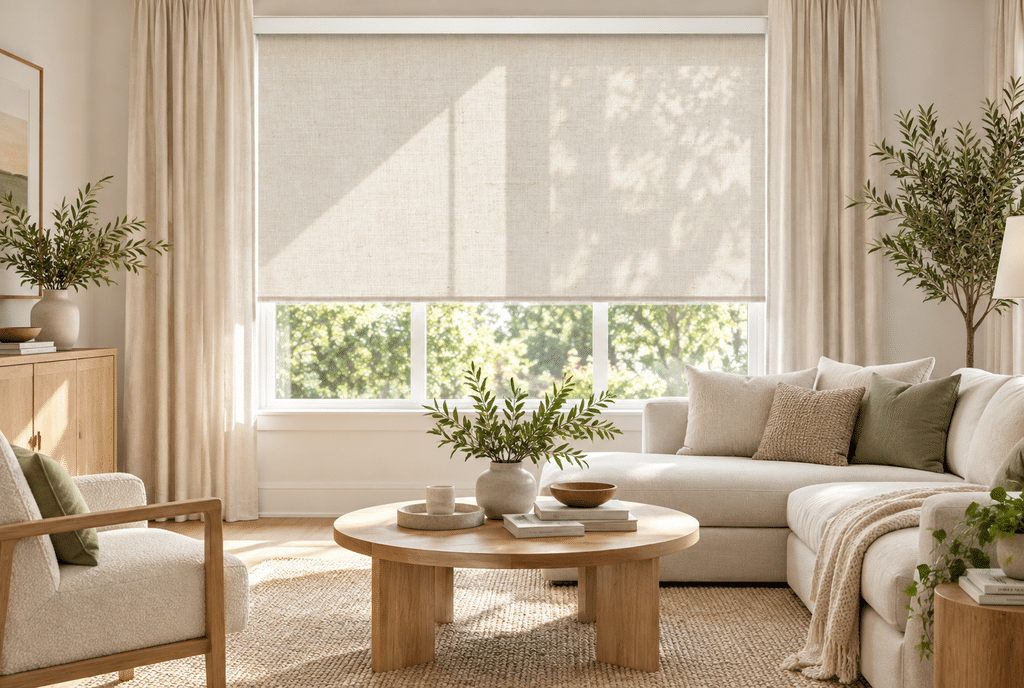
For rooms where darkness matters most, blackout roller shades can cover the window with an opaque fabric that limits incoming light and keeps the viewing area easier on the eyes. In a family room or multipurpose media space, motorized shades add another kind of convenience: you can adjust the window covering without leaving the couch. The right setup depends on the screen, the window location, and how the room is used when movie night is over.
Why Window Glare Changes the Viewing Experience
Projectors are particularly sensitive to ambient light because the image is reflected from the screen back toward the viewer. When daylight enters from a side window, darker parts of the picture can lose depth and appear gray. TVs can handle more room light, but reflections on glossy screens can still become distracting.
The problem is often most obvious in rooms with west-facing windows, large windows beside the screen, or light-colored walls that bounce stray light around the space. Blackout shades help by addressing the light at its source rather than asking the display to overpower it.
Blackout Coverage Matters More Than Fabric Alone
A fabric can be called blackout and still leave bright lines around the window. The shade blocks the glass, but small gaps along the sides, top, or bottom can allow concentrated strips of daylight into an otherwise dark room. In a home theater, those gaps are easy to notice.
Fit therefore matters as much as fabric opacity. An outside-mount shade can provide extra coverage beyond the window opening, while a well-fitted inside mount creates a cleaner built-in look. For stronger light control, side channels, a cassette, or another edge treatment may help reduce perimeter leakage. Projector owners and homeowners with strong afternoon exposure should pay particular attention to these details.
Choose Shades Around How the Room Is Used
Not every media room is a dedicated theater. A basement projector room may stay dark most of the day, while a living room might be used for homework, gaming, or casual TV before it becomes a movie space at night. The window treatment should match that routine.
Blackout roller shades make sense for homeowners who want a streamlined look and strong room-darkening performance. They are especially useful in projector rooms, bedrooms with a TV setup, and compact media rooms where bulky drapery would take up too much wall space.
Shared rooms need more flexibility. During the day, homeowners may want natural light instead of complete darkness. Before a movie, the shade can close fully to control glare and privacy. Families, gamers, sports fans, and anyone who regularly watches during daylight hours are likely to notice the benefit most.
Motorization Makes Movie Mode Easier
A home theater feature is more useful when people actually use it every time. If several windows need to be closed manually before each movie, one may eventually be left partly open. Motorization removes that inconvenience.
With remote, app, or compatible smart-home control, multiple shades can be lowered together from the seating area. In a connected home, they may also be included in a movie-night routine with lighting and entertainment equipment. That is especially useful for large windows, hard-to-reach openings, or rooms with several shades.
Motorization is not essential for every theater, but it can make a multipurpose room transition more naturally from daytime living space to darker viewing space. It also keeps cords and chains out of the design.
Small Room Details Can Reduce Reflections Further
Window shades solve the largest source of unwanted daylight, but the rest of the room still affects what viewers see. Light-colored or glossy surfaces can reflect light toward a projector screen, while glass tables or bright decorative objects near a TV may create distracting highlights.
Use matte finishes around the screen, keep strong lamps from pointing toward the display, and position the screen where direct window reflections are least likely. Darker curtains or wall finishes can also help in dedicated theaters, while multipurpose family rooms can rely on targeted light control around the screen without making the entire space permanently dark.