Hair Extension Damage in 2026: What Stylists Say About the Safest Methods and Real Risk Levels
Hair extensions have become a defining part of modern beauty routines, yet conversations around “damage” often lack nuance.
Across salons and dermatology-informed styling guidance, one point is consistently emphasized: no extension method is completely risk-free, but risk levels vary significantly depending on tension, weight, and maintenance habits.
Rather than labeling any single method as “safe” or “unsafe,” stylists increasingly evaluate extensions based on how much continuous stress they place on the scalp—and how long that stress remains uninterrupted.
How Hair Extension Damage Actually Happens
Most extension-related damage does not come from the hair itself, but from mechanical stress applied to follicles over time.
The primary risk factors include:
- Continuous tension on the same hair sections
- Excessive weight relative to natural density
- Tight or improper installation techniques
- Inadequate removal methods (especially for adhesive systems)
- Lack of recovery time between installations
Dermatology literature on traction alopecia consistently links prolonged pulling forces with follicular weakening and, in severe cases, permanent hair loss.
This is why duration of wear is often just as important as extension type.
A Stylist-Informed Ranking of Extension Methods (By Tension Level)
Rather than a strict “best-to-worst” hierarchy, stylists typically view extension methods along a tension spectrum:
- Halo extensions — lowest continuous tension
- Clip-in extensions — low, intermittent tension
- Tape-in extensions — moderate, semi-continuous tension
- Sew-in extensions — highest sustained tension
This ranking reflects how long the scalp remains under load and how concentrated that load becomes at attachment points.
Halo Extensions: The Lowest-Tension Category
Halo extensions are often considered the most low-impact option because they do not attach directly to individual strands.
Instead of bonding to the hair, a transparent wire rests around the crown while the natural hair is gently layered over the top to conceal it. The weight is distributed broadly rather than concentrated at multiple root points.
This makes halos especially relevant for:
- Fine or thinning hair
- Sensitive scalps
- Temporary styling needs
- Summer wear routines
Why stylists recommend them
Because halos are removed daily, the scalp is not exposed to continuous tension cycles. This intermittent wear pattern significantly reduces the risk associated with traction-based stress.
Limitations
However, halos are not automatically “damage-free.” Issues can still arise when:
- The weft is too heavy for natural density
- The wire is adjusted too tightly
- They are worn during sleep or high-intensity activity
Comfort is usually the most reliable indicator of correct fit.
Clip-In Extensions: Low Risk with Proper Use
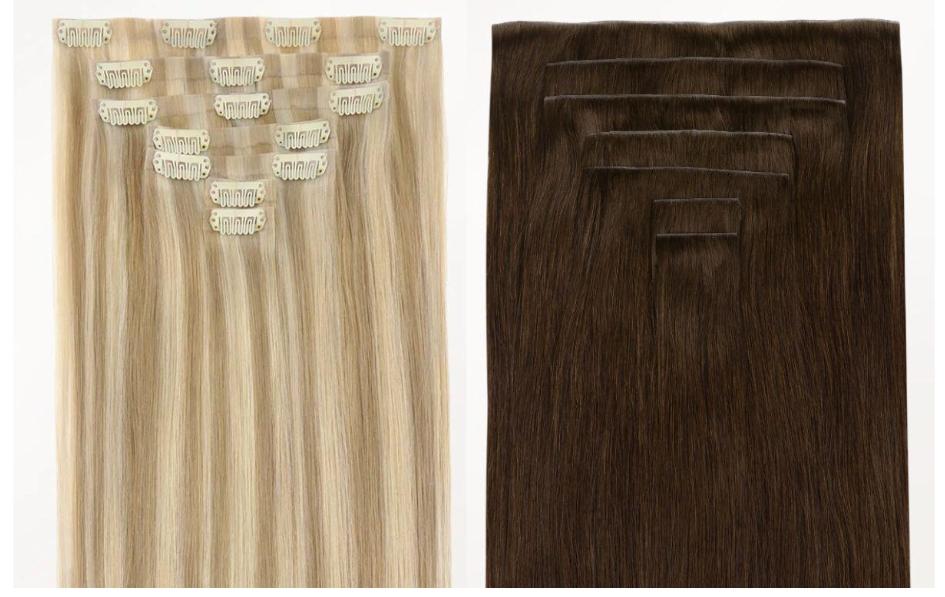
Clip-in extensions introduce localized pressure points through small attachment clips, but because they are removed daily, they avoid continuous tension exposure. This makes them one of the most flexible options in terms of styling and recovery balance.
When risk increases
Damage risk typically rises when:
- Clips are repeatedly placed in the same fragile sections
- Heavier sets are used on fine hair
- Users sleep or sweat in clip-ins
Even though the exposure is temporary, repeated stress on identical strands can still lead to breakage over time.
Some lightweight 100% Remy human hair systems are designed with weight variation in mind, allowing users to select different density levels based on natural hair thickness and styling needs.
Within this approach, GOO GOO Hair offers multiple set weights intended to support different hair types—from fine, delicate strands requiring lighter density for daily wear, to fuller sets designed for more voluminous styling and occasion-based looks. This variation allows for a more personalized fit, helping distribute clip pressure more evenly depending on how the extensions are used.
Tape-In Extensions: Semi-Permanent, Moderate Tension
Tape-in extensions sit between temporary and long-term systems.
They use adhesive strips to sandwich small sections of natural hair and typically remain in place for 6–8 weeks.
Why stylists classify them as moderate risk
Unlike temporary systems, tape-ins create continuous attachment stress over extended periods. If weight distribution is uneven or placement is too close to the scalp, this can lead to:
- Breakage at the bond site
- Localized thinning
- Adhesive-related shedding during removal
Proper professional installation and removal are critical to minimizing risk.
Modern lightweight tape systems—such as those using flat-lay construction and hypoallergenic adhesives—aim to reduce bulk and improve scalp comfort during wear.
Sew-In Extensions: Highest Continuous Tension
Sew-in extensions are widely recognized in dermatology discussions as the highest-risk method for traction-related stress.
Natural hair is first braided tightly into cornrows, and wefts are then sewn into the braids. This creates sustained tension even before extension weight is applied.
Why risk is higher
Because the base itself applies pressure to the scalp, wearers experience:
- Continuous follicle tension
- Limited scalp recovery time
- Higher strain at edges and part lines
While sew-ins can be appropriate for thick, resilient hair types under professional control, they require strict tension management and scheduled breaks.
Side-by-Side Understanding (Not a Ranking System)
| Method | Tension Profile | Wear Pattern | Recovery Time |
| Halo Wire | Minimal | Daily removal | Full daily rest |
| Clip-in | Low | Intermittent | Full daily rest |
| Tape-in | Moderate | Continuous (6–8 weeks) | Between installs |
| Sew-in | High | Continuous (6–12 weeks) | Between installs |
Rather than “best vs worst,” stylists increasingly describe these methods as different stress systems applied to the scalp over time.
Choosing the Right Method for Your Hair Type
Fine or thinning hair
Lightweight halos or carefully selected clip-ins are generally preferred due to minimal sustained tension.
Medium-density hair
Clip-ins and tape-ins can both work depending on whether flexibility or semi-permanent wear is preferred.
Thick or coarse hair
Most methods are viable, including sew-ins when professionally installed with controlled tension.
Damaged or fragile hair
Temporary, low-tension systems such as halos are typically recommended until hair strength improves.
Damage Prevention Principles Stylists Agree On
Regardless of method, professionals consistently emphasize:
- Matching extension weight to natural density
- Avoiding overnight wear for temporary systems
- Ensuring professional installation for semi-permanent methods
- Using proper solvent-based removal for adhesives
- Allowing rest cycles between installs
- Monitoring scalp discomfort as an early warning sign
Persistent pain or tightness is always treated as a signal to adjust or remove extensions.
Editorial Insight: What Actually Determines Safety
Across salon environments and scalp health discussions, one conclusion remains consistent:
Extension damage is rarely about the category itself—and almost always about how long and how intensely the hair is placed under tension.
Method matters, but behavior matters more.
Frequently Asked Questions
Which extension method causes the least damage?
Halo extensions are generally considered the lowest-tension option because they avoid direct attachment to individual strands and are removed daily, allowing full scalp recovery.
Can tape-in extensions cause long-term damage?
Tape-ins can contribute to damage if improperly installed, worn too long, or removed incorrectly. Professional application and maintenance significantly reduce this risk.
Are clip-ins safer than tape-ins?
Clip-ins typically create less continuous tension, but they still apply localized pressure. Safety depends more on weight, placement, and usage habits than the method alone.
What is the safest option for fine hair?
Lightweight halo extensions are most commonly recommended for fine hair because they create minimal tension and can be removed daily, reducing continuous stress on delicate strands. Lightweight clip-in hair extensions are also considered a safe option when worn correctly, especially for occasional use, since they allow flexible placement and avoid permanent attachment. For the best results, choose lighter-weight sets, avoid clipping into fragile areas, and rotate placement regularly to help prevent breakage.
Final Take
Hair extensions continue to evolve not only as a beauty tool, but as a technical category shaped by material design, scalp physiology, and professional styling practices.
Rather than searching for a “perfectly safe” method, stylists emphasize a more realistic approach: selecting the lowest appropriate tension system for your hair type, and maintaining disciplined care habits over time.