From Snapshots to Discovery: Protecting the Hardware Behind the Lens
The way we explore the world has fundamentally shifted. Gone are the days of fumbling with oversized paper maps or squinting at faded plaques in a language you don’t speak. Today, the smartphone in your hand is the ultimate travel companion, acting as your eyes, ears, and translator. With platforms like ChatGPT, the mystery of the unknown is solved in seconds. You see a strangely shaped spire in a hidden European alleyway or a rare wildflower on a Pacific Northwest trail, and a quick snap tells you exactly what you’re looking at. This AI-driven visual search has turned every traveler into a well-informed explorer, bridging the gap between curiosity and instant knowledge.
But there is a catch. This newfound “digital superpower” relies entirely on a piece of hardware that is notoriously fragile: a slab of glass and aluminum. When you’re leaning over a rain-slicked balcony to get that perfect angle or navigating a chaotic train station with two suitcases in hand, your phone isn’t just a device—it’s a vulnerability. One accidental slip on the pavement doesn’t just mean a cracked screen; it means losing your map, your camera, and your ability to identify the very world you came to see.
The Gritty Reality of Travel Photography
If you’ve ever spent a week shooting in the field, you know that travel photography is nothing like taking selfies in a controlled studio. It is high-stakes, high-friction work. You are pulling your phone out of your pocket or bag hundreds of times a day. You’re propping it up on jagged stone walls for a timed group shot, mounting it to shaky bike handlebars, and pushing the internal processor to its limits by running GPS, 4K video, and AI search tools simultaneously.
This level of intensity makes a standard, decorative phone case obsolete. You don’t need something that just looks good; you need what is essentially hardware insurance. A shattered lens or a charging port that fails due to a hard impact isn’t just an “inconvenience” when you’re halfway across the globe—it’s a total blackout of your travel infrastructure.
Why Military-Grade Isn’t Just Marketing
When you treat your smartphone like professional gear, you start looking for equipment that matches that ambition. This is where the ESR Military-Grade Protection series changes the game. While many brands use “military-grade” as a buzzword, the MIL-STD-810H standard is a specific set of requirements for shock absorption and durability.
ESR’s dedicated collections for iPhone cases and Samsung cases aren’t just thicker shells. They are engineered systems. By using reinforced corners and high-grade polymers that actually dissipate the energy of a drop, these cases protect the sensitive logic board and camera sensors from the shock of a terminal fall. For the traveler, this is about confidence. It’s the peace of mind that allows you to hold your phone over a canyon or a crowded street to get the shot, knowing that a fumble won’t end the trip.
Building a Mobile Ecosystem that Works
A true “digital survival tool” needs to do more than just survive a drop—it needs to make your life easier while you’re on the move. Travel is famously hard on batteries. Using an app like Lenso.ai to identify landmarks or local flora requires significant processing power, which can drain your percentage before lunch.
This is why the move toward Qi2 and MagSafe integration is so significant. A case shouldn’t be an obstacle to your power supply. ESR has managed to find that sweet spot where heavy-duty protection meets extreme magnetic strength. Their cases are designed to snap onto magnetic power banks or car mounts with a grip that far exceeds the standard. Whether you’re on a vibrating bus or a windy ferry deck, your phone stays locked to its charger or mount.
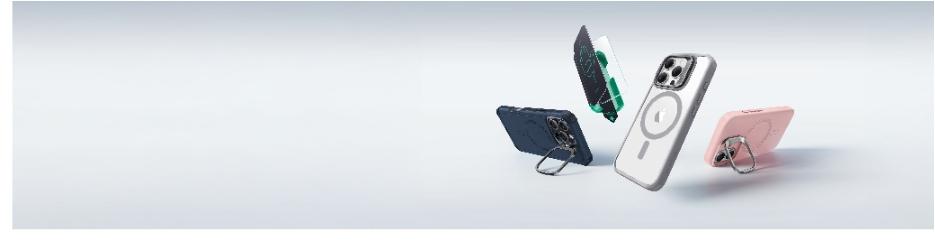
And then there’s the sheer utility of the design. Many ESR cases now feature integrated kickstands, like the Stash Stand, which is tucked discreetly around the camera lens. For a solo traveler, this is a lifesaver. It allows you to set up a stable, hands-free shot on a flat rock or a café table without needing to lug around a tripod. It’s this kind of modular thinking that elevates a simple case into a piece of essential travel tech.
Resilience for the Modern Explorer
At the end of the day, the best gear is the stuff you don’t have to think about. When your hardware is protected by military-grade standards and optimized for the latest charging technology, the “what ifs” of travel disappear. You stop worrying about the pavement and start focusing on the light, the architecture, and the discovery.
As we move deeper into 2026, AI tools will only become more integrated into how we experience new places. But no matter how “virtual” our information becomes, the physical protection of our devices remains a very real, tactile necessity. By investing in a rugged, reliable ecosystem from esrtech.com, you are ensuring that your window to the world stays wide open. Whether you’re identifying ancient ruins via visual search or just trying to find your way back to the hotel in a rainstorm, your hardware needs to be just as resilient as your curiosity.