From Kitchens to Bathrooms: What Remodeling Costs in New York in 2026
1. Empire State Realities: The 2026 New York Housing Landscape
From the pristine waters of the Finger Lakes and the rugged peaks of the Adirondacks to the bustling, historic brownstones of Brooklyn Heights and the high-rises of Manhattan, New York is a state defined by geographical and structural diversity. Navigating its real estate market in 2026 requires financial clarity. According to research, the average home value in New York has reached $832,934, representing a 3.9% increase over the previous year. As property values climb, more homeowners are choosing to reinvest in their current spaces rather than brave the competitive market. Whether you are winterizing a classic Catskills cabin against harsh northeast seasons or maximizing a compact 600-square-foot co-op on the Upper East Side, understanding the true local cost of remodeling is the first step toward a successful transformation.
2. Culinary Upgrades: The Cost of New York Kitchens
In New York’s dense urban centers and scenic suburbs alike, the kitchen remains the heart of the home. However, remodeling one in 2026 is far from a one-size-fits-all endeavor. For a cosmetic kitchen refresh—involving fresh paint, cabinet refacing, a new tile backsplash, and upgraded lighting without altering the layout—homeowners typically spend between $15,000 and $25,000.
For a more comprehensive mid-range overhaul, including semi-custom cabinetry, durable quartz countertops, and high-quality appliances, the costs average $55,000 to $85,000. If you are working within a compact footprint—common in historic apartments across Brooklyn and Queens—a small kitchen remodel generally runs between $35,000 and $85,000, depending on the quality of finishes. Homeowners can keep budgets manageable by retaining the kitchen’s original layout to avoid expensive plumbing or gas line relocations and scheduling construction during the off-season, late fall or winter when contractor demand cools down.
3. Compact Sanctuaries: Bathroom Renovation Realities
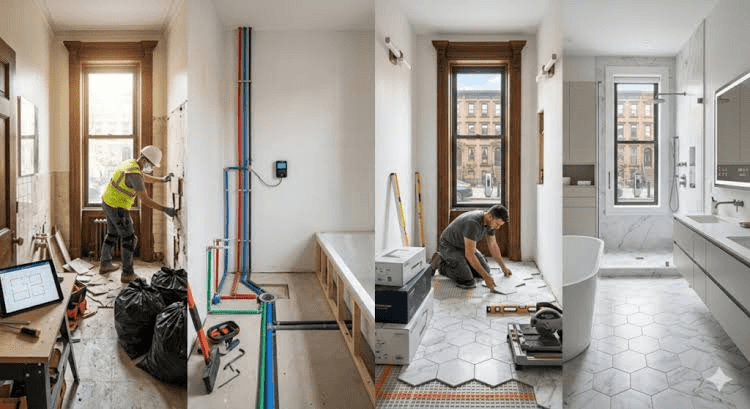
With New York’s freezing winters and humid summers, creating a durable, spa-like bathroom sanctuary is a popular way to improve daily comfort and property value. In New York City, a standard bathroom remodel averages $55,000, with typical project ranges spanning from $30,000 to $110,000+ depending on layout adjustments and finish choices.
For a standard 5×8 mid-range bathroom renovation, owners can expect to invest $25,000 to $50,000. Compact urban bathrooms (between 35 and 60 square feet) usually cost between $25,000 and $55,000 due to the higher cost per square foot of custom storage solutions, glass enclosures, and strict spatial constraints. Furthermore, apartment dwellers must navigate unique multi-family logistics. Co-op and condo boards strictly enforce rules like the “wet-over-dry” policy, which prevents moving plumbing fixtures over dry living spaces of downstairs neighbors, and limits construction hours to narrow windows, driving up overall labor rates.
4. Stripping to the Studs: The Cost of Gutting a Home and Remodeling
When outdated pre-war mechanical systems, cracked plaster, or sagging floor joists require more than cosmetic upgrades, homeowners must look at a complete overhaul. Nationally, HomeLight’s published cost data estimates that a high-end full home makeover averages around $190,000. However, the actual cost of gutting a home and remodeling in New York represents a much higher financial commitment.
A full-scale gut renovation in New York City typically runs between $350 and $750 per square foot . In Queens, a mid-range gut renovation of an 800-square-foot one-bedroom apartment costs $240,000 to $320,000, while a 1,800-square-foot single-family home in Astoria or Forest Hills can easily scale to $540,000 to $720,000. Demolishing a space down to the bare studs and rebuilding requires entirely new electrical panels (costing $5,000 to $15,000), repiping the copper plumbing (averaging $8,000 to $25,000), and complete HVAC overhauls. These extensive projects typically span anywhere from 4 to 8 months for apartments and up to 14 months for historic multi-story townhouses.
5. Navigating Regulatory Hurdles and 2026 Building Code Changes
New York’s complex regulatory landscape significantly shapes project budgets and schedules. Homeowners planning renovations in 2026 face several major building code shifts from the Department of Buildings (DOB). Most notably, a new digital attestation requirement enacted on January 26, 2026, mandates that co-op and condo boards formally log their approval within the DOB NOW online platform before any permit can be accepted. This extra administrative step adds 2 to 4 weeks to the permitting timeline.
Additionally, Local Law 128 of 2024 has raised the minimum DOB permit filing fee to $130. For those building low-rise residential properties (seven stories or fewer), a strict fossil-fuel ban went into effect on January 1, 2026, mandating all-electric systems for heating and cooking. Understanding these changes is critical, as unpermitted structural or electrical work can result in severe civil penalties and stop-work orders.
6. Smart Budgeting and Professional Alliances
Achieving a successful New York renovation requires balancing aesthetic desires with financial discipline. Homeowners should establish an emergency contingency fund of 10% to 20% of the total budget to cover hidden pre-war issues such as asbestos, water damage, or structural rot that may be uncovered once walls are opened. To maximize return on investment, prioritize high-impact areas. According to industry data, minor kitchen remodels can recoup up to 113% of their cost, while upgrading exterior siding can return up to 114%.
Finally, partnering with experienced professionals is crucial. Engaging with savvy New York realtors early in the planning phase can provide invaluable neighborhood-specific insights on which finishes yield the highest resale values. Coupling their market guidance with licensed, insured general contractors who understand local co-op alteration agreements and municipal codes will protect your investment, ensuring your 2026 remodel remains a dream rather than a regulatory headache.