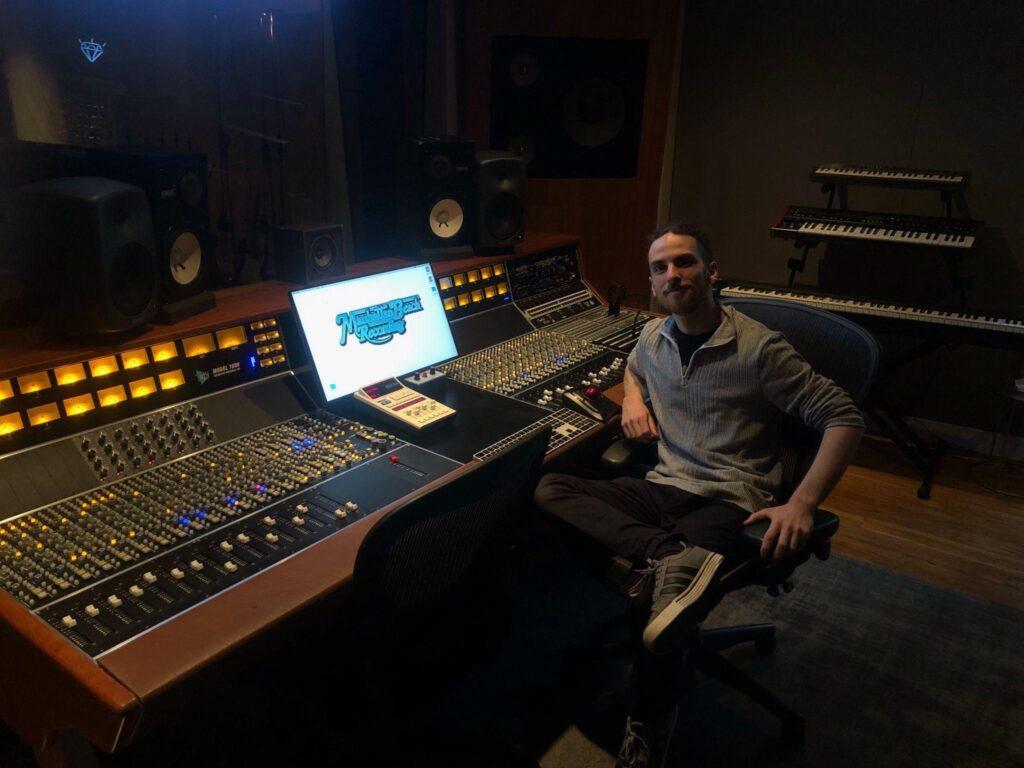
From a Small French Town to New York’s Premier Recording Studios
Sound engineer Guénolé Georgelin has recorded Nas, contributed to major Mass Appeal hip-hop releases, and built a career that proves you do not need to be born into the music industry to earn a place in the room.
At twelve years old, Guénolé Georgelin was already listening differently.
He was helping his father build hi-fi speakers and amplifiers in his workshop in the French countryside. He also took guitar lessons.
Years later, he would find himself in New York City, where he now works as a recording engineer at Manhattan Beach Recording Studios, one of the city’s important spaces for rap and R&B.
Paris, Then New York
Georgelin studied in Paris at ESRA, the École Supérieure de Réalisation Audiovisuelle.
For Georgelin, that shift to this competitive environment was energizing. Sound was no longer only a fascination. He realized it could become a profession.
He began taking opportunities early. During his freshman year, he volunteered for sound mixing and recording work on film sets, attended sessions with graduating students, took internships, and started building confidence in professional environments.
His first credit as a re-recording mixer came on Jerkyflow, directed by Adnane Rami and released in 2021. The short film went on to receive recognition across Europe and North Africa, including official selections at Venezia Shorts in Italy and the Paris Play Film Festival, as well as a win at the Anglet Short Film Festival in 2022.
Georgelin later moved to New York through his school’s program and worked as sound supervisor on Ruby Shella, a feature by director Antoine Zimmerman. The film won at the NY Independent Cinema Awards in 2023 and was officially selected for the Silicon Valley Queer Festival.
Film taught him restraint, timing, and collaboration. It showed him how sound can shape what an audience feels before they can explain why. But music had always been where his earliest questions lived. So he made the move.
Into the Music Industry
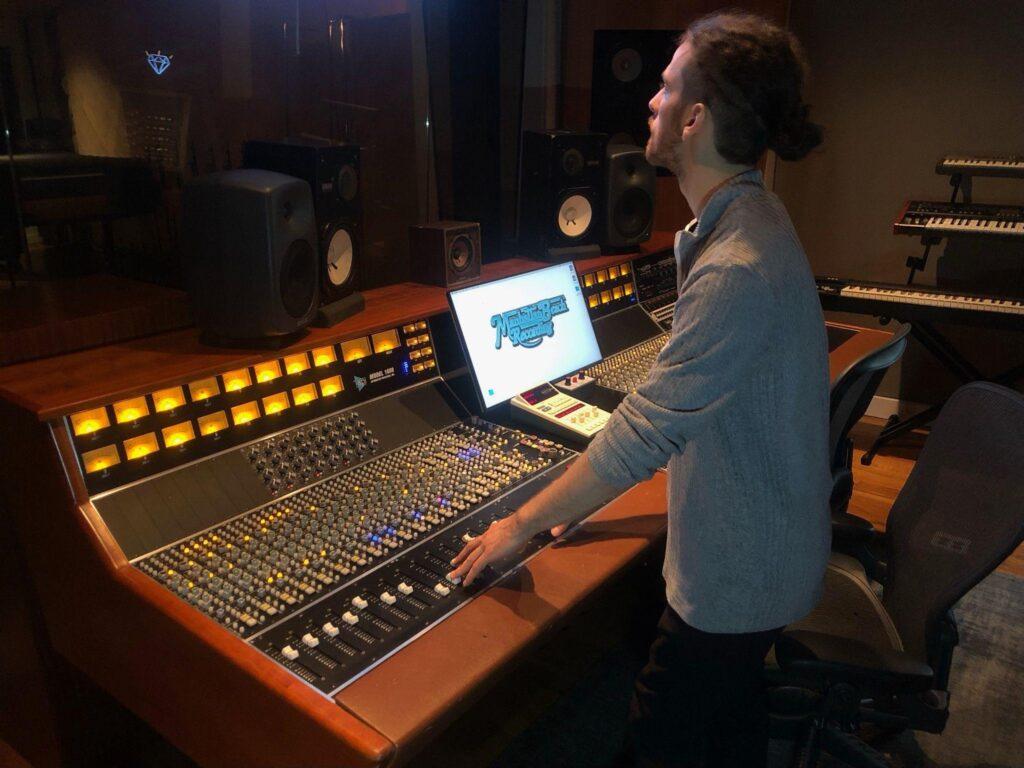
After Ruby Shella, Georgelin shifted toward music and became a recording engineer at Manhattan Beach Recording Studios, a position he still holds.
The role requires more than technical knowledge. An artist could ask for something that sounds different, warmer, heavier or closer to a specific era. The engineer needs to understand what they want, implement fast, and keep the session moving without losing the artist’s momentum.
In 2025, his work placed him inside two major releases from hip-hop label Mass Appeal. On “The Omerta” by Raekwon, Georgelin served as recording engineer and recorded Nas’s verse. He also worked on three tracks from the final Mobb Deep album: “Mr Magik,” “Discontinued,” and “Look at Me” recording the instrumentals.
In sessions like those, an engineer is not simply pressing record. He is being trusted with the sound of artists whose work already carries history. For someone who first became fascinated by speaker cones moving in a workshop, that trust represents a long path from curiosity to craft.
That same year, Georgelin was invited back to ESRA to sit on the jury for final student project evaluations. His fellow jurors included Albert Rudnitsky, dialog consultant on Sean Baker’s Anora, which won the Palme d’Or at Cannes, and Emmy Award-winning cinematographer Olivier Sarbil.
The Art of Listening
Ask Georgelin what makes a great sound engineer, and his answer comes quickly: listening.
Not just to the track, but to the artist: what they say, what they mean, and sometimes what they cannot yet put into words.
“I always try to translate the artist’s vision, their notes or musical tastes, to the speaker,” he explains.
This means not only understanding sound, but the meaning behind it. Speed is important, and studio time is limited. Artists are also not always in the room for long.
“If an artist is in the studio for two hours and needs to have a track mixed from raw to streaming-ready, there’s no time to make a plan,” he says. “I need to jump straight into it.”
Communication matters just as much. A good engineer has to read the room as well as the levels. Sometimes the clearest signal that a track is working is not a technical measurement, but a shift in body language.
“If I’m in the studio and I see an artist vibing to the track I worked on, then I know I’ve been successful,” Georgelin says.
Advice for the Next Generation
Georgelin says he used to think that to enter the recording industry, you had to grow up in a music family, spend your childhood around studios, know artists, and live in a major city. None of that was true for him. He came from a small town with almost no music scene or industry access.
What he had was a love for recording, a willingness to learn, and enough patience to keep following the path even when it was not obvious.
“I have been in the industry for eight years only now,” he says, “and this is only a start.”
His advice for aspiring sound engineers is that they should care deeply about music, practice, and be patient enough to learn and develop.
For Georgelin, it began with a question many people might have ignored: why does a speaker move when the kick drum hits?
He kept listening from there.
Connect with Guénolé Georgelin on LinkedIn.