Food for Memorials: Thoughtful Menu Ideas for Family and Friends
Organizing a memorial involves many important details. Along with selecting the location, music, readings, flowers, photographs, and gravestones, someone may also need to arrange refreshments for the people attending.
The best food for memorials is comforting, convenient, and easy to share. Guests do not expect an elaborate banquet. They generally appreciate familiar dishes, simple refreshments, and a welcoming place where they can sit, talk, and support one another.
Whether the gathering takes place at a family home, community hall, restaurant, house of worship, or memorial venue, the menu should be manageable for those organizing it. The following ideas can help create a thoughtful reception without placing unnecessary pressure on the grieving family.
Key Takeaways
- Select food that can be prepared or ordered before the day of the memorial.
- Consider the service time, venue, guest count, and available kitchen facilities.
- Offer a mix of filling dishes, lighter choices, desserts, and beverages.
- Ask friends, relatives, or a caterer to manage preparation and cleanup.
- Include a meaningful family recipe or favorite food when appropriate.
Why Serve Food at a Memorial?
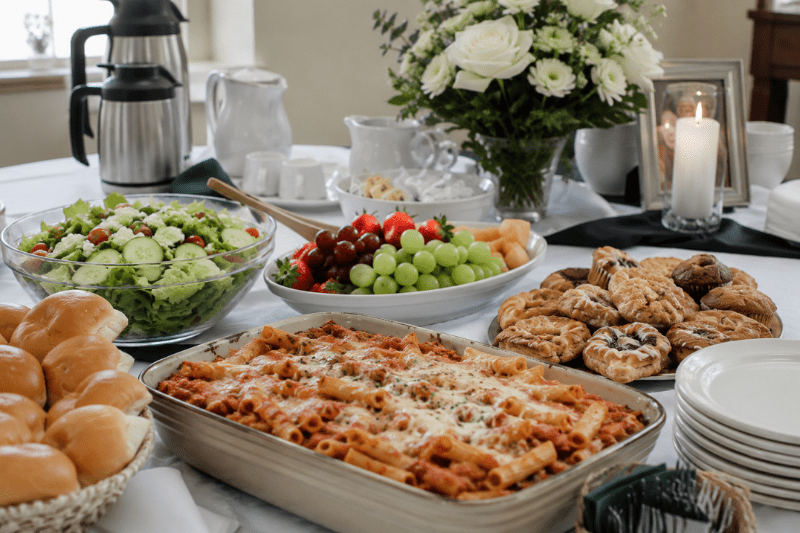
Food is not the central focus of a memorial, but it can play an important supporting role.
Guests may have traveled a long distance, attended several parts of a funeral, or spent many hours away from home. Even when people do not feel especially hungry, a drink and something small to eat can help them regain energy.
A reception also gives family and friends additional time together. The formal service may leave little opportunity for conversation. Once guests gather around a table, they can speak more freely, offer condolences, and share stories about the person being remembered.
For the immediate family, this time can be especially valuable. Hearing a favorite story, meeting an old friend, or learning something new about a loved one can bring comfort during a difficult day.
Memorial food is therefore about more than feeding a group. It supports hospitality, connection, and remembrance.
1. A Light Reception With Small Bites
A light reception is a suitable choice when the memorial is held between regular mealtimes or when the gathering will be relatively brief.
Small foods allow guests to eat without sitting down for a full meal. They are also easier to arrange in venues with limited tables, seating, or kitchen equipment.
Possible choices include:
- Mini croissant sandwiches
- Savory pastry bites
- Cheese cubes with crackers
- Fresh fruit cups
- Vegetable cups with dip
- Chicken or vegetable skewers
- Small wraps
- Bruschetta
- Olives and marinated vegetables
- Bite-sized cookies or bars
Choose foods that are easy to pick up and unlikely to drip, crumble excessively, or require several utensils. Guests may be holding a drink, greeting relatives, or moving between conversations.
A light menu does not need many different items. Two or three savory choices, a fresh option, one dessert, and several beverages can be enough.
Small labels can help guests identify each food. They are particularly useful for vegetarian dishes and foods containing nuts, dairy, eggs, seafood, or gluten.
2. A Warm Family-Style Meal
A warm meal can provide a sense of comfort, especially when the memorial takes place during colder weather or around lunch or dinner.
Family-style food should be straightforward rather than formal. Choose dishes that can be prepared in larger quantities, kept warm, and served without complicated plating.
Appropriate main dishes may include:
- Herb-roasted chicken
- Sliced turkey with gravy
- Baked ham
- Beef stew
- Stuffed peppers
- Vegetable lasagna
- Braised beef
- Baked fish
- Meatloaf
- Mushroom pasta
Pair the main dish with two or three simple sides. Mashed potatoes, rice pilaf, roasted vegetables, green beans, mixed salad, and soft rolls are dependable choices.
Serving food family-style can encourage conversation because guests share dishes at the table. However, it requires enough seating, serving bowls, and volunteers to refill food.
For larger groups, placing the same dishes on a buffet may be more practical.
3. Soup, Bread, and Sandwiches
A soup-and-sandwich menu is comforting without being too heavy. It works especially well for an autumn or winter memorial, a gathering at home, or a reception with an uncertain number of guests.
Soups that are easy to serve include:
- Chicken and rice soup
- Tomato soup
- Vegetable soup
- Potato and leek soup
- Lentil soup
- Beef and barley soup
- Creamy mushroom soup
- White bean soup
Offer one meat-based soup and one vegetarian choice when possible. Keep each soup warm in a slow cooker or covered warmer, and place a ladle beside every container.
Sandwiches can be prepared in advance and cut into smaller portions. Turkey and cranberry, roast beef, chicken salad, grilled vegetables, cheese and tomato, or egg salad are all suitable fillings.
Bread, crackers, and a simple green salad can complete the meal. A tray of cookies or slices of loaf cake provides an easy dessert.
This menu is flexible because guests can choose a light bowl of soup, a sandwich, or both.
4. A Memorial Brunch
A memorial held in the morning may be followed by breakfast or brunch rather than a traditional luncheon.
Brunch foods tend to be familiar, affordable, and easy to prepare in advance. They can also feel less formal, which may suit a relaxed celebration of life.
Menu ideas include:
- Vegetable frittata
- Breakfast strata
- Mini bagels and spreads
- Savory muffins
- Yogurt cups
- Granola
- Fresh berries
- Sliced melon
- Scones
- Cinnamon bread
- Oatmeal bars
A warm egg dish can serve as the centerpiece of the menu. Add fruit, bread, and one or two baked items to create a balanced spread.
Coffee is usually expected at a morning reception, but it should not be the only beverage. Provide decaffeinated coffee, hot tea, juice, and water. Nondairy milk or creamer can also be helpful.
Place beverages on a separate table so guests preparing coffee do not interrupt the food line.
5. An Afternoon Tea-Style Gathering
An afternoon gathering can be served in a lighter style, particularly when it begins after lunch and ends before dinner.
Tea-style food feels welcoming and can be presented neatly without requiring a large buffet. It is also suitable for a smaller memorial held in a private home or reception room.
A simple afternoon menu might include:
- Cucumber sandwiches
- Smoked salmon bites
- Savory scones
- Miniature quiches
- Fruit tarts
- Shortbread
- Lemon loaf
- Fresh berries
- Tea
- Coffee
- Lemonade
- Sparkling water
The food does not need to follow formal afternoon tea traditions. The idea is simply to provide small savory foods, modest sweets, and warm or cold drinks.
Select items that can remain attractive on the table and be replenished as needed. Avoid putting out every perishable item at once.
6. A Casual Buffet
A buffet is one of the most flexible choices for a larger memorial reception. Guests can select their preferred foods, and the family does not need to arrange formal table service.
A balanced buffet can include:
- One meat-based main dish
- One vegetarian main dish
- Two vegetable or grain sides
- One salad
- Bread
- Dessert
- Hot and cold drinks
For example, a buffet could feature baked chicken, spinach and ricotta pasta, roasted vegetables, couscous salad, rolls, fruit crumble, coffee, tea, and water.
Another option is a Mediterranean-inspired spread with grilled chicken, falafel, rice, hummus, flatbread, cucumber salad, olives, and small pastries.
The best buffet dishes remain appealing even when served over a period of time. Avoid foods that dry out quickly, require last-minute frying, or depend on precise presentation.
Arrange the buffet in the order guests will use it. Put plates first, followed by main dishes, sides, bread, and cutlery. Desserts and drinks should be placed elsewhere when space allows.
7. A Menu Based on a Favorite Meal
Food can make a memorial feel personal when it reflects something the person genuinely enjoyed.
The menu might include a favorite soup, a regional dish, a beloved dessert, or food connected to a family tradition. Someone who loved weekend breakfasts could be remembered with a brunch. A person known for summer cookouts might inspire a casual menu of grilled food, salads, and fruit.
The meal does not have to recreate an entire event from the person’s life. One familiar dish can be enough to create recognition and conversation.
A small card beside the food can explain its significance. For example, it might note that a cake was served at every family birthday or that a particular dish came from a treasured handwritten recipe.
Personal touches should remain simple and respectful. The purpose is to bring back warm memories, not to create additional work for the family.
What to Consider When Choosing Memorial Food
Many different menus can work well, but the right one depends on the circumstances surrounding the gathering.
The Time of the Service
A morning service may call for coffee, fruit, and brunch foods. A midday reception should offer lunch, while an evening memorial generally requires a more filling meal.
When the gathering falls between mealtimes, lighter refreshments may be sufficient.
The Reception Location
Find out what the venue allows before ordering food. Some facilities have full kitchens, while others provide only tables and electrical outlets.
Ask about refrigeration, ovens, warming equipment, water access, waste disposal, and catering rules. These details can determine whether hot food, cold platters, or individually packaged items are most practical.
The Number of Guests
Memorial attendance can be difficult to estimate. Some people may attend the service without staying for food, while others may arrive only for the reception.
Use responses from relatives, friends, community groups, and online notices to create a reasonable estimate. Prepare a modest amount of extra food, but avoid ordering far more than the group is likely to need.
The Family’s Budget
A thoughtful reception does not need to be expensive. Soup, sandwiches, pasta, salad, fruit, baked goods, and drinks can feed a group without requiring a formal caterer.
When comparing options, include delivery fees, service charges, disposable plates, utensils, ice, beverages, and cleanup supplies.
Dietary Requirements
Offer at least one substantial vegetarian option. Depending on the guest list, it may also be helpful to include gluten-free, dairy-free, or plant-based foods.
Label major ingredients and provide a separate utensil for every dish. Clear labeling allows guests to make their own informed decisions without repeatedly questioning the family.
Should the Food Be Homemade or Catered?
Homemade food can be meaningful and affordable, but it also requires time and organization. The immediate family should not feel responsible for cooking a large meal while planning a memorial.
Friends, neighbors, relatives, or members of a faith community may be able to prepare dishes, collect supplies, and organize the serving table.
Catering can reduce stress, especially for larger gatherings. Restaurants, grocery stores, and independent caterers may offer hot trays, sandwich packages, salads, desserts, and beverage service.
Before placing an order, confirm whether delivery, setup, plates, napkins, serving utensils, and warming equipment are included.
A restaurant reception is another option. It removes most preparation and cleanup, although the family may need to reserve space and confirm the number of guests in advance.
Organizing Help From Others
People often want to assist after a death but may not know what would be useful. Specific requests make it easier for them to help.
One person can coordinate the food and assign tasks such as:
- Collecting the catering order
- Bringing drinks and ice
- Setting up the tables
- Labeling dishes
- Watching food temperatures
- Replacing serving utensils
- Clearing used plates
- Packing safe leftovers
Dividing the work prevents the responsibility from falling on one person. It also gives friends and extended relatives a practical way to support the family.
Choosing Food With Care
There is no single correct menu for a memorial. A small table with coffee, sandwiches, and cake can be just as appropriate as a catered buffet.
The most important consideration is whether the food is easy to manage and suitable for the people attending. It should support the gathering rather than create another source of stress.
Food for memorials offers nourishment, but it also gives people a reason to remain together. Around the table, guests may exchange stories, reconnect with relatives, and remember ordinary moments that made a loved one special.
A simple menu, thoughtfully chosen and shared with care, can provide comfort when it is needed most.