Exploring Men’s Mental Health and Masculinity: A Q&A with Author Itianu Emiaj
Traditional expectations of manhood often demand that men provide, protect, and remain strong at all times. This pressure to hide emotions and face struggles alone creates deep challenges for men’s mental health. Society rarely offers a safe space for men to discuss trauma, emotional struggles, or the weight of these rigid societal roles.
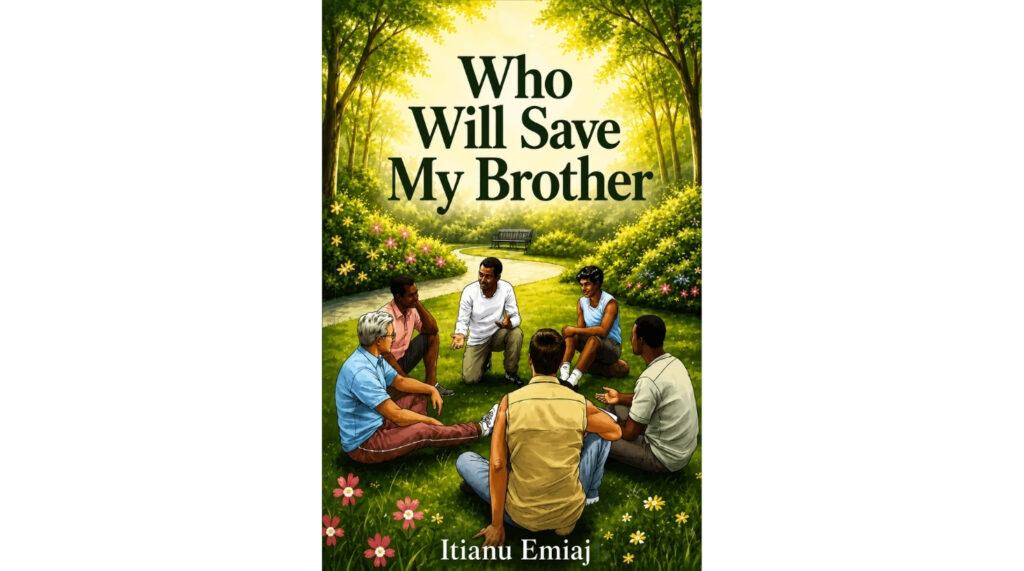
Mozambican author Itianu Emiaj tackles these silent battles in her contemporary fiction book, Who Will Save My Brother?. Drawing inspiration from everyday conversations and lived experiences, Emiaj invites readers to engage with her characters to build compassion and understanding. Today, we sit down with her to discuss the story of Kobe, the complexities of family relationships, and the courage it takes to ask for help.
Q: Your inspiration comes from the lived experiences of family, friends, and everyday conversations. How did these real-world interactions shape the story of Kobe and the men he meets in Who Will Save My Brother?
Itianu Emiaj: As you already know, with my books I try to discuss, with compassion, issues that most of time we, as a society, take them for granted such as the challenging beliefs about motherhood, marriage, violence, among others which often times are met with “It’s like this, is has always been like this, it’s our culture” and all sorts of reasoning. In addition, many times I was confronted with “what about men”? There are issues affecting men “alone”. Therefore, because I’m a daughter, a cousin, a friend, a partner of heterosexual men, I took the challenge of writing a book about issues affecting men to show them that I see them, I hear them, I see their struggles and I love them dearly. A sort of a love letter if I may.
For this book, the inspiration for the different characters came mainly from observing the lived experience of male family members, including my dad who died from cancer. It also draws from conversations and lived experiences of my male friends, some whom I lost due to other diseases, accidents due to drink and drive as well as suicide. Also observing and navigating heterosexual relationships as well as engaging in conversations with men in my work informed the book. Therefore, all the stories in the book were chapped by real men behind it.
Q: The book examines the heavy expectations placed on men—the need to provide, protect, and hide emotions. Why do you think society still struggles to let men show vulnerability?
Itianu Emiaj: We live in a world where boys are socialized to become machines so to speak. They are not allowed to be human. In the words of bell hooks, “…they have to engage in acts of psychic self-mutilation that kill off the emotional part of themselves. And if an individual is not successful in emotionally crippling himself, he can count on patriarchal men to enact rituals of power that will assault his self-esteem”. This is why society struggles to make men show vulnerability and if they dare to do so, they will be bullied until they succeed.
The first time that I truly understood what she meant by that was the moment where I equally realised the danger of peer pressure or even just the perception of it, yes, at times is not even real. Many years ago, I noticed that with the same men in different contexts having the same conversation they would say different and contradictory things. You must be thinking “what does she mean by that?”. Let me give you an example. A couple of times I was in a one-on-one conversation with my dear male friends, and I would ask them how they felt about being the provider, protector, or other trait perceived as male or any expectation that society and themselves have for being men. They would give me the most honest opinion about how they felt and often was that they did not enjoy the pressure, the pressure to have everything figured out all the time, shared their fears and insecurities. Because it was a safe space without fear of judgement, they spoke from their hearts. However, the same men when in a group with other men and having the same conversation, would contradict what they had told me privately and suddenly they would say things that they don’t agree with but because the group members were vigorously saying the same, they felt the need to agree. The funny yet sad part is that probably in the end none of them agreed with what they were saying but none of them had the courage to speak up with fear of being bullied. Nonetheless, through my work, I’ve also seen the wonders that come with creating a safe space, free from judgement for a group of men, particularly when they don’t know each other. It gives the same result; they allow themselves to be truly honest about how they feel about being a man, showing that at the end they are just human and should be able to live as such. Plus, the contexts have significantly changed throughout the years so the need to rethink and maybe change elements of the so-called culture of what it means to be a man that is doing more harm than being of service to us, particularly to men, should be revisited.
Another thing that I believe keeps men trapped and fearful of being vulnerable is the understanding of power as domination over others. The moment one realises that power comes in many ways, shapes and forms, that it comes from within, it can be shared, and it can be beautifully balanced with care, sensitivity, understanding and gentleness, then men will be allowed and comfortable being vulnerable and, in that sense, being human. The reality is that in the end, many of the issues facing men derive from the impossibility of stripping them of their humanity. Therefore, we have almost half of the population in the world pretending and trying as hard as they can to fit an impossible model which is to be a machine in a human body. The math doesn’t add up, and men are dealing with the painful mental health consequences of that.
Q: You often write about complex topics to reduce politicization and build bridges between people. How does this book attempt to spark healthy, everyday discussions about men’s mental health?
Itianu Emiaj: I believe that my role as a writer is to create space for honest and hard conversations to happen in a safe and free of judgement place. The book takes on some of the most critical traits perceived as male and let men unpack them, deal with the contradictions, the pressure and disappointment and link all of that to their own mental, physical health and ultimately their will to live. As I mentioned before, the book is based on real people, conversations, observation and lived experiences. I can empathize with their pain and struggles but I’m not a man therefore I just put out there what it came to me, from them. It is about men reflecting on what it will be necessary for them to get into a point where they will choose their humanity. More than presenting answers, the book provides space for the conversations to happen in a context where there is no one size fits all and all I give is my love and respect for them. I hope they will receive it once they read the book and choose their humanity. I think that I can comfortably say that we (women and other gender identities who are also on the receiving side of the negative consequences of the male traits), are tired of engaging with the pretending machines.
Q: Family relationships play a large role in this narrative. How do the connections between the characters help illustrate the personal growth they go through?
Itianu Emiaj: Honestly, I wouldn’t say that the book illustrates the personal growth the characters go through given that in this particular case it would bear the risk, in my view, of sounding judgemental. Who gets to decide what’s growth in a context where people are genuinely trying the best way that they can to fit into a model when the problem is the model itself? And if/when they dare not to follow such a model, they face serious consequences. It’s a tricky business for the growth reference. The book presents characters that are complex, some with similar and yet different life experiences, single and married with children, young and old therefore exploring intergenerational differences in situations where they needed or thought that they needed to be the providers, protectors, strong, take risks and the consequences of that. They do not navigate alone but with their loved ones (families and friends) and therefore get to reflect on how being a man, husband, son, father or friend presents itself within these relationships as well. When dealing with mental health, some have support, others don’t, it explores their fears, insecurities and all that goes with it. However, it does it with kindness and care.
Q: A central theme of the book is the courage it takes to ask for help. What do you hope readers take away from Kobe’s journey?
Itianu Emiaj: The book premise is that, in a world as diverse as the one that we live in, pretending that we are all the same and that in similar situations we will act the same is a fallacy. Therefore, I hope that each reader will take from the different characters what suits him the best, which, in my view, it’s the beauty of it. Kobe is one of many characters and different people will identify themselves with different characters in the book. However, what they need might be different from what the character did and that’s the whole point. They will be able to take the lessons that fit their needs and do differently. For others who feel inadequate or are already doing differently despite the fear of the consequences for daring to be different, the book will be reassuring in the sense that will show them that in fact there is nothing wrong with how they fell and that indeed is possible to live a more loving and caring life being a man. In the end I hope that they realise that they are not alone and another way is possible simply because they are loved.
Who Will Save My Brother? offers a heartfelt look at the quiet emotional battles many men face every day. By exploring the pressures of traditional manhood, Emiaj highlights the need for vulnerability and open communication. Her storytelling strips away the politics surrounding mental health, focusing instead on shared human experiences and empathy.
As conversations around mental health continue to evolve, narratives that challenge outdated gender expectations are highly necessary. Books like this provide a starting point for families and friends to better understand the men in their lives. Emiaj proves that true strength lies not in suffering alone, but in having the bravery to seek support.
Get a copy at https://itianu-emiaj.sellfy.store/p/who-will-save-my-brother/