Essential Tips for a Safe, Efficient, and Long-Lasting Gas Log Installation
Gas fireplaces can add warmth, comfort, and visual appeal to a home while offering a convenient alternative to traditional wood-burning fireplaces. They are available in many designs, sizes, and operating styles, making it possible to create a fireplace that suits different interior preferences. However, installing a gas log system requires careful planning because the appliance involves combustible fuel, heat, and specialized components. A properly completed gas long installation can support dependable operation when the correct equipment, connections, ventilation, and safety procedures are used. Understanding the installation process can help property owners make informed choices and avoid common mistakes that may affect performance or safety.
Understanding Gas Log Systems
Gas logs are specially designed components that create the appearance of a traditional wood fire while operating with a gas-powered burner system. They are commonly manufactured from heat-resistant ceramic or similar materials and are available in different shapes, textures, colors, and sizes. Some systems are primarily intended for decorative purposes, while others are designed to provide supplemental heat. Before choosing a system, it is important to understand the existing fireplace, fuel type, ventilation arrangement, and manufacturer’s requirements. Selecting compatible equipment is one of the most important steps toward creating a dependable and attractive fireplace.
Why Proper Installation Is Important
A gas fireplace should never be treated as a simple decorative project because it involves a fuel supply and combustion. Incorrect connections, improper burner positioning, unsuitable logs, inadequate ventilation, or incorrect controls can create serious operating problems. Professional installation allows the entire system to be evaluated before it is placed into regular use. A qualified technician can determine whether the fireplace is suitable, confirm compatibility between components, and identify modifications that may be necessary. Proper workmanship can also reduce the possibility of leaks, poor flame performance, and other installation-related concerns.
Choosing Suitable Gas Logs
Gas logs are available in numerous styles, allowing homeowners to select an appearance that complements the fireplace and surrounding room. Some designs resemble oak, birch, maple, or other types of natural wood, while others offer contemporary shapes and finishes. The size of the logs should be appropriate for the firebox and burner system. Oversized or incompatible logs may interfere with the intended flame pattern or installation requirements. Property owners should consider both appearance and technical compatibility when making a selection. Manufacturer specifications should always be reviewed before purchasing or installing gas logs.
Understanding Different System Types
Gas log systems can have different operating and ventilation requirements. Some systems are designed for fireplaces with approved venting, while others are manufactured for specific applications with different ventilation characteristics. These systems should not be considered interchangeable. A fireplace designed for one type of gas log arrangement may not be appropriate for another without proper evaluation and modifications. Understanding the difference between available systems helps property owners avoid buying equipment that is unsuitable for their fireplace. A qualified professional can explain the advantages, limitations, and requirements of each appropriate option.
Inspecting the Existing Fireplace
Before beginning gas long installation, the existing fireplace should be inspected carefully. The firebox, chimney or venting system, hearth, surrounding materials, and available gas supply can all influence the project. Cracks, deteriorated masonry, damaged components, excessive debris, or other structural problems should be addressed before the new system is installed. If the fireplace has remained unused for an extended period, additional inspection may be appropriate. Starting with a thorough assessment helps prevent unexpected complications and provides a safer foundation for the installation. It also allows professionals to determine whether repairs are necessary before new equipment is added.
Evaluating the Gas Supply
The gas supply must be compatible with the selected fireplace equipment. Different systems may be designed for different fuel types, and the supply pressure and capacity must meet the manufacturer’s specifications. If the available gas supply is inadequate, the fireplace may not operate correctly or may experience inconsistent performance. A qualified technician can evaluate the existing piping and determine whether it can support the new appliance. Property owners should never modify gas piping or pressure controls without suitable professional knowledge. Proper supply planning is essential for reliable operation and safe combustion.
Importance of Professional Gas Connections
Gas connections require careful attention because even a small installation error can have significant consequences. Connections must use appropriate components and be installed according to applicable requirements and manufacturer instructions. Shutoff valves, connectors, fittings, and supply lines should be suitable for the intended application. A professional can also verify that the connection allows the appliance to be serviced appropriately in the future. Property owners should avoid improvised fittings or unapproved components. Professional workmanship provides greater confidence that the fuel delivery system has been installed correctly and tested before use.
Correct Placement of Gas Logs
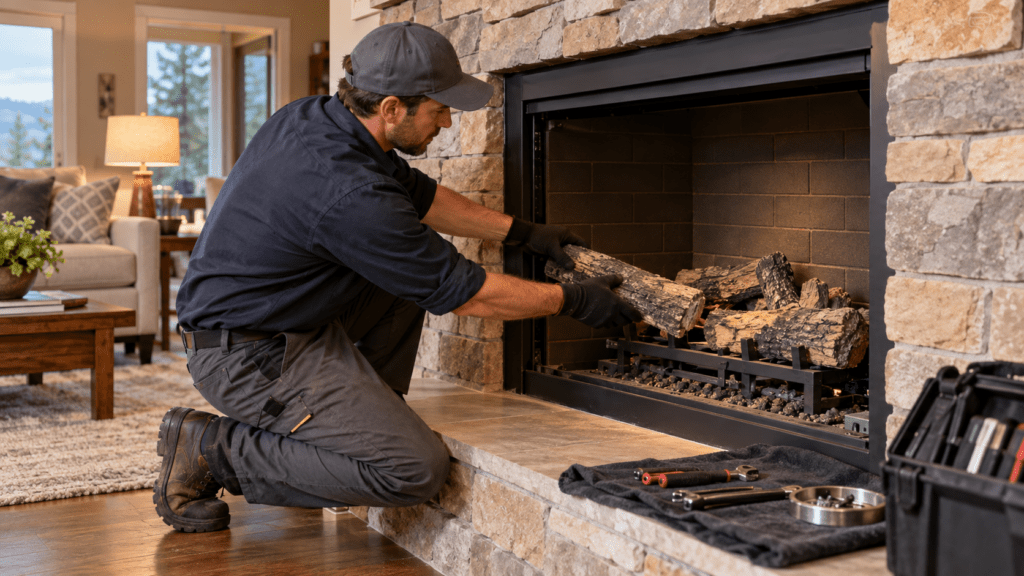
The positioning of gas logs plays an important role in the appearance and operation of the fireplace. Most log sets are designed with specific placement instructions that determine how the flames interact with the decorative pieces. Moving the logs into different positions can change the flame pattern and may interfere with the intended operation of the burner. Property owners should therefore avoid rearranging the logs simply to achieve a different appearance. If the logs appear unstable or incorrectly positioned, a qualified professional should be consulted. Correct placement helps preserve both the intended appearance and functionality of the system.
Creating a Realistic Fireplace Appearance
One of the main reasons people choose gas logs is their realistic appearance. Modern products can closely resemble natural wood, complete with textured surfaces, detailed coloring, and carefully shaped branches. The burner can also be designed to create flames that move naturally around the logs. The final appearance depends on the quality of the components and their correct arrangement. Property owners should choose a style that fits the existing fireplace and room design. Proper placement is particularly important because even high-quality logs may look unnatural if they are positioned incorrectly.
Inspecting the Burner
The burner is one of the most important components of a gas fireplace because it controls the distribution of fuel and produces the flame. During installation, it should be inspected for damage, contamination, or other issues that could affect performance. Burner openings should remain clear, and the burner should be positioned according to the manufacturer’s instructions. Property owners should never attempt to enlarge openings, alter burner components, or make unauthorized adjustments. If the flame does not appear normal after installation, professional evaluation should be arranged. Proper burner maintenance can support consistent and dependable fireplace operation.
Understanding Flame Behavior
The flame provides a visible indication of how the fireplace is operating, although appearance alone cannot diagnose a specific issue. Property owners may notice changes in flame height, color, distribution, or movement. Significant changes from the normal operating pattern should not be ignored. The cause could involve the burner, fuel supply, ventilation, or another component. Users should not attempt to adjust gas controls simply to make the flame look larger or more attractive. If the flame behaves differently from the manufacturer’s expected pattern, a qualified technician should evaluate the system.
Importance of Proper Ventilation
Ventilation is a critical consideration for gas-burning appliances because combustion produces gases that must be managed correctly. The ventilation requirements depend on the type of fireplace and gas log system being used. Approved venting should remain unobstructed and should never be modified without professional guidance. Property owners should understand the ventilation requirements for their particular system before operating it. If the fireplace has a chimney or flue, its condition may also need to be evaluated. Proper ventilation supports the intended operation of the appliance and is an important part of responsible fireplace maintenance.
Inspecting the Chimney and Flue
For systems that require a chimney or flue, these components should be evaluated before the fireplace is placed into service. Blockages, damaged liners, deteriorated masonry, cracks, and accumulated debris can affect the performance of the system. Chimneys that have not been used for a long time may require additional attention before operation. A professional can inspect accessible areas and determine whether further service is needed. Any necessary repairs should be completed before the gas fireplace is regularly operated. This step can help identify potential concerns that may otherwise remain hidden.
Testing After Installation
Once gas long installation has been completed, the system should be tested before normal use. Testing may include checking connections, controls, ignition, flame behavior, gas supply, and other relevant components. Appropriate testing helps verify that the equipment is operating according to its intended design. A fireplace should not be considered ready simply because the burner lights successfully. A thorough final assessment can identify problems that may not be obvious during initial operation. Qualified professionals should perform any specialized testing required for the specific system and installation.
Recognizing Potential Gas Problems
Property owners should be familiar with signs that may indicate a gas-related problem. A strong gas odor, hissing sound, unexpected flame behavior, or repeated ignition issue should receive immediate attention. If a gas leak is suspected, the appliance should not be operated, and occupants should follow appropriate emergency safety guidance. Property owners should never attempt to locate or repair a suspected gas leak themselves. Professional assistance should be obtained promptly. Recognizing warning signs and responding appropriately can help reduce the risk associated with an unexpected gas system problem.
Keeping the Fireplace Area Safe
The area around a gas fireplace should remain free of items that could interfere with safe operation. Curtains, furniture, decorations, rugs, and other household materials should be positioned according to the manufacturer’s clearance recommendations. Combustible objects should not be placed too close to hot surfaces. Children and pets should also be protected from hot glass and other heated components. Maintaining a clear area helps reduce accidental contact and heat-related damage. Property owners should review the fireplace manual for specific clearance requirements because they can vary between models and installation types.
Preparing for Seasonal Use
Many fireplaces are used more frequently during colder months and remain inactive during warmer periods. Before beginning regular seasonal operation, homeowners can perform a visual check of accessible areas. Dust, cobwebs, and debris can be removed according to the manufacturer’s cleaning recommendations. The logs, glass, burner area, surrounding surfaces, and visible ventilation components should be examined for obvious changes. If damage, unusual odors, or other concerns are noticed, professional service should be arranged before regular use begins. Seasonal preparation can help identify problems before they interrupt normal fireplace operation.
Routine Fireplace Maintenance
Regular maintenance helps preserve the appearance and functionality of a gas fireplace. Dust can accumulate on decorative logs, glass panels, exterior surfaces, and surrounding areas. Cleaning methods should always follow manufacturer recommendations because different materials may require different products or techniques. Liquids and cleaning products should never be sprayed directly into burner assemblies, gas connections, controls, or electrical components. Routine maintenance should focus on safe, accessible areas. Specialized servicing should be left to qualified professionals who understand the appliance and its components.
Cleaning the Glass Front
Many gas fireplaces feature a glass enclosure that can become cloudy or develop deposits over time. The glass should always be completely cool before cleaning. Manufacturers may recommend specific products designed for fireplace glass, and those recommendations should be followed carefully. Abrasive materials can scratch the surface, while unsuitable chemicals may leave residue or cause damage. The glass should also be inspected for cracks, chips, or other signs of damage. If damaged glass is discovered, the fireplace should not be used until the problem has been properly addressed by an appropriate professional.
Caring for Decorative Logs
Gas logs are manufactured to withstand high temperatures, but they can still be damaged through rough handling. They should remain in their intended positions and should not be moved unnecessarily. Dust can be removed using approved methods, but aggressive brushing or unsuitable chemicals should be avoided. Cracked, broken, or deteriorated logs may require replacement with compatible components. Property owners should never substitute ordinary decorative objects for approved fireplace logs. Keeping the original components in their intended positions helps preserve the manufacturer’s designed flame pattern and appearance.
Common Installation Mistakes
Several mistakes can negatively affect a gas fireplace project. Using incompatible logs, choosing an unsuitable burner, installing incorrect connections, ignoring ventilation requirements, or failing to test the system are examples of problems that can occur. Attempting to modify a burner to produce larger flames is another serious mistake. Property owners may also make the mistake of choosing equipment based solely on appearance without confirming technical compatibility. Professional planning can prevent many of these issues. Avoiding shortcuts is especially important when combustible fuel and high temperatures are involved.
Choosing a Qualified Installer
The professional selected for gas long installation can have a major influence on the final result. Property owners should seek professionals with relevant experience working with gas fireplaces and similar systems. It is useful to ask about qualifications, previous experience, recommended equipment, installation procedures, and testing methods. A reputable professional should explain the project clearly and answer questions about safety and operation. Property owners should also be cautious about contractors who recommend modifications without explaining their purpose. Good communication and professional workmanship can help ensure a successful installation.
Understanding Project Costs
The overall cost of a gas fireplace project can vary considerably depending on the existing fireplace, selected equipment, gas supply, required modifications, venting, labor, and other components. Property owners should request a detailed estimate that clearly explains what is included in the project. Comparing estimates based only on price can be misleading because one contractor may include testing, preparation, or additional materials that another estimate excludes. Quality workmanship and appropriate equipment should remain priorities. A properly planned project may provide better long-term value than an inexpensive installation that requires repeated repairs.
Benefits of Professional Installation
A professionally installed system can provide reliable operation, improved appearance, and greater confidence in the fireplace. Properly selected components work together more effectively, while accurate placement supports the intended flame pattern. Correct connections and testing help identify installation problems before regular use. Professional installation can also reduce the likelihood of damage caused by incorrect positioning or unsuitable components. In addition, technicians can provide useful information about operation and maintenance. Investing in quality workmanship at the beginning can make future maintenance and troubleshooting easier.
Long-Term Maintenance Requirements
After installation, regular attention remains important. Property owners should follow the manufacturer’s recommendations for cleaning, inspection, and servicing. The fireplace should be observed for changes in flame behavior, unusual odors, strange noises, damaged glass, or other unexpected conditions. Any concerns should be addressed promptly rather than ignored. Professional inspections may also be appropriate depending on the system, frequency of use, age, and manufacturer’s recommendations. Consistent maintenance can help preserve the condition of the fireplace and provide an opportunity to identify problems before they become more complicated.
Protecting the Fireplace From Damage
Simple precautions can help extend the useful life of a gas fireplace. Heavy objects should not be placed on components that are not designed to support them. Decorative items should remain outside required clearance zones, and the glass should be protected from impacts. The surrounding area should be kept clean and free from materials that could be damaged by heat. Children and pets should be supervised around the appliance. Property owners should also avoid making unauthorized modifications to the fireplace. Preventing accidental damage is an important part of maintaining the system over time.
Considering Future Fireplace Changes
Property owners may eventually want to upgrade their fireplace, replace decorative logs, change the appearance, or improve certain features. Any modification involving the burner, gas supply, controls, or ventilation should be evaluated professionally before work begins. Components from different manufacturers or systems should not automatically be assumed to be compatible. Future upgrades should follow the original appliance requirements and applicable safety standards. Planning modifications carefully can help avoid unnecessary damage and ensure that the fireplace continues to operate appropriately after changes are made.
When Professional Service Is Necessary
Professional service should be requested whenever the fireplace develops unusual operating behavior or requires work involving gas connections, burners, valves, controls, or ventilation. Warning signs can include persistent gas odors, inconsistent flames, repeated ignition problems, unusual sounds, visible corrosion, cracked glass, or unexplained changes in performance. Property owners should never bypass safety devices or attempt unauthorized adjustments. A qualified technician can evaluate the system and determine the appropriate solution. Professional attention is particularly important for older systems or fireplaces that have experienced repeated problems.
Final Thoughts
A gas fireplace can become a valuable feature of a home by providing warmth, convenience, and an attractive visual centerpiece. However, safe and dependable performance depends on selecting compatible equipment, evaluating the existing fireplace, confirming the fuel supply, following ventilation requirements, positioning components correctly, and testing the completed system. A professionally performed gas long installation can help establish a strong foundation for reliable operation and long-term performance. Property owners should also follow manufacturer instructions, keep the fireplace properly maintained, and seek professional assistance whenever gas-related components require attention. With careful planning, quality workmanship, and responsible maintenance, a gas fireplace can remain an attractive and functional part of a home for many years.