Essential Gymnastics Equipment for Safe and Effective Home Practice
The Evolution of Home Gymnastics Training
Gymnastics has traditionally been an activity confined to the specialized environment of a fully equipped professional facility. However, the landscape of the sport has shifted significantly over the last decade. Athletes are increasingly looking for ways to supplement their gym hours with focused practice in their own living spaces. This transition requires more than just enthusiasm, it necessitates a deep understanding of the technical requirements and safety standards of the gear involved.
Setting up a home practice area is not about recreating a multi million dollar facility. Instead, it is about identifying the specific skills that can be safely refined outside of a coached environment and providing the physical infrastructure to support that growth. When an athlete chooses Elite Gymnastics equipment for safe and effective home practice, they are investing in the same engineering principles that govern professional competitive gear. The goal is to bridge the gap between the weekly class and the daily repetition required for mastery.
High level performance in gymnastics is built on a foundation of muscle memory. By having access to reliable equipment at home, gymnasts can work on body tension, flexibility, and basic shapes that are often rushed during limited gym sessions. This guide will explore the technical specifications and practical considerations for building a safe, effective, and professional grade home training environment.
Safety First The Foundation of Every Home Gym
Safety in gymnastics is not a suggestion but a requirement. The primary risk in home training does not usually come from the equipment itself, but from improper use or inadequate padding. Before purchasing a single item, one must evaluate the available space. Ceilings must be high enough to allow for jumps and leaps without risk of head injury, and the floor must be level to ensure stability for bars and beams.
1. Clear a perimeter of at least three feet around every piece of equipment.
2. Ensure the flooring underneath mats is not overly slick, which could cause the mats to slide during impact.
3. Check for overhead obstructions such as ceiling fans or low hanging light fixtures.
A critical component of safety is understanding the limits of home practice. Complex acrobatics that require a spotter or high level aerial maneuvers should generally be reserved for the gym. Home equipment is best utilized for drills, strength building, and perfecting the technical nuances of skills already learned under professional supervision. Integrating Elite Gymnastics products into your routine ensures that the physical tools you are using meet the rigorous demands of the sport.
Selecting the Right Flooring and Landing Surfaces
The most important investment in any home gymnastics setup is the flooring. Standard carpet or hardwood provides zero shock absorption, which can lead to repetitive strain injuries in the ankles, knees, and spine. There are three main types of mats that every home practitioner should consider.
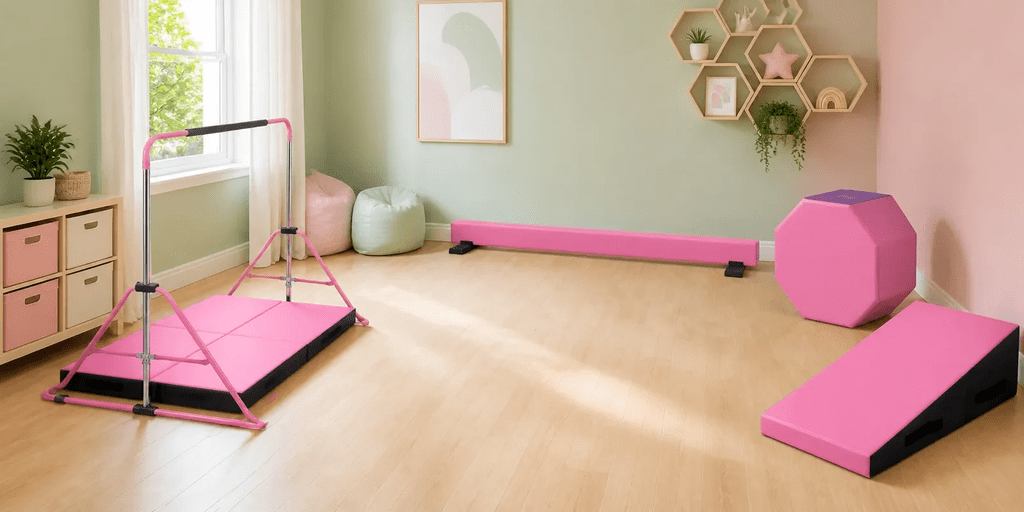
1. Folding Panel Mats: These are the workhorses of the home gym. Usually made of firm cross linked polyethylene foam, they provide a stable surface for stretching, conditioning, and basic tumbling like cartwheels or walkovers. They are easily stored and can be expanded by connecting multiple mats via hook and loop fasteners.
2. Inflatable Air Tracks: These have revolutionized home practice by providing a rebound similar to a spring floor. They allow for higher repetitions with less impact on the joints. When using these, it is vital to monitor air pressure to ensure the surface is firm enough to prevent bottoming out but soft enough to absorb shock.
3. Crash Mats and Landing Pads: For any skill involving height, such as practicing off a low beam or bar, a thicker open cell foam mat is required. These are designed to dissipate the energy of a fall safely.
Quality flooring serves as the literal and figurative base of your training. Without proper attenuation of force, the longevity of an athlete’s career can be significantly shortened by avoidable injuries.
Specialized Apparatus for Skill Progression
Once the flooring is established, the focus shifts to specific apparatus. The most popular choices for home use are balance beams and horizontal bars. When selecting these, stability and height adjustability are the two most important factors to look for.
Balance beams for home use typically come in two varieties. Floor beams sit directly on the mat and are excellent for beginners or for practicing difficult turns and leaps without the fear of a fall. Raised beams, often adjustable in height, help athletes prepare for the psychological aspect of performing on the standard four foot high competitive beam. The surface should be covered in synthetic suede to mimic the feel of professional equipment and provide the necessary grip.
Horizontal bars, or kip bars, require a sturdy base. A common mistake is purchasing a bar that wobbles during use. Look for models with lateral support braces and a high weight limit. As the gymnast grows and their power increases, the stability of the bar becomes paramount. Elite Gymnastics provides high quality solutions that prioritize this structural integrity, ensuring the bar remains stationary during circles and swings.
Strength and Conditioning Tools for Gymnasts
Gymnastics is a sport defined by the strength to weight ratio. While apparatus work is exciting, the majority of home time should be spent on conditioning. A well rounded home gym includes tools that facilitate functional strength.
1. Parallettes: These small portable bars are essential for developing press handstands, L sits, and upper body stability.
2. Resistance Bands: These are vital for shoulder health and for adding tension to leg exercises without the need for heavy weights.
3. Stall Bars: While a larger investment, a wall mounted stall bar is the ultimate tool for core conditioning and active flexibility training.
Conditioning at home allows the athlete to arrive at the gym ready to fly. By building the necessary muscular endurance in a controlled environment, the time spent with a coach can be focused on technical execution rather than basic physical preparation.
Space Management and Equipment Maintenance
Maintaining a home gym is just as important as setting it up. Gymnastics equipment is an investment, and proper care will ensure it lasts for years. Mats should be cleaned regularly with a non toxic disinfectant to prevent the buildup of bacteria and sweat. Suede beams should be brushed to maintain their texture and grip.
Storage is another vital consideration. Many families do not have a dedicated room for gymnastics, meaning equipment must be portable. Folding mats, inflatable tracks, and height adjustable bars that can be disassembled are ideal for multi purpose spaces. When selecting gear, consider how easily it can be moved by a single person and whether it fits into standard storage areas.
Using Elite Gymnastics gear often means having access to equipment designed with the home user in mind, balancing professional durability with the need for residential convenience. Always inspect bolts and attachments on bars and beams weekly to ensure nothing has loosened during practice sessions.
Developing a Long Term Training Environment with Elite Gymnastics
Building a home gym is a journey rather than a one time purchase. As an athlete progresses from a recreational level to competitive ranks, their equipment needs will evolve. A young gymnast might start with a simple folding mat and a floor beam, but within a few years, they may require a full length air track and a professional grade junior bar.
By choosing a reputable brand like Elite Gymnastics, parents and athletes ensure they are getting equipment that grows with them. The modular nature of many modern gymnastics products allows for upgrades and additions. For example, you might start with one panel mat and eventually connect four of them to create a full tumbling strip. This scalable approach makes high quality training accessible and sustainable over the long term.
Advancing Your Skills Safely and Confidently
The ultimate goal of home practice is to build confidence. When a gymnast feels the familiar texture of a suede beam or the consistent bounce of a high quality mat under their feet, they can focus entirely on their form and technique. This consistency between the home environment and the professional gym is what leads to rapid skill acquisition.
Effective practice is not about the quantity of hours spent training, but the quality of the movements performed. With the right equipment, a gymnast can turn a twenty minute daily session into a powerful tool for advancement. By prioritizing safety, investing in quality materials, and maintaining a disciplined approach to conditioning, the home becomes a sanctuary for athletic growth.
The transition from a beginner to an advanced gymnast is paved with thousands of repetitions. Providing the right environment for those repetitions is the best gift any parent or athlete can provide. When the equipment is reliable, the athlete is free to push their limits, explore their potential, and reach new heights in this demanding and beautiful sport.