Choosing Between 30-Day, 90-Day, and 180-Day Crypto Savings Terms
Crypto savings products have become increasingly popular among digital asset holders looking to generate returns on idle BTC, ETH, or stablecoins. Among the most common options are fixed-term savings products, which require users to lock assets for a specific duration in exchange for potential yield opportunities.
However, selecting the right savings term is not always straightforward. Some users prioritize flexibility and liquidity, while others are comfortable committing funds for longer periods in pursuit of structured long-term strategies.
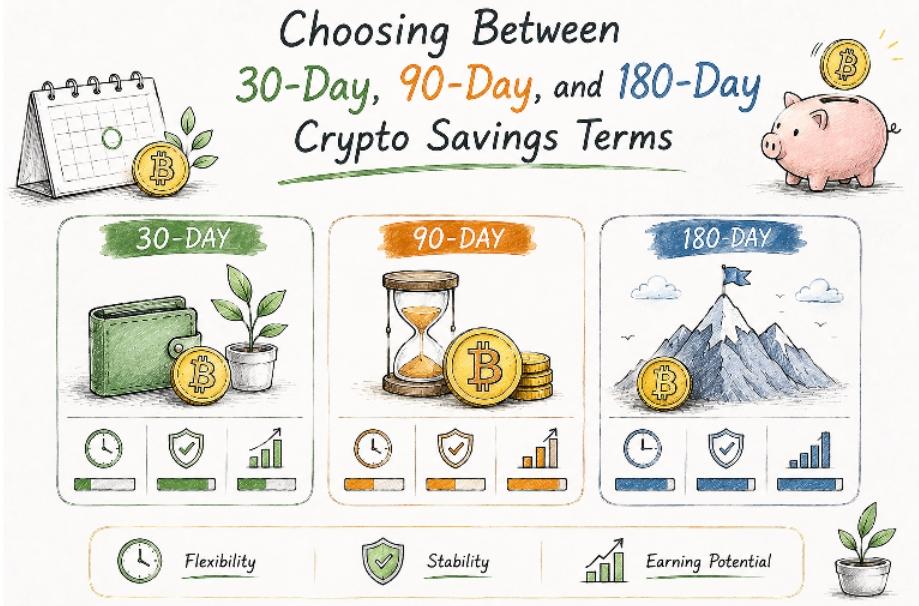
Understanding the differences between 30-day, 90-day, and 180-day crypto savings terms can help investors make more informed decisions based on their financial goals and risk tolerance.
What Are Fixed-Term Crypto Savings Products?
Fixed-term crypto savings products allow users to deposit assets into structured earning programs for a predetermined period.
Unlike flexible savings accounts, fixed-term products generally:
- Require lock-up commitments
- Restrict early withdrawals
- Operate on predefined durations
- Provide yield based on product conditions
Platforms such as CoinEx Fixed Savings offer multiple savings durations designed for users seeking different balance points between liquidity and long-term commitment.
These products are commonly used by investors interested in fixed crypto savings strategies for BTC, ETH, and other supported assets.
Why Savings Duration Matters
The length of a crypto savings term can affect:
- Liquidity access
- Portfolio flexibility
- Risk exposure
- Capital planning
- Yield structure
Choosing the right duration depends largely on how long a user is comfortable leaving assets locked without needing immediate access.
Different market conditions may also influence which term lengths feel most appropriate at a given time.
Understanding 30-Day Crypto Savings Terms
A 30-day savings term is often viewed as the most flexible fixed-duration option.
Potential Advantages
- Shorter commitment period
- Faster liquidity access
- Easier portfolio adjustments
- Reduced long-term lock exposure
This option may appeal to users who:
- Want to test savings products gradually
- Expect potential market changes
- Prefer maintaining shorter liquidity cycles
- Are newer to crypto earning strategies
For users looking to earn on idle BTC while retaining relatively frequent access to funds, shorter-term products may feel more manageable.
Trade-Offs
The main trade-off is that shorter durations may not align with the goals of long-term holders seeking extended commitment structures.
Users may also need to manually renew positions more frequently if they wish to continue participating after maturity.
Understanding 90-Day Crypto Savings Terms
The 90-day term is often considered a middle-ground option between flexibility and long-term commitment.
Potential Advantages
- Balanced commitment structure
- Longer passive earning periods
- Reduced need for frequent renewals
- Suitable for medium-term holders
This duration may work well for investors who:
- Have moderate liquidity needs
- Follow multi-month holding strategies
- Want more structured portfolio management
For many users, 90-day terms provide a balance between accessibility and commitment.
Trade-Offs
Compared to 30-day products, users must remain comfortable with longer periods of reduced liquidity.
Unexpected market changes or personal liquidity needs can become more challenging during longer lock-up periods.
Understanding 180-Day Crypto Savings Terms
A 180-day savings term represents a more long-term commitment approach.
Potential Advantages
- Longer structured holding periods
- Lower need for active management
- Alignment with long-term investment strategies
This option may appeal to:
- Long-term BTC or ETH holders
- Passive investors
- Users comfortable with reduced liquidity
- Investors following multi-year accumulation strategies
For investors focused on long-term crypto participation, longer-term savings products may fit naturally within broader holding strategies.
Trade-Offs
Longer lock-up periods create greater liquidity limitations.
Investors should avoid committing funds they may need during the savings period for:
- Emergency expenses
- Trading opportunities
- Portfolio reallocation
- Market volatility responses
Longer durations also increase exposure to platform-related operational risks over time.
Factors to Consider Before Choosing a Savings Term
Before selecting a savings duration, users should evaluate several key factors.
Liquidity Needs
How quickly might access to funds become necessary?
Investors with uncertain short-term financial needs may prefer shorter durations.
Market Expectations
Some users choose shorter terms during periods of high market uncertainty and longer terms during more stable holding phases.
However, predicting markets consistently remains difficult.
Risk Tolerance
Longer lock-up periods increase exposure to:
- Platform risk
- Market uncertainty
- Reduced flexibility
Users should only commit amounts they are comfortable leaving untouched for the full duration.
Investment Horizon
Long-term holders may naturally prefer longer savings terms, while active traders may prioritize shorter commitments.
The right structure depends on individual portfolio goals.
Combining Multiple Savings Terms
Some investors diversify across multiple durations rather than selecting only one term length.
For example:
- A portion of BTC in 30-day products
- Another portion in 90-day products
- Remaining assets held liquid
This approach may help balance:
- Liquidity access
- Portfolio flexibility
- Passive earning opportunities
Diversifying term durations can also reduce concentration in a single lock-up structure.
Risks of Fixed-Term Crypto Savings
Regardless of term length, users should carefully assess:
- Platform security
- Custodial structure
- Withdrawal conditions
- Regulatory considerations
- Operational transparency
Even well-known platforms carry risk, and crypto savings products are not risk-free investments.
Research remains essential before depositing assets into any platform.
Final Thoughts
Choosing between 30-day, 90-day, and 180-day crypto savings terms depends largely on an investor’s liquidity preferences, risk tolerance, and long-term financial strategy.
Shorter durations may suit users seeking flexibility, while longer terms may appeal to investors focused on passive long-term asset management.
For users exploring structured earning opportunities, products such as CoinEx Fixed Savings are part of the expanding ecosystem of crypto savings solutions designed for different investment styles and time horizons.