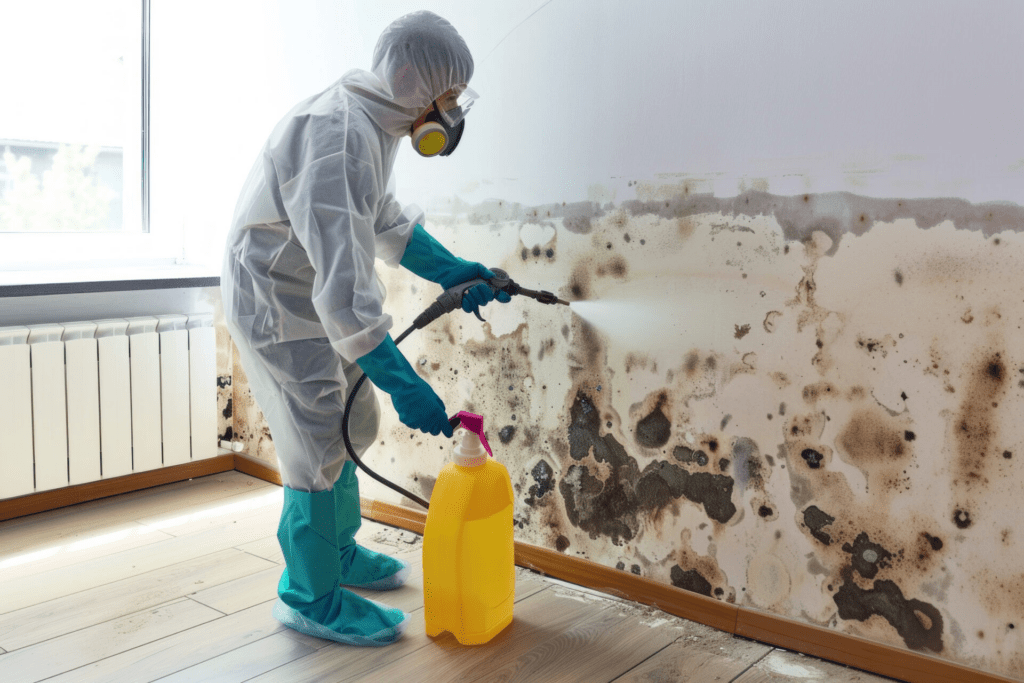
Can Mold Remediation Treat All Types of Mold?
Mold appears in many colors, textures, and locations. Some species grow on drywall, while others spread through insulation, wood, carpet, or HVAC components.
Professional remediation can treat common indoor molds, but the method depends on the affected material, contamination level, moisture source, and location of the growth.
Can Professional Remediation Address Every Mold Type?
Understanding mold removal cost often begins with assessing the extent of growth, moisture conditions, and affected materials. The remediation approach matters more than mold color because every indoor growth problem requires appropriate containment, removal, cleaning, and drying methods.
Professional remediation can address mold found in:
- Drywall and wall cavities
- Wood framing and subflooring
- Carpet and carpet padding
- Attics and crawl spaces
- Cabinets and bathroom vanities
- Ceiling tiles and insulation
- HVAC equipment and ductwork
- Concrete and masonry
- Areas affected by plumbing leaks
- Rooms exposed to flooding or high humidity
How Remediation Handles Different Types of Mold
Mold species do not all grow under identical conditions. However, professional remediation follows the same core principles: control moisture, contain contamination, remove affected materials, and clean the area.
Black Mold
The term black mold often refers to Stachybotrys chartarum, but several molds can appear black or dark green. Color alone cannot confirm the species or its risk.
Remediators contain the area and remove affected porous materials carefully. Controlled physical removal helps prevent spores and fragments from spreading into clean rooms.
Aspergillus
Aspergillus includes many species found both outdoors and indoors. It may grow on drywall, insulation, dust, fabric, and materials exposed to persistent humidity.
The response depends on the affected surface and the size of the growth. Containment and HEPA filtration help control airborne particles while contaminated materials are cleaned or removed.
Penicillium
Penicillium may appear blue, green, or yellow. It often develops on wallpaper, carpet, insulation, furniture, and other materials following water intrusion.
Porous items may require removal when growth has entered beneath the surface. Material-level assessment determines whether cleaning can reach the contamination or replacement is necessary.
Cladosporium
Cladosporium can appear green, brown, or black. It may grow on fabrics, window frames, wood surfaces, painted walls, and areas affected by condensation.
Hard surfaces may be cleaned if they remain structurally sound. Moisture source correction is still necessary because surface treatment alone will not prevent renewed growth.
Alternaria
Alternaria is commonly associated with damp areas such as bathrooms, windows, sinks, and locations affected by plumbing leaks. It can spread across several nearby materials.
Remediation begins by identifying the water source and defining the affected area. Prompt moisture control limits continuing growth while cleaning and removal work proceeds.
Mold in HVAC Systems
Mold near air handlers, coils, drain pans, or duct interiors requires careful attention. Operating the system may distribute particles into other areas of the building.
Technicians inspect accessible components and determine whether specialized HVAC cleaning is needed. System-specific containment helps avoid spreading contamination during the remediation process.
Additional Factors That Shape Mold Treatment
Identifying the visible mold is only one part of the assessment. The material beneath it, the extent of growth, and the source of moisture often have a greater effect on treatment.
1. The Affected Material
Mold on a sealed, nonporous surface is usually easier to clean than growth inside drywall, insulation, or carpet padding. Porous materials can hold contamination below the surface.
Technicians evaluate whether each material can be cleaned and dried completely. Porosity guides the decision to clean, remove, or replace a building component.
2. The Size of the Contaminated Area
A few spots around a window require a different response from growth covering several rooms. Larger areas create more opportunities for particles to spread.
The project scope determines containment, filtration, protective equipment, and removal procedures. Contamination size shapes the work plan before disturbed materials are handled.
3. The Original Moisture Source
Mold can develop after a burst pipe, roof leak, flood, plumbing failure, or prolonged indoor humidity. Each cause creates a different pattern of hidden moisture.
Professional mold remediation by United Water Restoration Group of Henderson includes finding the condition supporting the growth. Correcting the moisture source is essential if the cleanup is expected to last.
4. The Location of the Growth
Visible mold on a bathroom wall is easier to reach than growth inside a wall cavity, attic, crawl space, or HVAC system. Restricted locations need specialized access.
Technicians may remove trim, open small sections, or use inspection equipment. Safe access planning helps expose contamination without causing unnecessary damage elsewhere.
5. The Condition of the Material
Mold does not always mean that an entire structure must be removed. Sound framing may sometimes be cleaned, while swollen drywall or compressed insulation may not be salvageable.
The decision considers strength, surface condition, and depth of contamination. Material integrity determines salvageability rather than appearance or age alone.
6. Occupant Health Considerations
Some people are more sensitive to mold exposure than others. Those with asthma, respiratory conditions, allergies, or weakened immune systems may need added precautions.
A remediation company can explain site controls but does not diagnose health problems. Medical concerns require professional advice from a qualified healthcare provider.
What Mold Remediation Cannot Guarantee
Mold spores naturally exist in outdoor and indoor air. Remediation is intended to correct abnormal indoor growth, not create a permanently sterile building with no mold spores.
It also cannot prevent future mold when:
- A roof or plumbing leak remains unrepaired
- Indoor humidity stays consistently high
- Wet materials are enclosed before drying
- Condensation continues around windows or ducts
- Crawl-space moisture enters the building
- Flood-damaged materials remain in place
- Occupants ignore new signs of water damage
- Ventilation problems are not corrected
- Gutters or drainage direct water toward the property
- New water damage occurs after remediation
The CDC states that property owners generally do not need to identify the mold type before addressing visible growth. Any unwanted indoor mold should be removed, and the moisture condition supporting it should be corrected.
Conclusion
Mold remediation can treat common indoor molds, including growth on walls, flooring, framing, insulation, crawl spaces, and HVAC components. The correct method depends more on the affected material, location, moisture source, and contamination size than on color alone. Containment, physical removal, HEPA filtration, cleaning, and structural drying work together to control the problem. Lasting remediation requires moisture correction because mold can return wherever damp conditions remain.