Beyond The Basics: Choosing A Reliable MetaTrader Alternative For Your Brokerage
Brokerage founders often face a critical crossroads when their primary legacy provider introduces restrictive compliance rules or sudden pricing changes. You need technology that supports your growth rather than limiting your options. Finding the right software requires evaluating the underlying infrastructure, the frontend user experience, and the vendor’s onboarding capabilities.
Key Takeaways
● Relying on a single legacy trading platform limits your operational agility and exposes you to vendor risks.
● Upgrading your infrastructure should eliminate hidden costs and volume-based pricing models that quietly erode your margins.
● A proper migration is a fast and smooth process when guided by an experienced vendor with dedicated support.
The Financial Reality Of Modern Infrastructure
Licensing fees make up a significant portion of a broker’s monthly expenses. Legacy platforms like cTrader silently drain your margins through volume-based pricing models and B-Book turnover fees, while MetaTrader’s licensing and operational costs scale heavily with your client base. Scaling your business shouldn’t mean paying a penalty for every single trade your clients execute. When your daily volume increases, those micro-fees compound into massive financial losses that could have been reinvested into marketing or client acquisition.
Modern technology partners offer cost-efficient, transparent pricing that protects your bottom line. By removing these turnover fees entirely, you retain full control over your revenue streams. You can then use those savings to pay third-party vendors directly for specialized external integrations that enhance your brokerage’s capabilities.
Today, brokers build resilience by diversifying their technology stack. You protect your business by selecting a core system built for modern demands rather than clinging to outdated software architectures. If you are searching for a robust Metatrader alternative, prioritize platforms like Match-Trader that offer a PWA and a mobile-first architecture. This ensures your traders have a seamless experience across all devices without having to download heavy, restrictive desktop applications.
Redefining The Trading Experience
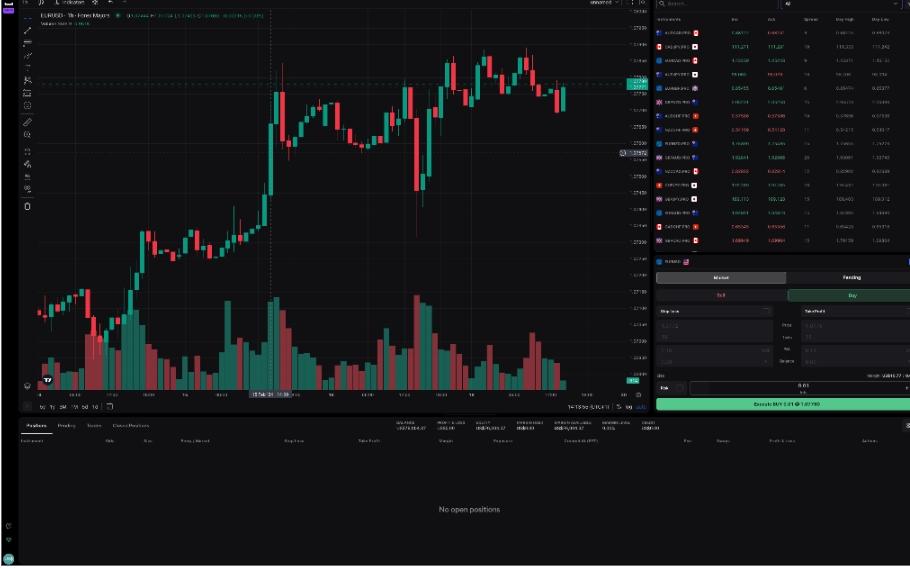
Traders now expect advanced charting, intuitive interfaces, and instant execution speeds. However, offering premium charting tools, such as TradingView integration, is not a market baseline; it is a distinct competitive advantage. Match-Trader provides the full TradingView UI for FX/CFD brokers, creating a highly sophisticated environment for technical analysis. This level of frontend quality directly impacts your client retention rates by keeping traders engaged with familiar, top-tier tools.
You must also consider the growing popularity of funded trader programs. Managing different trader demographics usually requires a fragmented tech stack. Match-Trader solves this by operating as a single hybrid platform that covers both the retail FX/CFD and prop firm segments. You do not need to purchase two separate products. The same TradingView charting also supports prop trading workflows, so you can run evaluations and funded phases without bolting on a separate front end.
Connecting Distinct Ecosystem Products
Your core trading engine requires reliable connections to liquidity and payment gateways. Integrating distinct products within the same technology ecosystem accelerates your operational efficiency. When you connect Match-Trader with one of Match-Trade’s liquidity brands, FX-Edge or Match-Prime, you gain access to deep, institutional-grade liquidity that helps stabilize execution during high-impact news events.
The same logic applies to processing client deposits. Implementing Match2Pay alongside your core platform removes funding friction. Traders can deposit crypto through a streamlined flow, and the funds settle in fiat and are credited to their trading accounts without manual administrative delays. This ecosystem approach guarantees that all critical infrastructure components communicate flawlessly.
Moving Fast Without The Friction
The biggest hesitation founders have about changing software is the fear of operational downtime or the loss of valuable client data. Switching platforms is a fast, smooth process when your vendor provides dedicated, hands-on onboarding support. Professional engineers map your existing databases and configure the new servers in the background.
You simply test the new environment and roll it out to your clients without disrupting their trading routines. By partnering with a vendor that prioritizes setup support, you eliminate the technical anxiety associated with scaling your business.
FAQ
Is migrating client accounts to a new platform difficult?
No, a professional vendor makes migration incredibly fast and smooth, transferring open positions, trading history, and account balances with zero operational friction.
Does a new platform mean paying more for third-party tools?
Brokers pay third-party vendors directly for external integrations, just as on legacy platforms. Modern technology partners like Match-Trader simply make it easier to connect those tools through open APIs and a flexible architecture.
Can I run both FX and prop models simultaneously?
Yes, modern platforms operate as a unified hybrid system, allowing you to manage both traditional FX/CFD clients and prop traders from a single administrative backend.