Bathing as Meditation: What Lies Behind the Japanese Tradition of Deep Immersion?
Bathing may be no more than a daily routine, yet in Japanese culture it rises to the level of a carefully observed ritual. Deep immersion in hot water at the end of the day offers a way to quiet the mind and restore the body. Over time, this custom has found its way into European interiors, bringing with it a distinctive approach to bathroom design.
A Vertical Form That Envelops the Body
The roots of this practice stretch back to the Edo period, when Japanese neighborhoods relied on shared bathhouses known as sento. Over time, these characteristically deep tubs began to appear in private homes, where they were used exclusively for soaking the already cleansed body.
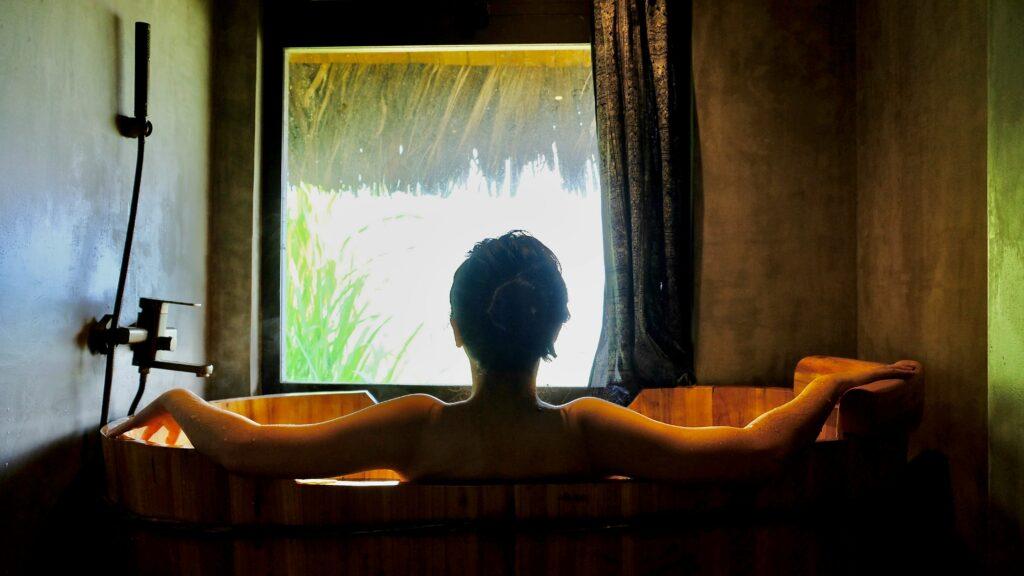
The design of such a vessel differs radically from Western sanitary standards. The bather sits almost upright, while the waterline rises to shoulder level. This vertical arrangement allows for full-body immersion while using bathroom floor space far more efficiently.
In international architectural projects, Polish craftsmanship in this field is often described simply as a wooden bathtub, a term that clearly suggests direct contact with a natural material. At Michor, a workshop that has been active for nearly fifty years, such pieces are made exclusively to order. Its artisans work with carefully selected hardwood species. The finished bathtubs are delivered to private homes in places such as Zurich, as well as to Austrian hotels, where they become the defining feature of Japanese-style suites.
Technology Hidden Beneath a Raw Surface
Wood exposed continuously to hot water requires uncompromising protection. At the Polish workshop, an advanced impregnation system derived directly from the yachting industry has been implemented and tested. The process takes ten days and is based on certified OSMO waxes and oils made from natural ingredients. Because the work is divided into several independent stages, the final surface becomes completely waterproof and fully safe for the skin.
The long-term durability of the bathtub also depends on the structure of the material itself. The manufacturer has moved away from solid single blocks in favor of solid wood arranged in three intersecting layers. This technology brings several tangible benefits:
- It guarantees high structural stability in every component of the bathtub.
- It minimizes the risk of cracking or warping caused by exposure to water.
- It ensures exceptional resistance to extreme fluctuations in room humidity.
- It allows for more efficient use of the material, helping to reduce post-production waste.
Bathing Principles That Set the Rhythm
An authentic Japanese bathing experience is based on strict adherence to a clearly defined sequence. One enters the water, typically heated to 38-40°C only after thoroughly scrubbing the entire body under the shower. Washing often takes place while seated on a small wooden stool. No soap or bath products are ever used in the tub itself. There is no room here for splashing or haste, and the ideal soaking time ranges from 15 to 20 minutes.
It is precisely this intentionality that sets the traditional ofuro soaking tub apart from the typical whirlpool bath. It is not fitted with noisy air jets. The water remains impeccably clean, and in private homes it is changed immediately after use. This is an environment designed solely for solitary contemplation, sensory quiet, and a return to balance — something far removed from the idea of bubbly, shared recreation.
The Physical Effects of Heat and Wood
The wood species preferred in production, including ash, oak, and walnut, are distinguished by their natural antibacterial properties. Under the influence of high temperatures, they release a subtle, resinous scent that deepens the feeling of calm. Could one imagine a better way to shut out the noise of the outside world? Heated water stimulates circulation, relaxes built-up muscular tension, and, through gentle perspiration, supports the body’s natural cleansing processes.
Introducing such sessions into one’s routine on a regular basis can directly lower stress levels and noticeably improve sleep quality. It can also bring relief to people struggling with chronic joint pain. In keeping with the Japanese idea of yutori — the creation of space and a margin of freedom in life — this daily habit extends far beyond ordinary hygiene. It becomes a powerful tool for caring for the mind.
A New Dimension of the Home Relaxation Zone
Handcrafted solid-wood bathtubs prove that traditional materials can perform beautifully in demanding contemporary interiors. The meeting of the Japanese philosophy of mindful bathing and the experience of a Polish workshop produces a tangible result in the form of durable, functional equipment. It is a fully practical tool for physical regeneration that fundamentally transforms the role of the bathroom. Instead of being a place devoted to the morning routine, it becomes a private sanctuary where the process of slowing down matters most.