A Complete Guide to Epoxy Flooring for Durability, Style, Maintenance, and Long-Term Value
Flooring is an important part of any property because it affects the appearance, safety, cleanliness, and everyday usability of a space. A floor is constantly exposed to foot traffic, furniture, equipment, dirt, moisture, spills, and general wear. Choosing the right surface can make daily maintenance easier while also improving the overall appearance of the property. Epoxy flooring is widely considered for areas that need a combination of durability, attractive design, and practical performance. When the correct system is selected and installed over a properly prepared surface, it can provide a strong and visually appealing finish that is suitable for many different applications.
The Main Benefits of Choosing Epoxy Flooring
One of the biggest advantages of epoxy flooring is its ability to create a durable and continuous surface over suitable concrete. Depending on the formulation, an epoxy system can provide resistance to everyday abrasion, stains, impacts, and certain chemicals. It can also be customized with different colors, decorative flakes, textures, and finishes. This makes it possible to create a floor that is both functional and visually attractive. However, the final performance depends on product quality, substrate preparation, installation technique, coating thickness, environmental conditions, and proper curing.
Why Proper Surface Preparation Is Important
Surface preparation is one of the most important stages of any flooring project. Before applying a coating, the concrete should generally be clean, dry, stable, and free from oil, grease, dust, old coatings, and loose material. Depending on the condition of the existing surface, preparation may involve mechanical grinding, cleaning, patching, or other specialized methods. Cracks and damaged areas may also require repair before the coating is installed. Applying a high-quality material over a poorly prepared surface can result in peeling, bubbling, weak adhesion, and premature deterioration.
How Professional Installation Improves Flooring Results
Professional installation can make a significant difference in the appearance and performance of a finished floor. Experienced installers understand how to prepare the substrate, mix materials according to specifications, apply the correct amount of product, and manage curing conditions. They can also identify potential problems before installation begins. Incorrect mixing, uneven application, poor preparation, and insufficient curing can reduce the lifespan of the coating. Professional workmanship can therefore help property owners achieve a more consistent finish while protecting their investment over the long term.
Choosing the Right Flooring System for Your Space
Not every flooring system is suitable for every environment. A lightly used residential space may have different requirements from a busy workshop, garage, commercial facility, or industrial area. Before selecting a product, property owners should consider foot traffic, vehicle movement, equipment use, moisture, temperature changes, chemical exposure, and cleaning requirements. Appearance should also be considered because different systems provide different colors, textures, thicknesses, and decorative effects. Choosing a system according to the actual conditions of the space can improve durability and reduce the risk of premature problems.
Creating an Attractive Floor With Different Color Options
Color can have a major effect on the appearance of a room. Light colors may help make a space appear brighter and more open, while darker shades can create a bold and sophisticated appearance. Neutral colors are often useful because they coordinate with many different furniture styles, walls, cabinets, and equipment. Property owners should consider the amount of natural and artificial lighting before selecting a final color. Reviewing physical samples can also be helpful because the finished shade may look different depending on lighting and surrounding surfaces.
Adding Decorative Flakes for More Visual Interest
Decorative flakes can provide a practical way to add texture, depth, and personality to a coated floor. Small colored flakes are distributed across the surface to create different patterns and visual combinations. Subtle blends can provide a simple appearance, while stronger combinations can create a more noticeable decorative effect. Flakes can also help disguise small amounts of dust and everyday debris between cleaning sessions. The final appearance depends on the base color, flake colors, particle size, coverage, and application technique, so samples should be reviewed before installation.
Exploring Metallic and Decorative Flooring Finishes
Some flooring systems can be enhanced with metallic pigments and specialized decorative techniques. These methods can create unique patterns, movement, and depth across the finished surface. Such finishes may be useful when the floor is intended to become a major decorative feature of the room. Because specialized effects require careful application, professional installation is generally recommended. Property owners should explain their desired appearance to the installer and review examples before choosing a highly customized finish. Proper planning can help ensure that the final design complements the surrounding interior.
Improving Safety With the Right Surface Texture
Safety should be considered when selecting any flooring material. Water, oil, cleaning solutions, and other liquids can make certain smooth surfaces slippery. Depending on the environment, textured additives or specialized finishing methods may be used to improve traction. The appropriate level of texture depends on the intended use of the space. A workshop may require different characteristics from a residential room or decorative commercial area. Discussing slip resistance with a professional can help property owners choose a surface that balances safety, appearance, comfort, and ease of cleaning.
Understanding Flooring Durability and Everyday Performance
Durability is an important consideration because flooring experiences repeated stress every day. Foot traffic, furniture, equipment, dropped objects, and vehicle movement can all affect a surface over time. A properly selected and installed coating can handle many everyday demands while helping protect the underlying concrete. However, no flooring system is completely immune to damage. Extremely heavy impacts, sharp objects, abrasive debris, or inappropriate chemical exposure may still cause damage. Selecting a product based on expected conditions is therefore essential for achieving reliable long-term performance.
Protecting Floors From Scratches and Heavy Impact
Although a properly cured coating can be durable, heavy objects and sharp equipment may still create scratches, chips, or abrasions. Furniture pads can reduce friction beneath heavy items, while protective mats can help shield areas where tools or equipment are frequently used. Heavy objects should be lifted or moved using suitable equipment instead of being dragged across the surface. Regular sweeping can also remove sand and grit that may act as abrasive particles. These simple precautions can help preserve the appearance and reduce unnecessary repair requirements.
Moisture Considerations Before Flooring Installation
Moisture is one of the most important conditions to evaluate before installing a coating over concrete. Moisture moving through the slab can interfere with adhesion and may eventually cause bubbling, peeling, discoloration, or other forms of failure. This is particularly important in areas that have previously experienced dampness or water-related problems. The substrate should be evaluated before installation, and any significant moisture concerns should be addressed. Proper moisture management can improve the reliability of the flooring system and reduce the possibility of expensive repairs later.
Repairing Cracks Before Applying a New Coating
Existing cracks, holes, and damaged sections should be evaluated before a new coating is installed. Small imperfections may require suitable patching materials, while larger cracks may require additional assessment. Some cracks can indicate movement or other underlying issues, so simply covering them may not provide a lasting solution. Proper repairs create a more stable surface and can improve the appearance of the finished floor. Addressing substrate problems before installation is generally more effective than attempting to correct them after the coating has already been applied.
Easy Cleaning and Maintenance Practices
One of the practical advantages of a properly finished floor is that routine cleaning can be relatively simple. Dust, dirt, and loose debris should be removed regularly to prevent abrasive particles from accumulating. Spills should be cleaned promptly using suitable cleaning products. Sweeping and occasional mopping may be enough for many spaces, while busy environments may require more frequent attention. Property owners should follow the manufacturer’s recommendations regarding cleaning solutions and equipment. Avoiding harsh chemicals and abrasive tools can help maintain the appearance and condition of the finished surface.
Handling Oil, Grease, and Chemical Spills
Spills involving oil, grease, chemicals, food, or strongly colored liquids should be addressed quickly. Although some flooring systems offer resistance to common substances, resistance levels vary by product. Property owners should know which cleaning methods and products are compatible with their specific coating. Harsh chemicals should not be used without confirming their suitability. Keeping appropriate cleaning supplies available can make it easier to respond quickly when a spill occurs. Prompt maintenance can help reduce staining and prevent certain substances from causing unnecessary surface deterioration.
Flooring Applications in Garages and Workshops
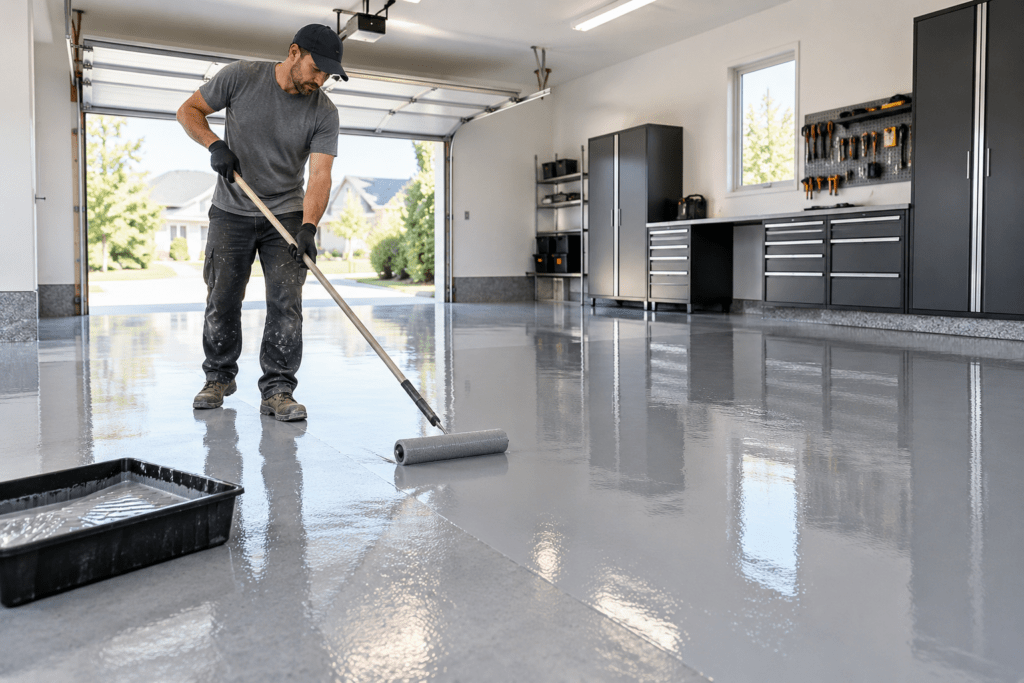
Garages and workshops can place demanding conditions on a floor because they may experience vehicle traffic, oil, grease, tools, equipment, dirt, and moisture. A suitable coating can help protect the concrete and make the area easier to clean. Decorative finishes can also give the space a more organized and attractive appearance. Work mats can be placed beneath machinery or areas where spills and impacts are likely. Proper surface preparation is especially important because oil and other contaminants can interfere with adhesion if they are not thoroughly removed before installation.
Commercial Applications for Durable Flooring Systems
Commercial spaces often require flooring that can handle frequent traffic while maintaining a professional appearance. Offices, showrooms, retail areas, workshops, studios, storage spaces, and other facilities may benefit from an appropriately selected coating. Businesses should evaluate traffic levels, cleaning schedules, equipment movement, moisture, and chemical exposure before choosing a product. Installation should also be planned around normal business activities to minimize disruption. A professionally installed system can provide a consistent appearance while helping the floor handle the demands of everyday commercial use.
Understanding Installation Conditions and Curing Requirements
Environmental conditions can affect the installation and curing of many flooring materials. Temperature, humidity, moisture, and ventilation can influence how a coating bonds and develops its final properties. Manufacturers usually provide recommended installation conditions that should be followed carefully. After application, the surface also needs sufficient time to cure before it can handle normal traffic. Walking, placing furniture, or moving equipment onto the surface too early can cause marks or other damage. Allowing the appropriate curing time is essential for achieving the expected performance.
Common Installation Mistakes to Avoid
Several common mistakes can negatively affect a flooring project. Applying material over contaminated concrete, ignoring moisture problems, failing to repair cracks, choosing an unsuitable product, or applying the material incorrectly can result in premature failure. Rushing the curing process is another common issue. Property owners should also avoid assuming that a coating can hide major structural or moisture-related problems. Proper inspection, preparation, product selection, and professional application can reduce these risks and improve the overall quality of the finished surface.
Understanding the Factors That Influence Flooring Cost
The total cost of a flooring project depends on several factors, including the size of the area, condition of the existing surface, preparation requirements, materials, decorative features, coating thickness, and labor. Comparing prices based only on material cost can be misleading because preparation and workmanship can have a major influence on the final result. Property owners should request detailed estimates that clearly explain what is included. A higher-quality system may have a greater initial price but can provide better long-term value through durability, easier maintenance, and reduced repair requirements.
How Regular Inspection Can Prevent Major Flooring Problems
Regular inspection allows property owners to identify small defects before they become larger issues. The surface should be checked for peeling, cracks, chips, discoloration, bubbling, or changes in texture. Small localized problems may sometimes be repaired before they spread. If the coating begins to separate from the substrate, the underlying cause should be investigated. Simply applying another layer over a failing surface may not solve the problem. Periodic inspection is especially useful in busy environments where flooring experiences heavy traffic and repeated exposure to demanding conditions.
When Professional Flooring Repair May Be Necessary
The correct repair method depends on the type and extent of the damage. Small chips or localized defects may be repaired, while extensive peeling or substrate deterioration may require more significant restoration. Professional evaluation can determine whether the existing coating can be repaired, recoated, or replaced. Attempting major repairs without understanding the original system can sometimes create additional problems. Addressing the cause of the damage, such as moisture or substrate movement, is essential for achieving a lasting repair and preventing the same issue from returning.
Planning a Flooring Project for Better Long-Term Results
Good planning can make a flooring project more efficient and predictable. Property owners should determine how the area will be used and what conditions the floor will experience. The existing substrate should be inspected for cracks, moisture, contamination, and other potential problems before materials are selected. Budget, appearance, maintenance requirements, installation timing, and expected traffic should also be discussed. Professional guidance can help identify suitable products and preparation methods. Careful planning reduces unexpected costs and helps ensure that the final result meets practical and visual expectations.
Comparing Flooring Options Before Making a Final Decision
Property owners may want to compare several flooring systems before selecting one. Important factors include durability, appearance, maintenance requirements, moisture resistance, chemical resistance, safety, installation requirements, and overall cost. Every flooring material has advantages and limitations, so the best choice depends on the intended environment. A product that performs well in a lightly used room may not be appropriate for a busy workshop or commercial facility. Comparing products according to actual needs can help property owners make a more informed and cost-effective decision.
Creating a Long-Term Maintenance Plan for Better Flooring Performance
A flooring investment should be supported by consistent maintenance. Regular cleaning, prompt spill removal, periodic inspection, and responsible use can help preserve the finished surface. Protective mats can be used in demanding work areas, while furniture pads can help reduce friction. Cleaning products should always be compatible with the installed system. If professional maintenance or recoating becomes necessary, addressing the issue early can prevent more extensive deterioration. Preventive care is often more practical than waiting until major damage requires expensive restoration or replacement.
Final Thoughts on Choosing the Right Flooring for Long-Term Value
Selecting a suitable flooring system requires careful consideration of durability, appearance, safety, maintenance, moisture, installation conditions, and expected use. Epoxy flooring can provide an attractive and practical surface for many residential, commercial, garage, workshop, and utility environments when the correct system is selected and installed properly. Surface preparation is especially important because even high-quality materials can perform poorly when applied over contaminated, damaged, or unsuitable concrete. Professional installation can improve adhesion, consistency, appearance, and durability, while regular cleaning and responsible use can preserve the finished surface. With careful planning, quality materials, proper installation, adequate curing, and ongoing maintenance, property owners can create a durable floor that provides reliable performance and long-term value.