What Makes a Sewing Machine Repair Program Credible
Sewing machines seem simple from the outside: a needle, a motor, some gears, a foot pedal. But anyone who has opened up a modern machine, especially a computerized model, knows there is a lot going on underneath that metal casing. Tension assemblies, timing belts, circuit boards, bobbin cases, and dozens of small parts all have to work together with precision. When something goes wrong, the person called in to fix it needs real knowledge, not guesswork. That is why sewing machine repair training credentials matter so much, both for the people doing the repairs and for the customers trusting them with expensive equipment.
If you are considering a career in this field, or you are a shop owner trying to hire the right technician, understanding what separates a credible training program from a weak one is essential. Not every course labeled “sewing machine repair training” actually prepares someone to do the job well. Some programs are thorough, structured, and taught by people with decades of hands-on experience. Others are little more than a few videos and a certificate that looks nice on paper but does not reflect real competency. Knowing the difference can save you time, money, and a lot of frustration.
Why Credentials Matter in a Specialized Trade
Sewing machine repair is a niche trade, and that is part of what makes credentials so important. Unlike more common fields like auto mechanics or general appliance repair, there are not a huge number of schools or certification bodies dedicated to this specific craft. Because the pool of training options is smaller, quality varies widely, and it becomes the responsibility of the student or the hiring shop to dig deeper and verify what a credential actually represents.
A credible credential tells a potential employer or customer that the technician has been exposed to a structured curriculum, not just trial and error. It signals that someone has learned how to diagnose issues methodically rather than simply swapping parts until something works. In a trade where machines range from vintage mechanical models to high-end embroidery systems, that structured knowledge base is the difference between a quick, correct repair and a frustrating cycle of guesswork that leaves the customer worse off.
Credentials also matter because they create accountability. A program with a real reputation has something to protect. If its graduates consistently perform poorly, word travels fast in a small, specialized industry. That reputational pressure tends to push legitimate programs toward better instruction, clearer standards, and more rigorous hands-on practice.
Hands-On Training Is Non-Negotiable
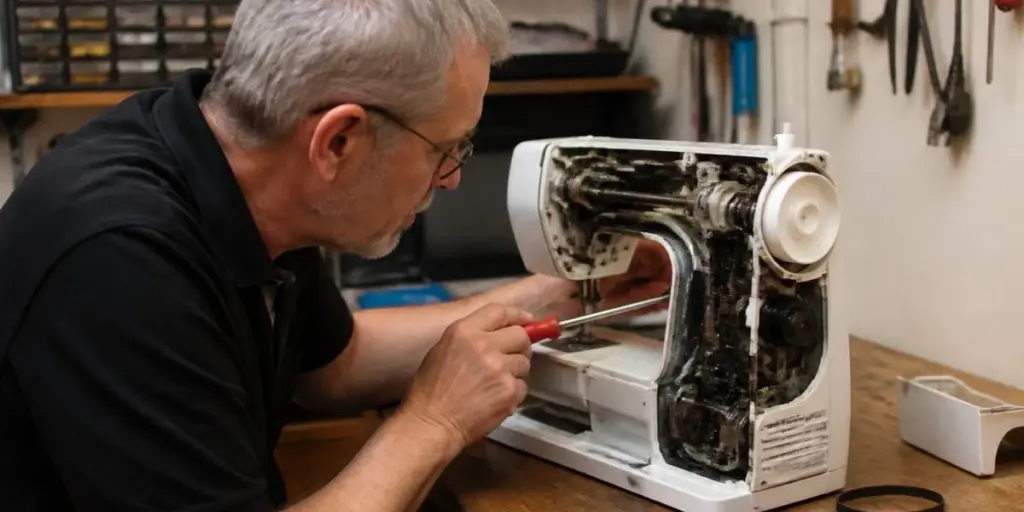
One of the clearest signs of a credible sewing machine repair program is the amount of hands-on instruction it requires. Reading about tension adjustment or watching a video on timing a rotary hook is not the same as doing it yourself, repeatedly, under the guidance of someone experienced. Repair work is a physical skill built through repetition. Muscle memory, the feel of a properly adjusted tension disc, the sound of a motor that is about to fail: these are things you learn by doing, not by memorizing facts.
A strong program will have students disassemble and reassemble actual machines, work through multiple brands and models, and troubleshoot problems that mimic what they will see in the field. This might include frayed wiring, stripped gears, bent needles that have damaged internal components, or electronic boards that have failed after a power surge. The wider the variety of machines and problems covered, the more prepared a graduate will be to handle whatever walks through the shop door.
If a program is entirely online with no physical practice component, that should raise a flag. Some foundational theory can certainly be taught remotely, and that is fine as a supplement. But a repair technician who has never physically opened a machine under supervision is missing something that no amount of reading can replace.
Curriculum Depth and Structure
Beyond hands-on practice, the structure of the curriculum itself says a lot about a program’s credibility. A thoughtful course moves from foundational mechanical principles to more advanced electronic and computerized systems, building knowledge in a logical sequence. Students should learn the basics of how a stitch is formed, how tension works, and how the feed dog and needle timing interact before they move on to diagnosing complex electronic faults in a modern machine.
Look for programs that cover a broad range of machine types, not just one brand or one category. A technician who only knows how to service a single manufacturer’s machines will struggle in a general repair shop where customers bring in everything from decades-old mechanical Singers to the latest computerized Brother or Janome models. A well-rounded curriculum includes vintage and modern mechanical machines, computerized and embroidery machines, industrial machines used in garment production, and even overlock or serger machines, which have their own quirks and common failure points.
It is also worth checking whether the program teaches safe electrical practices, since many repairs now involve circuit boards, sensors, and motors that require careful handling to avoid injury or further damage. A credible program treats safety as a core part of the curriculum, not an afterthought.
Who Is Teaching the Program
The instructors behind a training program are just as important as the curriculum itself. A credible program is usually led by people with years, often decades, of real-world repair experience. These are individuals who have run their own repair shops, worked for manufacturers, or trained other technicians over an extended career. Their knowledge comes from direct experience troubleshooting real machines brought in by real customers, not from a textbook alone.
When researching a program, it is reasonable to ask about the instructors’ backgrounds. How long have they worked in the field? Do they have experience across multiple brands and machine types? Have they trained other successful technicians before? A program that is transparent about its instructors and happy to share their credentials is generally more trustworthy than one that keeps that information vague or hard to find.
It also helps if instructors stay current with industry changes. Sewing machine technology has evolved considerably over the past twenty years, with many machines now featuring touchscreens, embedded software, and proprietary electronic components. An instructor who has kept up with these changes, rather than teaching only from decades-old notes, is better positioned to prepare students for the machines they will actually encounter on the job.
Industry Recognition and Manufacturer Ties
Another marker of a credible program is recognition from the broader sewing machine industry. Some training programs maintain relationships with specific manufacturers, which can mean access to manufacturer-specific manuals, parts, and even factory training sessions. This kind of connection often results in more accurate, detailed instruction because the program is drawing directly from the source rather than relying on reverse-engineered guesses about how a machine works internally.
It is also worth looking at whether a program’s graduates are respected within the industry. Are they hired by established repair shops? Do manufacturers or dealers recommend the program to people looking for technicians? Is the program mentioned in trade publications or referenced by sewing machine dealer associations? These are all signs that the program has built a genuine reputation over time rather than simply marketing itself well.
Shops and sewing machine dealers often have informal networks where they share opinions about which training programs produce competent technicians. If you are evaluating a program, it can be worth reaching out to local sewing machine shops or dealers and simply asking what they think. Their feedback, based on hiring experience, can be more valuable than anything found in a glossy brochure.
Certification Standards and What They Actually Mean
Not all certificates are created equal, and this is where many people get misled. A certificate of completion simply means someone attended a course and finished it, with no evaluation of whether they actually mastered the material. A real certification, by contrast, usually involves testing, whether written, practical, or both, to confirm that the student can perform the required skills to a defined standard.
When evaluating a program’s certification process, ask specific questions. Is there a final exam? Does it include a hands-on component where students must diagnose and repair an actual machine under observation? Is there a minimum passing standard, and what happens if a student does not meet it? Programs that have no real evaluation process, where everyone who pays and attends automatically receives a certificate, are less meaningful than programs that require students to demonstrate competency before certification is awarded.
It is also useful to understand whether a certification is recognized anywhere outside the program itself. Some certifications carry weight within the sewing machine dealer and repair community because they are tied to known organizations or respected training centers. Others exist only within a single company’s marketing materials and carry little recognition elsewhere. Doing a bit of research into how a certification is perceived by actual employers in the field can save a lot of disappointment later.
Red Flags to Watch For
There are a few warning signs worth mentioning directly, since they come up often when evaluating training options. Be cautious of programs that promise certification after an unusually short time frame, such as a weekend course claiming to fully prepare someone for professional repair work. While a short course might be useful for a hobbyist wanting to do basic home maintenance, it is not enough to build the depth of knowledge required for professional-level troubleshooting.
Be wary as well of programs that are vague about their curriculum, refuse to share instructor backgrounds, or rely heavily on testimonials without offering any verifiable details. A legitimate program should be comfortable answering detailed questions about what students will learn, how they will practice, and how competency will be assessed.
Finally, be skeptical of pricing that seems dramatically lower than comparable programs with no clear explanation. Quality hands-on training, access to a variety of machines for practice, and experienced instructors all cost money to provide. A program priced far below the norm may be cutting corners somewhere, often in the areas that matter most, like hands-on practice time or instructor experience.
Frequently Asked Questions
Do I need a certification to work as a sewing machine repair technician?
It depends on the employer and the region. Some shops hire based purely on demonstrated skill, especially if you can show a portfolio of repairs or pass a practical test during the interview. Others prefer or require formal training credentials, particularly larger dealerships or manufacturer-affiliated repair centers.
How long does a credible training program usually take?
Most legitimate programs run anywhere from several weeks to a few months of consistent instruction, depending on how in-depth the curriculum is. Programs that claim full certification in just a day or two should be viewed with caution.
Can I learn sewing machine repair entirely online?
Some theory can be learned online, but hands-on practice is essential. A strong approach combines online or classroom instruction with supervised, in-person practice on real machines.
What should I look for when hiring a technician based on their credentials?
Ask about the program they attended, who taught it, and whether it included hands-on testing. It also helps to:
- Ask for examples of past repairs or references from previous employers
- Request a short practical test, such as diagnosing a sample issue
- Confirm whether their training covered both mechanical and computerized machines
Are manufacturer-specific certifications better than general ones?
Not necessarily better, but different. Manufacturer certifications are valuable if a shop specializes in that brand, since they often include access to proprietary technical information. General certifications are more useful for technicians who need to service a wide variety of machines.
Is experience more important than formal training?
Both matter. Experience without any formal grounding can lead to bad habits or missed diagnostic steps, while formal training without real hands-on practice leaves gaps in practical skill. The strongest technicians usually have a combination of structured training and years of actual repair work.
Choosing a Program That Actually Prepares You
At the end of the day, a credible sewing machine repair program is one that combines a structured, comprehensive curriculum with real hands-on practice, taught by instructors who have genuine industry experience. It offers certification that actually means something, backed by testing rather than simple attendance. It has a reputation within the sewing machine community that can be verified through shops, dealers, or other technicians, not just through its own marketing.
Whether you are someone looking to start a new career or a shop owner trying to hire well, taking the time to dig into these details before committing to a program or a candidate pays off. Sewing machines, despite their small size, are intricate pieces of equipment, and the people who repair them need training that matches that complexity.