Why Is My Ebike Hard to Pedal?
If your ebike has suddenly become hard to pedal, do not assume the battery is failing or the tires are too wide. First establish whether the bike is physically dragging, the selected gear is too hard, or the motor is no longer providing its usual help. Those problems can feel similar from the saddle, but they need different fixes.
The distinction matters across all kinds of electric bikes. A bike that rolls normally but offers no assistance calls for a different investigation from one that resists being pushed with the power off. Start with the symptom before buying parts or changing settings.
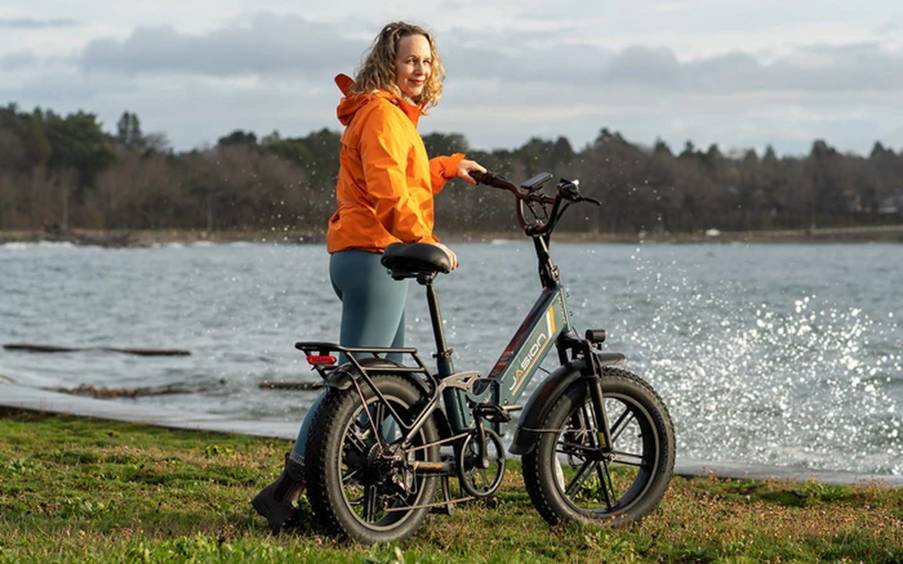
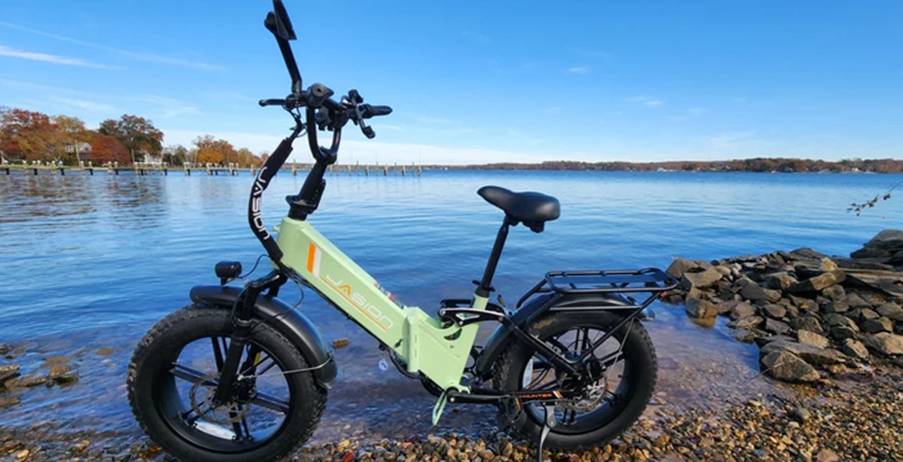
(Jasionbike ebike)
Start Here: What Kind of Resistance Are You Feeling?
| What you notice | What to check first | What it tells you |
| The bike is suddenly harder to push as well as pedal | Tire pressure and visible wheel, brake, or fender interference | Physical resistance needs attention; an assist setting will not fix it |
| It rolls normally, but the usual motor help has disappeared | Assist level, battery indication, error codes, and model-specific instructions | The assistance system needs checking; this does not identify a failed component |
| Starting is hard, but riding gets easier once moving | The gear selected before stopping | A high gear may be making starts unnecessarily difficult |
| Pedaling feels rough or the chain skips | Chain condition, shifting behavior, and recent damage | A drivetrain issue deserves inspection rather than more motor power |
| It feels heavy only with assistance switched off | Gearing, terrain, load, and the bike’s normal unassisted behavior | This may be expected effort rather than a new fault |
If there is grinding, a loose wheel, chain jamming, or a change in braking, stop riding. The checks below are for narrowing the problem, not proving that a bike is safe to use.
1. Switch Off and Walk the Bike
Disconnect the charger, switch the bike off, release both brake levers, and push it a short distance on level ground. Compare it with how the same bike normally feels. A heavy ebike will not push like a lightweight bicycle, so the useful clue is a change in resistance, not whether it feels weightless.
Look for a fender touching a tire, something caught around a wheel, an obviously deflated tire, or visible damage following a fall. Listen for a scrape that repeats as the wheel turns. These observations help locate the problem without dismantling anything.
Pushing cannot check everything: a bike may roll freely while its chain or gearing still causes trouble during pedaling. It does, however, help separate obvious rolling drag from missing motor assistance. If resistance appeared after wheel removal or brake work, have that work checked before adjusting unrelated parts.
2. Measure Tire Pressure Before Blaming Tire Width
A bike that rode well last month can feel sluggish after its tires lose air. Use a gauge and compare the reading with the guidance for the fitted tire, rim, bike, and load. Check both tires. A firm-looking sidewall does not establish that the pressure is appropriate.
On a fat tire ebike, low pressure can be especially easy to misinterpret as an unavoidable consequence of wide tires. But a familiar bike becoming harder to ride is a reason to check what changed, not dismiss the symptom as a design trait.
Do not automatically inflate to the highest number printed on the sidewall. A maximum limit is not a universal target. If the equipment guidance is unclear or conflicting, ask the manufacturer or a bike shop for a suitable setting. If pressure falls again soon after correction, investigate a leak rather than repeatedly topping it up.
3. Separate a Hard Gear From Missing Assistance
Think back to the last stop. Did you brake at an intersection while still in a high gear? Pulling away in that gear can require a heavy pedal stroke even when nothing is broken.
On derailleur-equipped bikes, prepare for the next start by shifting to an easier gear while still moving and pedaling lightly. Clicking the shifter while stationary does not complete a normal derailleur shift. Avoid forcing a gear change under heavy pedal or motor load.
If the bike rolls normally and the gear is appropriate, but the familiar motor support is absent, check the display. Is assistance set to zero? Is there an error code? Has the battery indication changed? On systems that display brake status, does that indication remain active after the levers are released?
Photograph any code before restarting and consult the manual for the exact bike and display version. A powered display does not prove the assistance system is working. Equally, an absence of assistance does not by itself prove that the battery, motor, or controller needs replacing. Do not bypass a brake cut-off sensor to test that theory.
4. Notice Whether the Pedals Feel Heavy or Rough
Steady effort and mechanical roughness are different symptoms. Clicking, skipping, binding, or a tight spot during each crank rotation deserves more attention than simply needing a lower gear.
With the bike off and stationary, visually check for obvious chain damage, a displaced chain, or damage around the rear derailleur. Keep fingers away from the chain and gears, and do not activate the motor during inspection. Cleaning and lubrication may help a dirty, dry drivetrain when performed according to the manufacturer’s guidance, but lubricant will not repair a bent component or worn drivetrain.
If the chain skips under load, stop testing it on hills. Record which gear is affected and have the drivetrain inspected. More assistance can conceal the effort temporarily without addressing the fault.
What to Pay Attention to on a Test Ride
Try the bike in the situations you will repeat most often: a normal start, an easy climb if available, a low-speed turn, and a short stretch of steady pedaling. Compare assistance settings without changing everything at once. An easier gear and a different assist level do different jobs, and understanding both makes the test more informative.
Also decide how much you actually want to pedal. Someone looking for a workout with occasional assistance may prioritize a different riding feel from someone who wants substantial help throughout a daily trip. Neither preference requires choosing by tire width alone.
When browsing Jasionbike, use the tire category to narrow the options, then look at the individual bike’s gearing, riding position, assistance system, and weight. The right choice should feel manageable on the route you ride most often, including the repeated starts and the last hill home.
What to Tell a Mechanic or Support Team
A useful description is specific: “It started after the rear wheel was refitted. The bike is harder to push with the power off, and I hear a scrape once per wheel rotation.” That gives a technician a place to start. “My ebike feels slow” does not.
Include the model, when the change began, whether it happens with assistance off, whether pushing also feels different, any recent work or impact, and photographs of error codes. Use your own observations; these examples are reporting formats, not diagnoses.
If the bike has always felt demanding only without assistance, and none of these checks reveals a change, the issue may be suitability rather than maintenance. A heavy bike, a climb, and a high gear can make unassisted riding hard work. Establish how your bike normally behaves while it is working properly, before relying on pedal-only riding as your backup for the trip home.