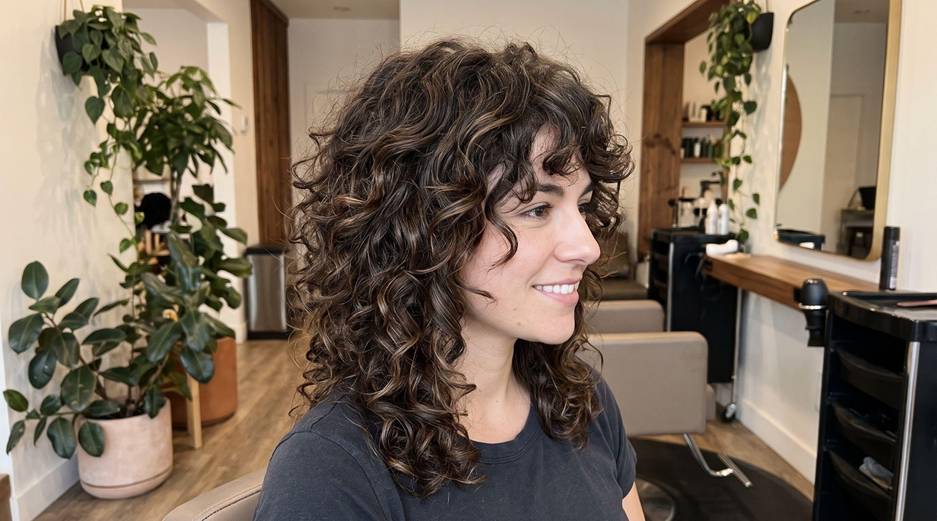
Curly Shag: How Deconstructed Crown Layers Create Effortless Wash-and-Go Volume
For anyone with waves or spirals, the most common haircut frustration comes down to basic physics: when curls are cut with a long, uniform perimeter, gravity pulls the roots flat against the scalp while piling dense bulk around the shoulders. You end up spending 45 minutes diffusing upside down just to coax an inch of lift at the crown.
A deconstructed, crown-layered shag flips that weight distribution on its head. Rather than relying on heavy styling foams or root teasing to fight downward drag, this architectural silhouette builds natural volume directly into the cut. By carving shorter, internally graduated layers at the crown and removing hidden weight pockets behind the ears, the style encourages waves and curls to spring upward, clump cleanly, and air-dry into an effortless wash-and-go shape.
The Geometry of Deconstructed Crown Layers
Deconstructed crown layers eliminate flat roots and bottom-heavy triangle silhouettes by shifting hair weight upward to the parietal ridge. Shorter, internally graduated tiers remove gravitational drag at the crown while sub-occipital debulking creates negative space behind the ears, allowing curls to spring and nest naturally.
Traditional layered cuts often place the shortest pieces too low—around the cheekbones or collarbone—which leaves the top of the head heavy while thinning out the bottom ends. A true deconstructed shag works through three coordinated structural zones:
- Parietal Ridge Elevation: Cutting shorter, softly blended tiers around the crown releases the weight pulling down on your roots. Once unburdened, natural S-waves and spirals recoil upward, creating built-in height that lasts all day.
- Sub-Occipital Negative Space: Thick waves and curls tend to stack horizontally behind the ears, widening the silhouette into a pyramid. Carving hidden pockets of negative space beneath the occipital bone allows curls to tuck inward rather than expanding outward.
- Feathered, Point-Cut Perimeter: Instead of a blunt, rigid bottom edge that sits stiffly on the shoulders, the perimeter is lightly beveled so ends move freely and blend seamlessly into the upper tiers.
While an edgier curly wolf cut relies on sharper crown disconnection and heavily tapered, mullet-inspired length at the nape, a deconstructed shag maintains softer transitions and fuller perimeter balance. That adaptability is why stylists frequently rank it alongside sculpted U-cuts and rounded bobs among the top haircuts for curly hair for clients seeking effortless movement.
| Architectural Feature | Deconstructed Shag | Wolf-Cut Hybrid | Traditional Long Layers |
| Crown Layering | Softly blended parietal lift for airy volume | High, disconnected tiers with dramatic crown height | Minimal top elevation; weight stays low |
| Perimeter Baseline | Feathered U-shape with balanced fullness | Heavily tapered, narrow nape silhouette | Full, blunt, or gently rounded baseline |
| Best Curl Pattern | Loose 2B waves through tight 3C spirals | Dense 2C–3B waves and medium spirals | Loose 2A–2C waves needing length weight |
| Grow-Out Cadence | Holds balanced shape for 10 to 14 weeks | Requires crown and nape reshaping every 6 to 8 weeks | Grows out evenly for 12+ weeks |
Why Smooth-Blade Dry Sculpting Beats Razors and Thinning Shears
Smooth-blade dry sculpting preserves unified curl clumps and seals the outer cuticle, whereas razors and notched thinning shears shred strands at mid-shaft into frizzy, disconnected fuzz. Cutting textured hair in its dry resting state also reveals each curl’s true spring factor so layers never shrink unevenly.
Curly and wavy fibers emerge from curved, elliptical follicles and rely on neighboring strands clinging together in cohesive curl families to form smooth ribbons. When a stylist uses a straight razor or notched thinning shears to “debulk” a shag, the blades slice individual hairs at random mid-shaft lengths. Stripped of the weight needed to spiral downward, those short inner fibers act like tiny springs, pushing outward through the canopy as halo frizz.
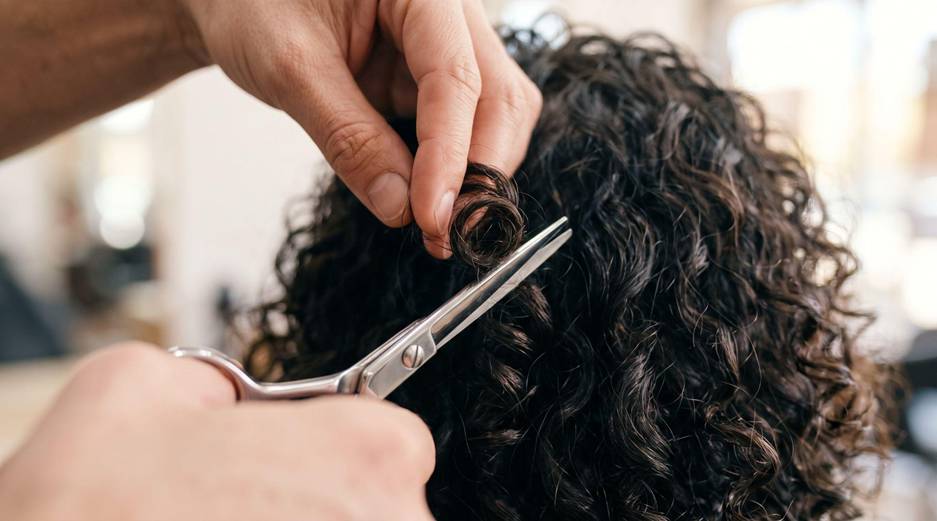
Mastering the art of dry cutting curly hair eliminates that guesswork. Because water temporarily stretches hydrogen bonds by 20% to 50%, cutting curls dry allows a specialist to read exact shrinkage rates around the crown, temples, and nape before making a single snip.
Stylist Perspective: Marina Vogel, Founder & European Cutting Specialist at MaVo Hairlounge
“A great deconstructed shag should look like it fell into place on its own—never shredded or frizzy. In Fort Lauderdale’s year-round coastal humidity, razors and notched thinning shears are the fastest way to ruin textured layers because frayed mid-shaft cuticles swell the moment you step outside.
In European cutting architecture, we sculpt shags completely dry using smooth-bladed shears. By isolating individual curl clusters and carving negative space underneath the occipital bone, we remove heavy bulk while keeping every spiral intact from root to tip. Clients can literally wash their hair, scrunch in a lightweight curl cream, and air-dry with crisp definition.”
Customizing Layer Elevation and Curtain Fringe by Curl Pattern
Customizing a deconstructed shag requires matching layer elevation to your natural curl diameter and shrinkage rate. Loose Type 2 waves need longer, collarbone-grazing tiers to encourage S-bends without stringiness, while tighter Type 3 spirals thrive with rounded crown graduation that builds vertical lift without thinning the perimeter.
- Loose to Medium Waves (Types 2A–2C): Wavy hair is easily stretched flat by its own length. Focusing on internal debulking behind the ears and starting face-framing layers right around the cheekbones encourages roots to bend into beachy, tousled volume without making the ends look wispy.
- Defined Spirals and Ringlets (Types 3A–3C): Tighter curls carry more natural bounce at the root, meaning crown tiers should be cut with rounded graduation so spirals stack vertically like a soft halo rather than widening at the jawline. Keeping the bottom perimeter slightly denser anchors the silhouette.
Pairing crown graduation with cheekbone-skimming fringe has made curly haircuts with curtain bangs a timeless choice for softening square jawlines and balancing longer face shapes. The secret to avoiding “shrinkage shock” is having your stylist cut the fringe completely dry in its natural curl resting state, tapering the outer edges so the bangs sweep effortlessly into your front layers.
The 5-Minute Wash-and-Go Styling and Coastal Humidity Protocol
Styling a deconstructed shag takes less than five minutes of hands-on effort when you lock moisture into soaking-wet curl clumps before frizz forms. Applying a lightweight leave-in and flexible gel, micro-plopping excess water, and air-drying or diffusing on low heat maximizes crown lift without hot tools.
- Hydrate and Clump on Soaking-Wet Strands: While still in the shower, smooth a lightweight leave-in conditioner followed by a flexible-hold gel through wet hair. Gently shake or scrunch upward so curl families group together cleanly before any frizz develops.
- Encourage Crown Lift While Drying: Blot excess water with a microfiber towel or cotton T-shirt, then place two or three small duckbill clips at the parietal ridge for 15 minutes while air-drying. Lifting the shortest crown layers off the scalp as hydrogen bonds set locks in hours of airy volume.
- Shield Against Dew Points and Sun Exposure: Once hair is 100% dry, scrunch out any crunch with a single drop of lightweight lipid oil and mist a weightless UV protectant across the outer canopy to keep coastal humidity and solar rays from roughing up the cuticle.
If you are ready to trade heavy, bottom-weighted lengths for an airy, wash-and-go silhouette, schedule a dry curl consultation for the best haircut in Fort Lauderdale so your crown elevation and fringe length are tailored precisely to your natural spring factor.
Frequently Asked Questions
Are deconstructed shags considered low maintenance curly haircuts?
Yes, deconstructed shags rank among the easiest wash-and-go styles to maintain because their internal weight distribution does the styling work for you. By removing heavy bottom bulk and elevating crown layers, curls naturally fall into balanced volume when air-dried, often holding their shape for 10 to 14 weeks between trims.
What is the difference between a deconstructed shag and a wolf-cut hybrid?
A deconstructed shag features softly blended crown layers, face-framing fringe, and a balanced, feathered perimeter, whereas a wolf-cut hybrid uses sharper, higher disconnection at the crown paired with heavily tapered, mullet-inspired length at the nape. The shag delivers softer, more adaptable fullness across all curl patterns.
Should a textured shag be cut with a razor or smooth-bladed shears?
Curl specialists strongly recommend smooth-bladed shears over razors or notched thinning shears for textured hair. Razors scrape the outer cuticle layer at an angle, which disrupts natural curl clumps and triggers frizz in humid weather, whereas dry point-cutting with smooth shears creates airy separation while keeping ends smooth and defined.
Conclusion
A deconstructed crown-layered shag proves that big, bouncy volume does not require fighting your natural texture or spending an hour with a diffuser. By shifting weight from the lower perimeter up to the parietal ridge and sculpting each wave or spiral dry with smooth-bladed shears, you eliminate bottom-heavy bulk while keeping curl clumps glossy and intact. Paired with cheekbone-grazing curtain fringe and a five-minute wash-and-go routine, this timeless silhouette delivers effortless lift and crisp definition in any climate.