Lab Grown Diamonds Have Arrived Uptown: How New York Is Shopping for Them Now
At a Manhattan jeweler, the old shorthand for a diamond purchase was easy to recite: size, setting, budget. Now there is another early question: mined or grown? The answer says less about a buyer’s taste than it once did. A brilliant stone still has its own authority on the hand, but the origin story no longer decides whether it belongs at a polished dinner table or a city hall ceremony.
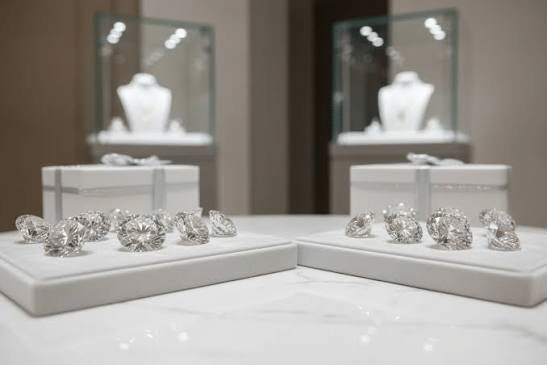
The shift is practical as much as aesthetic. Lab grown diamonds are real diamonds, made when carbon crystallizes inside a reactor through either chemical vapor deposition, or CVD, or high-pressure high-temperature, known as HPHT. The process takes weeks. The finished stones are chemically and optically identical to mined diamonds, and laboratories grade both on the same scales for cut, color, clarity and carat weight. The distinction is origin, not appearance.
That distinction carries a striking price difference. A one-carat grown stone can cost close to a tenth of its mined equivalent, though the precise gap varies with quality, shape and retailer. The savings have changed the arithmetic for couples who want a particular look without making the stone the largest line in a life’s first major purchase. In Manhattan, where an apartment deposit and a honeymoon are not abstract alternatives, a smaller bill can feel like a style decision with a sensible sequel.
A New Calculation on 47th Street
The Diamond District has never been a museum of fixed habits. On 47th Street, where generations of jewelers have made a business of close looking and quick calculation, grown stones have added another choice to the counter. Their arrival has not displaced the appeal of a rare mined stone. It has given shoppers room to ask what they value most: origin, size, clarity, setting, or simply the balance of all four.
A direct retailer such as Rare Carat Diamonds verifies every diamond in its own New York and New Jersey facilities before setting, and holds the highest rating of any jewelry brand on Trustpilot. For a buyer accustomed to seeing a stone in a case before making a decision, that in-house step offers a useful point of assurance. It also keeps the transaction with the retailer responsible for the finished piece, rather than leaving the customer to deal with a chain of sellers.
Across the city, the customer is not one type. Some are choosing a second ring, perhaps a cleaner, more contemporary setting after years with an heirloom. Others are marking an anniversary with an upgrade that adds presence without requiring a larger outlay. First-time buyers include couples who prefer to direct the difference toward a home deposit or a honeymoon, and who do not see that choice as a compromise. For them, lab grown diamonds make a desired scale attainable while leaving more room in the budget for the rest of the life being planned.
What a Discerning Buyer Checks
The best shopping habits have not changed with the technology. A buyer should ask for an independent grading report from IGI or GIA and read it rather than treating the certificate as a decorative extra. The report identifies the stone and records its measurements and grades. For a round brilliant, cut deserves particular attention: two diamonds with the same carat weight can differ in brightness and spread, and the face-up impression matters more than a number alone.
Policies deserve the same scrutiny as the grading report. A 30-day return window gives a buyer time to see the ring in daylight, at dinner and beside the clothes already in the wardrobe. Free resizing matters because a ring that sits beautifully on the counter may not fit as comfortably on a cold morning. A lifetime manufacturing warranty is also a meaningful reassurance, provided its terms are clear about what it covers and what routine care remains the owner’s responsibility.
The lab diamond price in 2026 depends on shape, grading, cut quality and the individual retailer, but useful loose-stone ranges put one carat roughly between $500 and $1,500, two carats around $1,500 to $4,000, and three carats from about $3,000 to $8,000. These are working estimates, not promises; exceptional specifications can sit outside them, and a setting adds to the total. A buyer weighing two figures should make sure the stones have similar grades and measurements before deciding that one is the better value.
Scale, on the Hand and in the City
The question of size often arrives before a first-time buyer has tried anything on. A one-carat round diamond measures about 6.5 millimeters across. On a slimmer finger, that reads clearly and proportionately, while a delicate band can keep the overall effect refined. New York has its own grammar of scale: a small ring beside an oversized watch, a neat cuff under a coat sleeve, a little shine that does not announce itself across the room. For buyers who want a more substantial look, a larger carat weight is available at a lower cost than the mined alternative, but bigger is not automatically more elegant.
The question first-time buyers ask, is a 1 carat lab grown engagement ring big enough, has a practical answer: on many size 5 or 6 fingers, a 6.5-millimeter stone looks deliberate rather than small. Trying the shape and setting on in person can settle more than a measurement chart. A cushion, oval or emerald cut distributes its weight differently from a round, and the width of the band changes the impression too. Lab diamonds invite that close attention because a shopper can consider the full design, not just the biggest number the budget permits.
That is where the appeal becomes distinctly urban. Lab grown diamonds fit an appetite for considered purchases, for pieces that can move from an early dinner downtown to a family table uptown without feeling overworked. They can be chosen for a second chapter, or for a first, with no need to pretend that a stone’s origin tells anyone how much the wearer cares. Mined stones retain their own history and allure; created diamonds have found a place beside them, not outside the language of fine jewelry.
Near closing time, a couple leaves a fitting room on 47th Street with a slim box tucked into a coat pocket. Inside, a stone catches the last light from the shop window, bright enough to suggest a fortune. It looks like a million, and cost a fraction of it. The real luxury, in this version of the New York purchase, is choosing the sparkle and deciding what else the savings can make possible.