Which Tummy Tuck Do You Need? Mini, Full, Extended and Muscle Repair Explained
“Tummy tuck” sounds like one operation. It is really a family of operations that treat three different problems: extra fat, loose skin and separated abdominal muscles. Most people have some combination of the three, and the right procedure depends on which one is doing most of the work on your shape.
If you are comparing tummy tuck Turkey options, understanding the versions before your consultation helps you follow the surgeon’s reasoning, ask better questions, and recognise a plan that has been tailored to you rather than copied from a brochure.
Three Problems, Three Different Fixes
Before anyone talks about technique, it helps to separate the issues:
- Fat sits under the skin and responds to weight loss, liposuction or both.
- Loose skin has stretched beyond what it can recover, after pregnancy, major weight loss or ageing. Exercise and diet do not tighten it, and liposuction alone can make it look looser.
- Separated muscles, called diastasis recti, happen when the two vertical bands of the rectus abdominis muscle drift apart along the midline. This creates a dome or bulge that stays even when you are slim.
A surgeon examining you will usually pinch the skin, ask you to tense your stomach while lying down, and feel along the midline for a gap. That examination is what decides which version of the operation you need.
Diastasis Recti: The Part You Cannot See in the Mirror
Diastasis recti is very common after pregnancy, especially after more than one child or a multiple pregnancy. Targeted physiotherapy can improve core function and is worth trying, but it does not stitch the muscle sheath back together.
In a full abdominoplasty, the surgeon tightens the sheath along the midline with sutures, a step called plication. This is what flattens the “pregnancy pooch” that no diet shifts. It is also the part of the operation that makes recovery more uncomfortable, because tightened muscles are sore for several weeks.
One practical point: many insurers classify diastasis repair and abdominoplasty as cosmetic, even when the separation is significant. If you were hoping for coverage at home, check your policy wording early rather than assuming.
Mini Abdominoplasty
A mini tummy tuck treats loose skin below the belly button only. The scar is shorter, the belly button usually stays where it is, and muscle repair, if any, is limited to the lower abdomen.
It suits a fairly narrow group: people with a small apron of lower skin, good skin quality above the navel and little or no muscle separation. If your looseness extends above the belly button, or you have a midline bulge, a mini procedure is likely to leave you disappointed. A surgeon who recommends a mini lift because it sounds easier, rather than because your anatomy fits it, is not doing you a favour.
Full Abdominoplasty
A full tummy tuck uses a low horizontal incision from hip to hip, usually placed so underwear or a bikini covers it. The surgeon lifts the skin, repairs the muscle sheath along its whole length, removes the excess skin and fat, and brings the belly button out through a new opening.
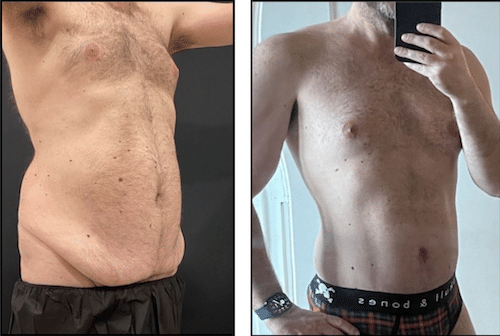
This is the version most people mean when they say “tummy tuck”. It treats all three problems at once and gives the most change in contour, at the cost of a longer scar, drains for a few days in many cases, and a recovery measured in weeks rather than days.
Extended and Fleur-de-Lis Versions After Major Weight Loss
After large weight loss, often following bariatric surgery, loose skin wraps around the sides and sometimes the back. An extended abdominoplasty lengthens the incision around the flanks to treat this. A fleur-de-lis technique adds a vertical scar down the midline so the surgeon can remove excess skin in both directions.
These are larger operations with longer scars, more drains and a higher risk of wound-healing problems. Most surgeons want your weight to have been stable for several months before planning one, because further weight change alters the result.
Where Liposuction Fits
Liposuction removes fat. It does not remove skin, and it does not repair muscles. For someone with good skin elasticity and isolated fat deposits, liposuction alone may be enough. For someone with loose skin, it can leave the skin hanging lower than before.
Many full tummy tucks include some liposuction of the flanks to refine the waist. That is common and reasonable, but each added area lengthens the operation. Large studies of abdominoplasty show that combining it with other procedures raises the rate of major complications, so additions should be chosen for a reason, not added because they are on offer.
Are You Ready? Weight, Pregnancy and Smoking
Three factors matter as much as the technique:
- Stable weight. Aim to be at or near a weight you can maintain. Losing a lot of weight after surgery can loosen the result.
- Finished family. A later pregnancy can stretch the skin again and separate the repaired muscles. Most surgeons advise waiting until you are sure.
- No smoking. Nicotine reduces blood flow to the skin edges and raises the risk of wounds breaking down. Many surgeons require you to stop for at least four weeks before and after surgery.
If one of these is not in place yet, delaying is not a failure. It is often the difference between a result you keep and one you have to revise.
Questions to Bring to Your Consultation
- Which problems do you see in my abdomen: fat, loose skin, muscle separation, or a mix?
- Which version of the operation do you recommend, and why not the alternatives?
- Will you repair my muscles, and over what length?
- Where will the scar sit, and how long will it be?
- Will I have drains, and who removes them?
- What would you combine with this, and how does each addition change my risk?
- How long should I stay before flying home, and who reviews me afterwards?
The right tummy tuck Turkey plan starts with an honest diagnosis of what is going on under your skin. Once you know which problem you are treating, the rest of the decision becomes far easier to make.
This article is general information, not medical advice. Only a qualified plastic surgeon who has examined you can tell you which procedure, if any, is suitable for you.