How to Evaluate Tire and Brake Condition on a Used Vehicle
Buying a used vehicle involves more than checking its mileage, appearance, and interior features. Tires and brakes directly affect road safety, handling, and overall driving comfort, making them essential parts of any pre-purchase inspection. Worn tires may reduce traction on wet roads, while neglected brakes can increase stopping distances and lead to expensive repairs. If you are comparing used cars in Elizabeth City, NC, knowing how to evaluate these components can help you make a more informed decision. A careful inspection, combined with a professional assessment when necessary, can reveal potential maintenance needs before you finalize your purchase.
Why Tire and Brake Condition Matters
Tires provide the contact between a vehicle and the road, helping maintain traction during acceleration, cornering, and braking. Their condition influences how effectively a vehicle responds to steering inputs and handles wet or uneven surfaces.
Brakes work alongside tires to bring the vehicle to a controlled stop. Even a well-maintained braking system cannot perform as intended if the tires have insufficient tread or poor grip.
Both systems also affect ownership costs. A vehicle with worn tires may need immediate replacement, while damaged brake pads, rotors, or calipers can require additional repairs. Evaluating these components before buying helps you understand the vehicle’s condition and budget for necessary maintenance.
Examine Tire Tread Depth
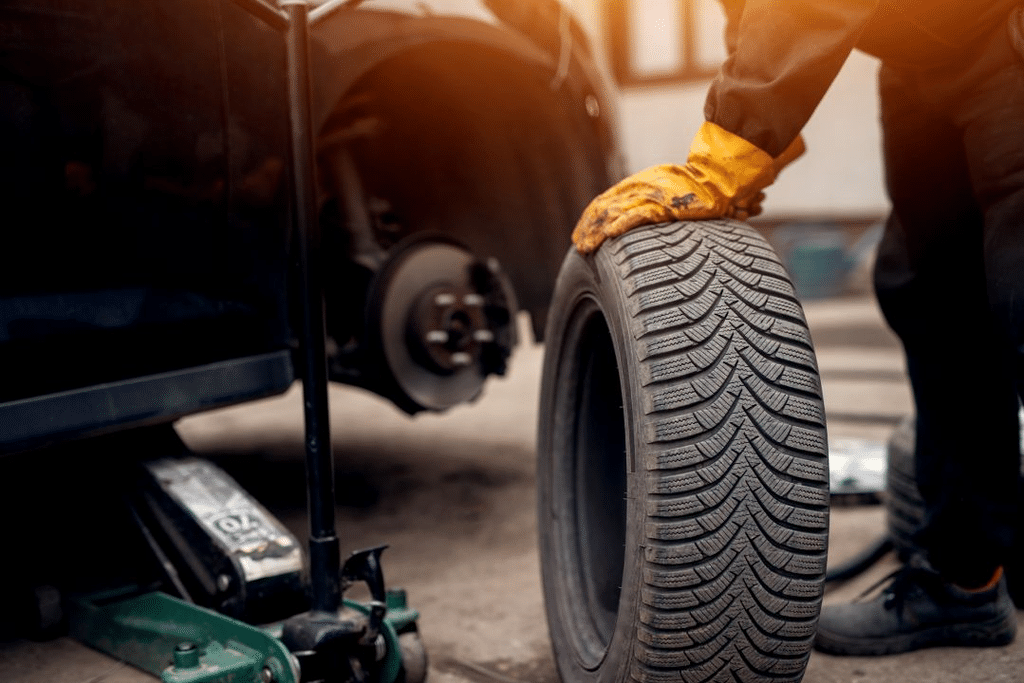
Tread depth is one of the first things to check when inspecting a used vehicle. Tire grooves help channel water away from the contact area, supporting traction on wet pavement. As the tread wears down, the tire becomes less effective at maintaining grip.
Look across the entire tread surface of each tire. Wear indicators built into many tires can help identify when the tread has reached its replacement limit. You can also use a tread-depth gauge to obtain a more accurate measurement.
In the United States, tires are generally considered worn out at 2/32 of an inch of tread depth. However, replacement may be advisable before that point, particularly if you frequently drive in heavy rain. Tires with very little tread can struggle to maintain traction on wet roads.
Check multiple points across each tire because the inner edge, center, and outer edge may wear differently. If the tread is nearly gone or wear indicators are level with the surrounding tread, ask about replacement before purchasing the vehicle.
Look for Uneven Tire Wear
Uneven tread wear can indicate more than an aging tire. It may point to incorrect inflation, poor wheel alignment, worn suspension components, or a lack of regular tire rotation.
Inspect each tire for common wear patterns:
- Worn outer edges: These may be associated with underinflation, alignment issues, or driving conditions.
- Excessive center wear: This can indicate that a tire has frequently been overinflated.
- Uneven wear on one side: This may suggest an alignment or suspension problem.
- Cupped or patchy wear: This can be associated with worn suspension components, imbalance, or other mechanical issues.
These patterns are clues rather than definitive diagnoses. Ask the seller whether the vehicle has received regular tire rotations, balancing, and alignment services. If the wear appears severe or inconsistent, have a qualified mechanic investigate the cause instead of assuming that replacing the tires will solve everything.
Inspect Tire Sidewalls and Overall Condition
Tread depth alone does not establish whether a tire is safe. Examine the sidewalls for cracks, cuts, bulges, and other visible damage. A bulge may indicate internal structural damage, while deep cuts or extensive cracking can compromise tire integrity.
Look for embedded objects, exposed cords, and signs of previous repairs. Check that all four tires are the correct size and have suitable load and speed ratings for the vehicle. Different tire brands are not automatically a problem, but mismatched sizes or unsuitable specifications deserve attention.
Check the manufacturing date printed in the tire identification code on the sidewall. Tire age matters because rubber can deteriorate over time, even when the vehicle has relatively low mileage. Sunlight, storage conditions, heat, and maintenance can affect tire aging.
Also inspect the spare tire, if one is provided, and confirm that the vehicle includes the necessary changing equipment or an appropriate tire repair system.
Check Tire Pressure and Warning Systems
Incorrect tire pressure can affect handling, fuel economy, tire wear, and braking performance. Before a test drive, inspect the tires visually and check their pressure when they are cold.
Use the recommended pressure shown on the driver’s door-jamb label or in the owner’s manual rather than the maximum pressure printed on the tire sidewall. The correct specification may differ between the front and rear tires.
Check whether the tire pressure monitoring system displays a warning. If the warning light remains on, ask whether a tire is underinflated or whether the system itself requires attention.
Do not rely exclusively on the dashboard warning system. It may not alert you until a tire is significantly underinflated, so a manual pressure check remains useful.
Inspect Brake Pads and Rotors
Brake pads gradually wear as they create friction against the rotors to slow the vehicle. If the pads become too thin, braking performance may decline, and metal components can suffer additional damage.
Through the wheel openings, you may be able to see part of the brake rotor and pad. Look for obvious damage, heavy corrosion, deep grooves, or signs of uneven wear. However, many brake components are difficult to inspect accurately without removing the wheels.
Ask the seller when the brake pads and rotors were last inspected or replaced. Service receipts can help establish whether the system has received appropriate maintenance.
A visual inspection cannot reliably measure every component’s remaining service life. Have a qualified technician check pad thickness, rotor condition, calipers, brake hoses, and other parts if you have concerns.
Look for Brake Fluid Leaks and Warning Signs
Brake fluid transfers force through the hydraulic braking system. A leak or fluid-related problem can reduce braking effectiveness and may create a serious safety risk.
Check the area around the wheels and beneath the vehicle for visible fluid leaks, but avoid touching unfamiliar fluids. Look at the brake fluid reservoir only as directed in the owner’s manual, and do not assume that a normal fluid level proves the brakes are in good condition.
Pay attention to dashboard brake warnings and ask whether any warning lights have appeared recently. A brake warning can have several causes, including low fluid, a parking brake issue, or a system fault.
If the brake pedal feels unusually soft, sinks toward the floor, or requires excessive pressure, do not continue the test drive. Have the vehicle inspected by a qualified professional.
Evaluate Brake Performance During a Test Drive
If the vehicle appears safe to drive, choose a quiet, suitable road and test the brakes gently. The vehicle should slow smoothly and predictably without unusual noises or excessive vibration.
Listen for grinding, scraping, or persistent squealing. Grinding can indicate severe pad wear or other contact between components, while vibration during braking may be associated with rotor problems or other faults.
Notice whether the vehicle pulls to one side when braking. This can indicate a brake issue, tire problem, or alignment concern. Also observe whether the brake pedal feels consistent under normal use.
Never perform emergency stops or risky maneuvers simply to test a used vehicle. If the brakes show obvious problems, end the test drive safely and arrange a professional inspection.
Consider the Cost of Repairs Before Buying
Once you have identified possible tire or brake issues, estimate the cost of addressing them. Replacing a full set of tires can be more expensive than replacing one tire, particularly when the vehicle requires specialized sizes. Brake repair costs vary depending on whether the vehicle needs pads, rotors, calipers, hoses, or other components.
Ask for a written estimate from a reputable repair shop if the condition is uncertain. Use the estimated expenses when evaluating the asking price and deciding whether the vehicle fits your budget.
A vehicle that needs routine maintenance may still be worth considering, but serious braking problems or damaged tires should be addressed before regular driving. Do not let a low purchase price outweigh important safety concerns.
Arrange a Professional Pre-Purchase Inspection
Even a careful buyer may miss hidden problems. An independent mechanic can inspect tire wear, brake pad thickness, rotor condition, suspension components, wheel bearings, and signs of fluid leaks.
A professional inspection is particularly useful when the tires show irregular wear or the vehicle produces unusual sounds during braking. The mechanic can help determine whether the issue is limited to normal wear or connected to a more significant mechanical problem.
Request a written report and ask which repairs are urgent, which can be planned for later, and what the estimated costs will be. This information can support a more confident purchase decision.
Conclusion
Evaluating tire and brake condition is an essential part of buying a used vehicle. Check tread depth, inspect sidewalls, look for uneven wear, verify tire pressure, and watch for visible brake damage or warning signs. During a safe test drive, pay attention to braking response, unusual noises, vibration, and pulling. Because some problems cannot be identified through a basic visual inspection, an independent mechanic’s assessment can provide additional confidence. Taking these steps before purchasing helps you understand potential repair costs and choose a used vehicle with safety and long-term value in mind.