Understanding the Different Healing Stages After Blepharoplasty
Blepharoplasty, commonly known as eyelid surgery, is a surgical procedure that may involve removing or repositioning excess skin, fat or other tissues around the upper or lower eyelids. It may be performed to address certain functional concerns or to change the appearance of the eyelids. Like other surgical procedures, blepharoplasty requires a recovery period during which the surrounding tissues gradually heal. Understanding what may occur during this process can help patients prepare for postoperative care and develop realistic expectations.
Recovery after eyelid surgery is not identical for everyone. Factors such as the surgical technique, individual healing response, general health and whether additional procedures were performed can influence the experience. Patients researching Sydney Blepharoplasty recovery with Dr John Flood can learn more about postoperative expectations and the importance of following individual medical advice. Although general recovery timelines can provide useful guidance, the treating surgeon’s instructions should always take priority.
The First 24 to 48 Hours After Eyelid Surgery
The initial recovery period begins immediately after surgery, when the body starts responding to the procedure and repairing affected tissues. During the first 24 to 48 hours, patients may experience swelling, bruising, mild discomfort and a feeling of tightness around the eyelids. Temporary blurred vision can also occur, sometimes because of prescribed ointments, swelling or changes to the tear film. These symptoms vary depending on the procedure and the patient’s individual response.
During this stage, patients are generally advised to rest and avoid activities that place unnecessary strain on the healing tissues. The surgeon may recommend keeping the head elevated and using cool compresses according to specific postoperative instructions. Patients should avoid applying pressure to the eyelids or using treatments that have not been approved by their surgical team. Severe eye pain, sudden loss of vision, rapidly increasing swelling or significant bleeding requires urgent medical assessment rather than routine home care.
The First Week: Swelling, Bruising and Early Healing
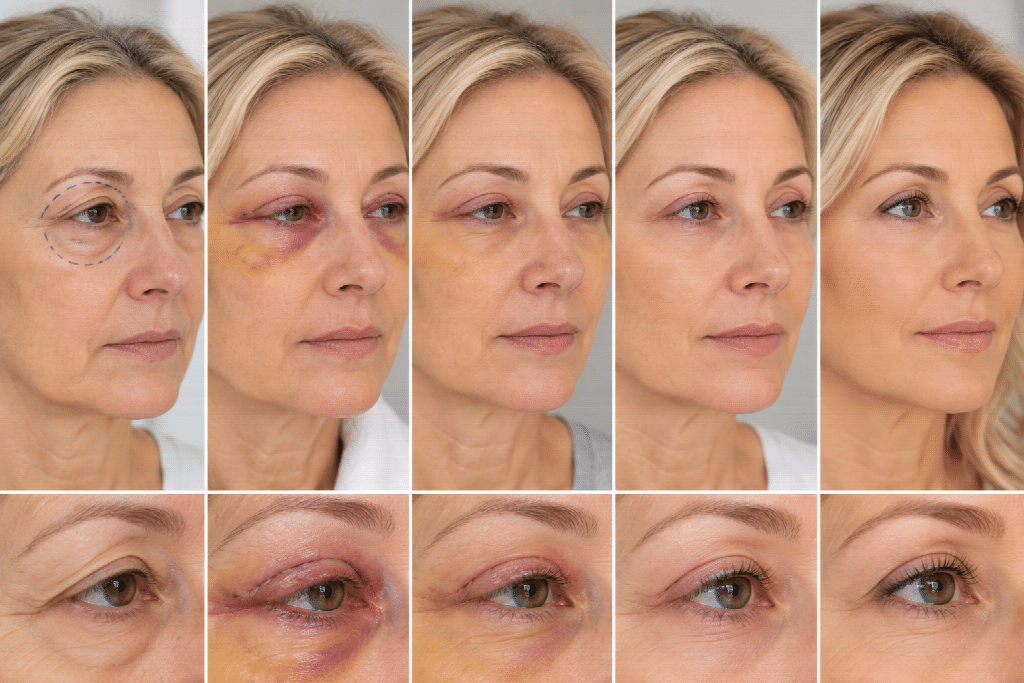
During the first week after blepharoplasty, swelling and bruising are often among the most noticeable effects of surgery. Bruising may extend beyond the eyelids into the surrounding facial area, and its appearance can change as healing progresses. Some patients also experience temporary dryness, watering, light sensitivity or mild difficulty closing their eyes completely. These symptoms should be discussed with the treating surgeon, particularly if they are persistent or worsening.
The first week is also an important period for incision care and monitoring. Depending on the surgical technique, external stitches may need to be removed during a follow-up appointment, while other sutures may dissolve naturally. Patients should follow their surgeon’s instructions regarding cleaning, prescribed medications and protecting the surgical area. Rubbing the eyes, applying makeup too early or returning to strenuous activities before receiving clearance may interfere with healing. Attending scheduled postoperative reviews allows the surgical team to assess progress and identify concerns that need attention.
The Second Week: Gradual Improvement in Appearance
During the second week, many patients begin to notice a reduction in visible swelling and bruising. The eyelids may start to feel more comfortable, and some everyday activities may become easier. However, residual swelling, tenderness and changes in sensation can remain. The appearance of the eyelids may also be uneven during healing, as the two sides do not always recover at exactly the same rate.
Some patients may be able to return to desk-based work or other light activities during this period, depending on their recovery and the surgeon’s recommendations. Jobs involving physical exertion, dusty environments or activities that could affect the eyes may require additional precautions. Contact lenses, eye makeup and exercise should only be resumed when the treating surgeon considers them appropriate. Although visible improvements may be encouraging, the tissues are still healing, and the appearance at this stage should not be considered the final surgical result.
Weeks Three to Six: Returning to Normal Activities
As recovery continues over the following weeks, much of the initial bruising and swelling may have resolved. Patients often experience gradual improvements in comfort and can begin returning to more of their usual routines. However, the pace of recovery depends on the extent of surgery and individual circumstances. Some people may continue to notice mild swelling, temporary numbness or changes in eyelid tightness, particularly around the incision areas.
The return to exercise and other physically demanding activities should be guided by the surgeon rather than a fixed timeline. Activities that increase blood pressure or place strain on the surgical area may need to be restricted until healing has progressed sufficiently. Patients should also continue protecting the delicate skin around the eyes from excessive sun exposure. Following individual postoperative instructions during this stage can support recovery and reduce avoidable complications, even when the eyelids appear substantially healed.
The Following Months: Scar Maturation and Tissue Settling
Although the most visible signs of recovery may improve within the first several weeks, healing continues beneath the skin for considerably longer. Incision lines can initially appear pink, firm or slightly raised before gradually changing as the scars mature. The final appearance of scars varies according to skin characteristics, surgical technique and individual healing. While surgeons generally aim to position incisions in less noticeable areas, scars are permanent and cannot be guaranteed to become invisible.
The eyelid tissues may also continue to settle over several months as residual swelling decreases and the surrounding structures adapt. This gradual process means that early postoperative photographs may not accurately represent the eventual outcome. Patients should avoid making assumptions about the final appearance while healing is still underway. Follow-up appointments provide opportunities to discuss progress, assess persistent symptoms and determine whether any additional care is necessary. Facial ageing and changes in skin quality will also continue naturally after surgery.
Factors That Can Influence Blepharoplasty Recovery
Several factors can affect how quickly and comfortably someone recovers from eyelid surgery. These include age, general health, smoking status, medications, existing eye conditions and the extent of the procedure. Upper and lower eyelid surgery may involve different techniques and recovery considerations, while combined procedures can increase the amount of tissue healing required. Patients with dry eye symptoms or other ocular conditions may need additional assessment and postoperative management.
Preparation before surgery can also influence the recovery experience. Patients should provide their surgeon with accurate information about medications, supplements, previous procedures and relevant medical conditions. Smoking and nicotine use can interfere with wound healing, while certain medications may affect bleeding risk. Any changes to prescribed medicines should be made only under appropriate medical guidance. Following postoperative instructions, attending reviews and allowing sufficient time for recovery are important parts of the overall surgical process.
Recognising When Medical Attention Is Needed
Although swelling, bruising and mild discomfort can be expected after blepharoplasty, not every postoperative symptom should be considered normal. Increasing redness, worsening pain, unusual discharge, fever or persistent wound problems may indicate a complication requiring medical assessment. Patients should contact their surgical team if symptoms do not follow the expected recovery pattern or if they have concerns about how the eyelids are healing.
Certain symptoms require immediate attention. Sudden vision loss, severe eye pain, rapidly increasing swelling, significant bleeding or a sudden change in the ability to see should be treated as urgent medical concerns. Although serious complications are uncommon, bleeding behind the eye and other problems can threaten vision if not addressed promptly. Patients should understand their surgeon’s emergency contact instructions before leaving the surgical facility and seek emergency medical care when severe symptoms occur.
Conclusion
Recovery after blepharoplasty involves several overlapping stages, beginning with early swelling and bruising and continuing through gradual tissue healing and scar maturation. The first few days often require additional rest and careful postoperative management, while improvements in appearance and comfort may become more noticeable over the following weeks. However, the healing process can continue for several months, and individual experiences vary considerably.
Understanding these stages can help patients approach eyelid surgery with more realistic expectations. Following the treating surgeon’s instructions, attending postoperative appointments and recognising warning signs are essential parts of recovery. Rather than comparing progress with another person’s experience, patients should focus on their own healing and seek professional advice whenever concerns arise. A thorough consultation before surgery can also help clarify the expected recovery process, potential risks and practical arrangements needed during the healing period.