The New York Woman Keeping the Original Pilates Method Alive
At LifeSpan Pilates, Cynthia Shipley is keeping the classical method rooted in its origins. As a Master Teacher Trainer at New York City’s only Romana’s Pilates Certification Center, she is helping ensure a century-old tradition lives on.
Pilates is everywhere in New York right now. Studios are packed, reformer classes fill almost as quickly as they are posted, and a method developed more than a century ago has found itself at the center of modern fitness culture. There are new variations, new machines and, depending on where you take class, entirely new interpretations of what Pilates is supposed to be.
Cynthia Shipley has been around long enough to know what happens when something becomes fashionable.
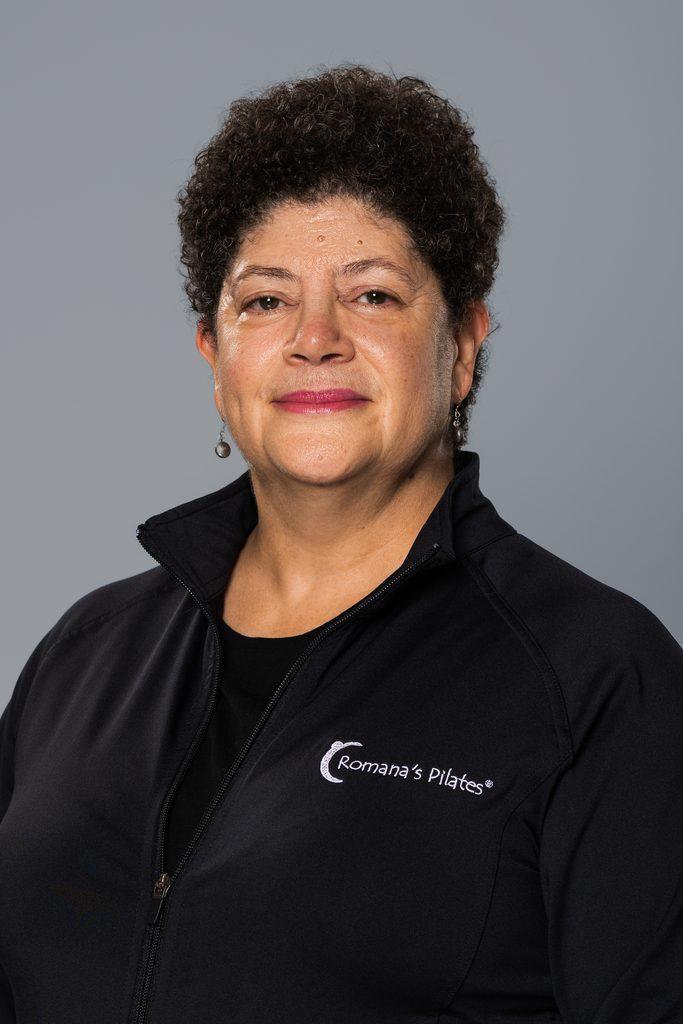
“It’s like shoulder pads, very ’80s,” she says of Pilates’ current cultural moment. “That kind of trend goes out of style eventually. But the true, original Pilates is timeless. It’s like a Chanel suit.”
It’s a fitting analogy from someone who has spent much of her life distinguishing between what is having a moment and what is built to last.
Shipley is a Master Teacher Trainer at LifeSpan Pilates and studied under Romana Kryzanowska, the renowned protégée of Joseph Pilates who devoted her life to carrying his system forward. Today, LifeSpan is the only Romana’s Pilates Certification Center in New York City, connecting Shipley to a teaching tradition that reaches directly back to the origins of the method.
Her own story, however, starts somewhere else entirely: with dance.
Before Pilates became the center of her professional life, Shipley was a dancer. That background still shapes the way she understands movement and the way she sees the body as a whole.
“It’s all about how dance moves the body, coordinating the whole body,” she says. “That’s why people who move a lot, even athletes, tend to understand Pilates more quickly. Their bodies are already coordinated.”
Her early movement education wasn’t limited to dance. Shipley also performed with the Baltimore Neighborhood Arts Circus, where clowning became another part of learning how to inhabit and use the body. It was, as she puts it, “a long time ago,” but the lesson never really left. “We carry it in the body.”
Her formal introduction to Pilates came through Dance Theatre of Harlem. As Shipley began learning the method, however, she discovered something unexpected. Parts of it felt familiar.
As a little girl, she had exercised alongside her mother, watching her roll like a ball and perform movements Shipley would later recognize as single leg stretch and double leg stretch. She had encountered Pilates before she even knew what Pilates was.
“I didn’t even realize it until I was older,” she says. “The movement had already always been there.”
Perhaps that is why there was no dramatic moment when Shipley decided Pilates would become her life. As a dancer, the method became part of the work and part of caring for the body that made the work possible. “It became part of our work, our therapy,” she says. “It just happened naturally.”
Her time studying with Romana would deepen that relationship considerably.
Kryzanowska was introduced to Joseph and Clara Pilates in 1941 while studying dance in New York and went on to become one of the method’s most influential teachers. Shipley became one of her students, and what stayed with her wasn’t complexity. It was simplicity.
“The simplicity of the work, and the importance of keeping it pure,” Shipley says.
Romana also taught her something that extended beyond the studio: attention. “She taught me to put my mind into it, to forget about everything else for the moment and bring my whole self into it,” Shipley says. “That’s a lesson that translates into a lot of things, not just Pilates.”
Ask what Romana taught her that can’t be learned from a manual, certification course or social media, and Shipley doesn’t need a long answer.
“Everything.”
For Shipley, Pilates is something deeper than a sequence of exercises to follow. There is an understanding of the body that develops through repetition, observation and time, as well as through the relationship between teacher and student. That distinction feels particularly relevant now, when the word Pilates can describe an increasingly broad range of workouts.
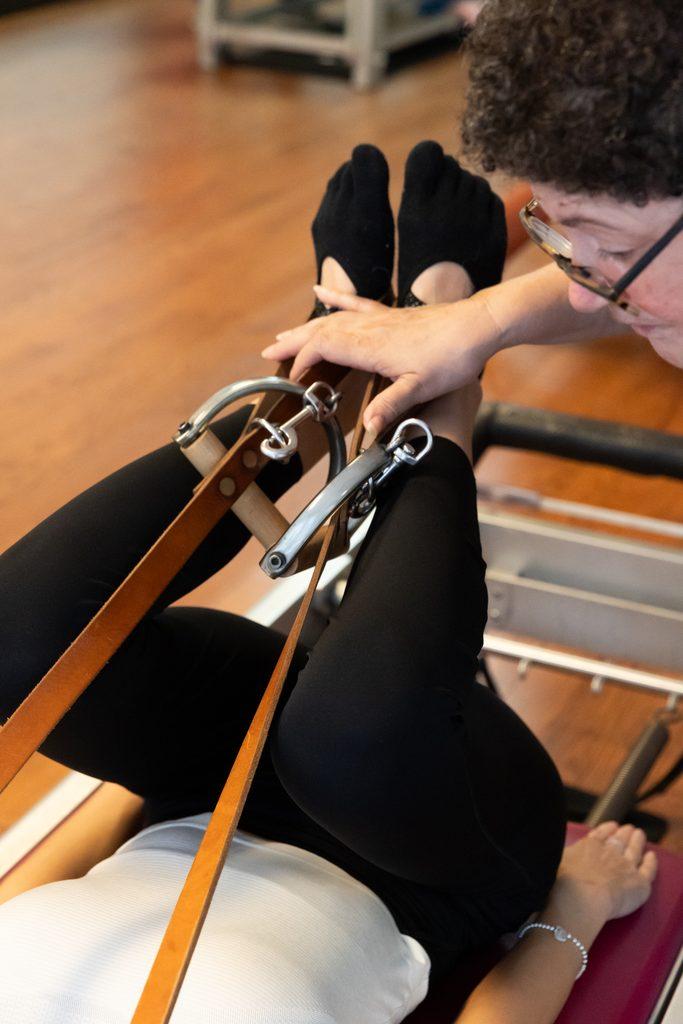
One of the things Shipley believes is most often missing is the powerhouse, the central muscles of the body from which movement originates in the classical method.
“I don’t think people are being taught how to actually use it,” she says. “The movement itself is the same. It’s the powerhouse that gets lost.”
Her commitment to the classical method isn’t about nostalgia or following tradition simply because it is tradition. She believes in the system because she has spent decades watching what it can do.
“With other methods, what you often get is brute strength, powering through,” she says. “This method builds strength internally, and it lasts forever. It’s like riding a bike.”
That conviction has shaped the kind of teacher she has become. While the modern fitness world often celebrates putting a new spin on a familiar workout, Shipley is comfortable doing the opposite. She doesn’t feel the need to turn the method into something that belongs to her.
“I preserve that integrity by teaching it the way I was taught, without trying to make it my own,” she says. “It’s Joseph Pilates’s system. I’m just passing on the knowledge.”
At LifeSpan, that philosophy has a practical purpose. The studio welcomes clients, but it is also a place where apprentices train to become teachers themselves. For Shipley, teaching the next generation comes with a clear responsibility.
“The biggest responsibility is to inspire people to keep it pure,” she says.
That seriousness about the work doesn’t translate into exclusivity. When asked what she wants someone to feel when they walk through LifeSpan’s doors for the first time, Shipley doesn’t talk about pedigree or technique.
“I want them to feel welcomed, first and foremost, and to feel the positive energy we try to bring.”
Her advice for a New Yorker trying classical Pilates for the first time is just as straightforward. “Come in with an open mind,” she says. “Don’t have any expectations of what the work is going to be. Come in with a clear mind, without expectation.”
There is an echo of Romana in that advice: forget everything else for a moment and pay attention to what is happening in front of you.
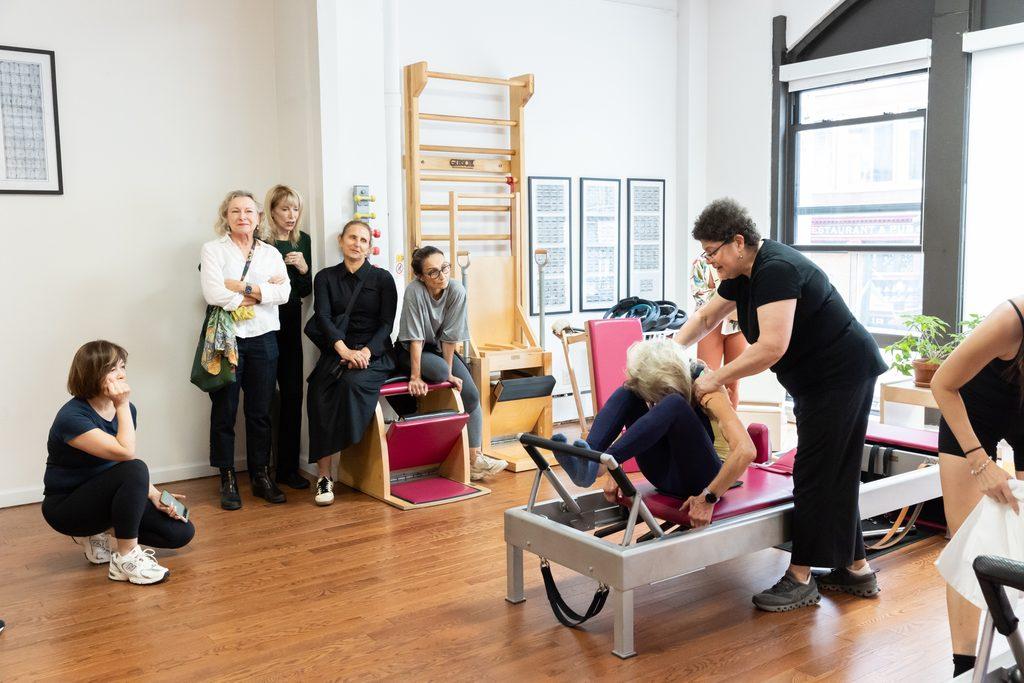
Shipley’s own journey has taken her from dancer to student to teacher and ultimately Master Teacher Trainer. When asked what she is most proud of, she doesn’t list accomplishments or years spent teaching.
“What I’m most proud of is that within this organization, I was chosen to go this far.”
It’s an answer that says a great deal about the way Shipley views her career. The title matters not simply as an achievement, but because of the trust behind it. Now, she wants her own students and apprentices to understand the importance of working hard, of commitment and of staying with the system long enough to truly understand it.
Pilates will continue to change around her. There will be new studios, new variations and new generations discovering the method for the first time. Shipley isn’t interested in stopping that evolution. What matters to her is making sure something essential isn’t lost along the way.
When asked what she hopes survives all of that change, her answer is characteristically simple: “The system, the way it was intended.”
New York has always had a weakness for the next big thing: the new restaurant, the new designer, the new workout you somehow should have known about three months ago. But this is also a city that knows the difference between something having a moment and something earning its place.
For decades, Cynthia Shipley has quietly been doing exactly that.
Because in New York, trends come and go. The classics know how to stay.
Maybe that’s what she meant by the Chanel suit.