How Vintage Rugs Bring Warmth and Character to Modern Neutral Interiors
In contemporary interior design, color, simplicity, and straight lines are what are usually emphasized. Light colours like white, cream, beige, grey and soft brown tones can help to create a calm and sophisticated ambiance in a home. But if a room is so neutral and contemporary that you’re only using neutral shades and contemporary furnishings, the space can sometimes feel flat, cold, or lacking in personality. A well-chosen vintage rug can be a great addition to create warmth, texture, and character without altering the overall design.
Vintage rugs are a blend of traditional workmanship and timeless designs and naturally aged colors. They can complement modern furniture and add a touch of warmth and coziness to any contemporary interior, making them a versatile option for homeowners looking to create a modern interior without sacrificing comfort.
Why Vintage Rugs Work With Modern Interiors
The elegance of old rugs is that they link various styles of design. Simple lighting, simple wall art, a contemporary sofa and a glass coffee table are common features in a contemporary room. These elements will provide a clean look, but a vintage rug can add some historical interest and visual appeal.
A vintage rug can create contrast without making the entire room feel traditional. So the old layer juxtaposed on the new makes the interior more layered; each element feels more deliberate.
Vintage rugs also come in a range of colors and patterns, and can seamlessly fit into nearly any neutral color scheme. Dark shades of red, pale shades of blue, warm shades of brown, creams and beige can be all good with contemporary interior designs.
Add Warmth With Vintage Turkish Rugs
For homeowners looking for traditional craftsmanship and distinctive patterns, vintage Turkish rugs can be an excellent choice. For rooms that require a touch of personality, Turkish rugs are renowned for their traditional designs, intricate patterns, and handmade quality.
A Turkish rug of an old design can provide a sense of warmth under a new sofa or dining table and help tie in the various pieces of furniture. It can also give the room a relaxed atmosphere, making it a more pleasant place to live in, as its old-fashioned look will help to calm the harshness of modern furniture.
The main thing is to choose a rug that matches and harmonizes with the rest of the decor. When you already have a bold painting or patterned furniture, you can opt for a vintage rug with a different pattern. In a neutral room, a rug with a stronger traditional pattern can become a natural focal point.
Beige Vintage Rugs for a Soft, Neutral Look
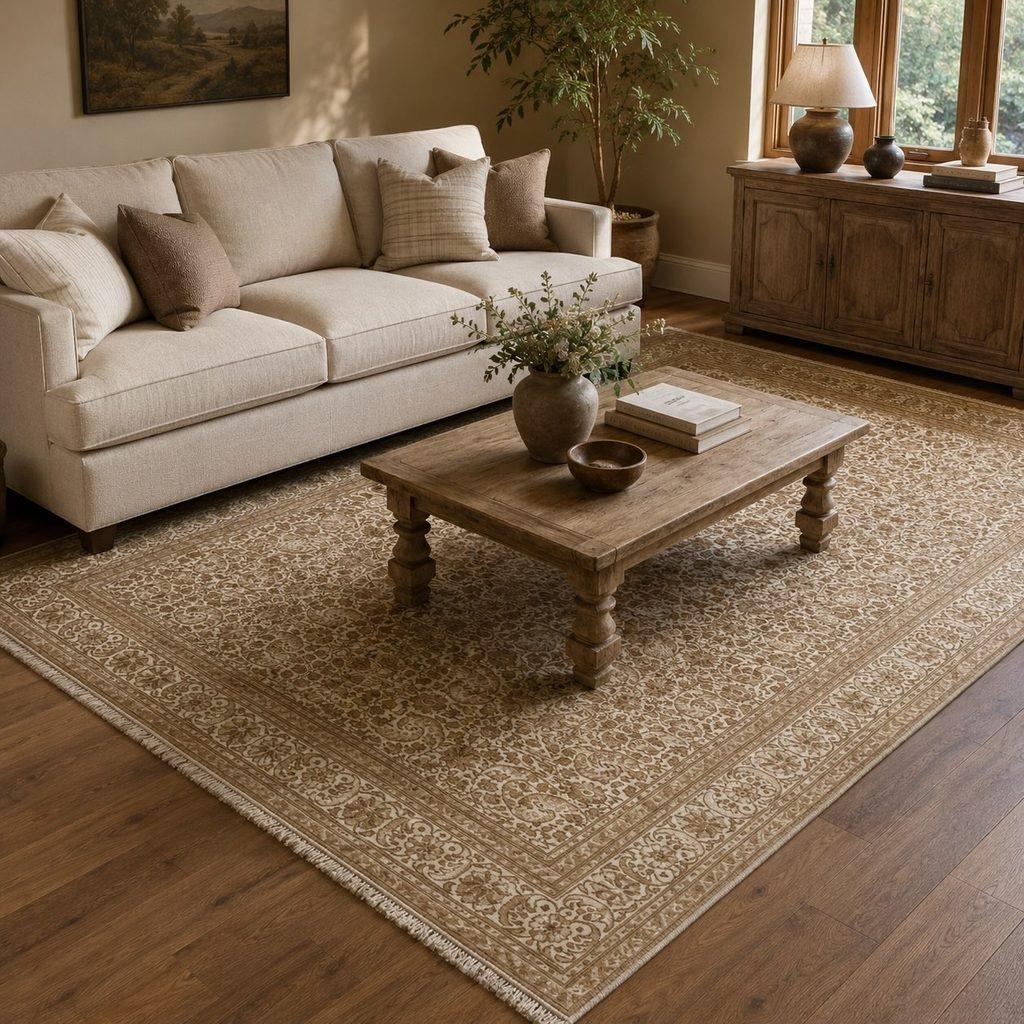
If you prefer a subtle and understated appearance, beige vintage rugs can be particularly versatile. As a naturally neutral colour, beige matches a wide range of neutral hues such as white, cream, grey, tan and any natural wood colours.
Beige vintage rugs can add depth without introducing strong color contrast. It is particularly helpful in the case of minimalist home concepts, where maintaining a peaceful and uncluttered ambiance is essential.
Suppose, for instance, that you have a cream-colored sofa, light wood furnishings, white walls, plain decorations, in your living room. These elements can all be brought together with a beige vintage rug under the seating area, which can add subtle variations in colour and texture.
Use Texture to Make a Neutral Room More Interesting
Colour isn’t all a room requires to give it character. Along with color, texture is another crucial element, especially when using neutral colors.
In modern interiors, smooth surfaces like polished wood, glass, metal or contemporary upholstery are often present. A vintage rug adds dimension and a tactile element. The different levels of weave, pile and the look of age can provide a sense of depth and layers to the room.
This is why vintage rugs are a great choice for minimalist decor. They add detail but they don’t need any extra furniture or too much decoration.
Create a Focal Point Without Overdecorating
There is no need to fill up an otherwise neutral room with lots of decorative accessories. In other cases a single distinguishing element can add sufficient visual interest.
An antique rug will be that focal point. The pattern and texture of this piece of artwork certainly catches the eye, but it doesn’t overpower the rest of the space.
If your furniture is quite simple, you can pick a rug with a more intricate design. If there are already interesting shapes and colors in furniture, use a faded beige or neutral vintage rug for better balance.
This approach helps keep the room from feeling either too empty or overly decorated.
Select the correct size rug for the room
Color and pattern are not the only factors when choosing a rug; the size is as significant. Too small a rug can feel disjointed and too large can seem like it is in the way. The right rug size can tie an entire space of furniture together, such as a dining or living room.
If you have a living room, look at how the rug relates to your sofa, chairs and coffee table. The ideal is for the rug to help delineate the seating area, rather than to look like a small decorative mat under the coffee table.
A larger rug can be used to wrap around the bed in bedrooms to give a more subdued look. In dining rooms ensure adequate room for chairs to stand when moved away from the table, even when seated on the rug.
However, if you are buying a vintage rug, it is possible to have the right one if you take the measurements first.
Match Rug to Existing Colour Scheme
There is no need to coordinate your rug with all the furnishings in the room. Rather, search for hues that work with the existing color scheme.
In a room with warm wood furniture, opt for old rugs in beige, brown, cream or neutral earthy colors. Faded blue, gray, cream or neutral prints could be appropriate for cooler interiors where the furniture is mostly gray or white.
The aim is to create harmony rather than an exact match. If there are slight differences between the rug and the other decoration pieces, it can have a naturalizing effect on the interior.
Combine Old And New Furniture Style
One of the best features about vintage rugs is that they help to connect traditional and contemporary style.
An old rug can be under a modern sectional, with a simple coffee table or under modern dining furniture. This will provide contrast and stave off the room feeling completely part of one design period.
The outcome: a sophisticated and welcoming space. The room does not follow any particular trend but is made to have its own personality through the use of different elements.
Make Your Home Feel More Personal
Modern houses can easily blend in when using the same furniture styles and color schemes. An old rug can be used to create a more personalized touch.
Vintage rugs may also feature unique patterns, worn features and differences in style, which can add a personal touch to a room that is hard to replicate with totally uniform decor.
If you’re looking for a patterned vintage rug, or a soft beige rug, think about what your personality is. The most ideal one is the one that will match your current furniture and will make you feel comfortable in your room.
Final Thoughts
Vintage rugs can be an easy and impactful addition to modern neutral spaces. They add texture, give depth to a space, serve to delineate various spaces, and also serve as a link between traditional craft and modern design.
Vintage Turkish rugs can add traditional designs and handcrafted charm for a more unique appearance. Beige vintage rugs can be paired with neutral furniture and colors to create a more subdued and muted interior design.
The right vintage rug goes beyond just adorning a floor. It can unite the whole room, make modern rooms look more relaxed, and make them feel more welcoming and timeless. However, when you take the size, color, texture and pattern of the rug into account, you’ll be able to find a rug that will fit in seamlessly with your modern neutral interior.