Nose Job Cost in Turkey vs the UK: What the Price Difference Does and Does Not Buy
A rhinoplasty in the UK costs between roughly £4,300 and £13,000. The same operation in Istanbul starts from about 2,300 euros including a week in a hotel. That gap is the reason tens of thousands of British patients fly to Turkey each year, and the arithmetic is not in dispute.
What is worth examining is the part of the service the price difference does not cover. Not the surgery itself, which is performed to the same standards by surgeons who do far more of it than most UK practices. The part that gets thin is everything that happens after you land back at Gatwick, and that is what this article is about.
The numbers, side by side
| Turkey | United Kingdom (private) | |
|---|---|---|
| Primary rhinoplasty | From 2,300 € | £4,300 to £13,000 |
| Typical range | 2,300 € to 3,000 € | £6,000 to £9,000 is most common |
| What is covered | Surgery, hospital, 7 nights hotel, transfers, coordination | Surgeon, anaesthetist and facility |
| Consultation | Included | £150 to £300, sometimes deducted later |
| Follow up | Pre departure check plus remote reviews | Usually 12 months of appointments |
Add a return flight at £80 to £250 and travel insurance covering elective surgery at £60 to £150, and a Turkish package still lands well below the bottom of the UK range. The saving is genuine. The question is what you do with it.
Why Turkish rhinoplasty costs less
Three reasons, none of which involve cutting clinical corners. Staffing and facility costs in Istanbul are a fraction of London’s. The exchange rate has favoured European patients for years. And volume: Turkish facial surgeons perform rhinoplasty at a frequency that almost no UK practice matches, which both lowers the cost per case and, for what it is worth, tends to improve outcomes.
There is also a structural difference. Medical tourism in Turkey is a state supported export sector with favourable tax treatment. A purely cosmetic operation in the UK carries VAT and the full overhead of a private facility. That is an economic difference, not a clinical one.
What a package covers
| Included in the package | Not included (budget separately) |
|---|---|
| Surgical fee, anaesthesia and hospital stay | Return flights, £80 to £250 |
| Pre operative blood tests and consultation | Travel insurance covering elective surgery |
| VIP airport, hotel and clinic transfers | A companion’s flight and room supplement |
| 4 to 5 star hotel, typically 7 nights | Extending your stay |
| Post operative medication, nasal splint, care essentials | ENT or private follow up in the UK |
| Bilingual patient coordinator throughout | Around two weeks off work |
| Follow up before the return flight and remote check ins | A revision, unless contractually covered |
Ask for the breakdown as separate line items rather than a single figure, and pay particular attention to what the remote follow up actually consists of. Before booking a nose job cost Turkey, get the revision terms in writing too: who pays, within what window, and who performs it.
The aftercare question, answered honestly
Your GP will not manage a cosmetic complication
NHS practices are not resourced to provide routine follow up for elective cosmetic surgery performed privately abroad, and many will decline. Genuine emergencies are treated as they would be for anyone, but a swelling you are worried about at week four, or a breathing issue at month three, is not an emergency and is unlikely to be handled through the NHS. A private ENT or plastic surgery appointment in the UK runs to £150 to £300. Budget for one or two.
Revision means travelling again
Roughly one rhinoplasty patient in ten needs a touch up, anywhere in the world. If yours is one of them, the revision is normally performed by the surgeon who did the original, which means another trip and another set of flights. Some providers cover the surgical fee for a revision within a defined window and some do not. Establish which before paying a deposit, because it materially changes the total cost of the decision.
Regulation works differently
UK private clinics are regulated by the CQC. Turkish hospitals are registered with the Turkish Ministry of Health, and the better ones hold international accreditation such as JCI. Neither system is a guarantee, but the routes available to you if something goes badly wrong are not the same, and it is worth understanding that before rather than after.
The twelve month rule nobody mentions
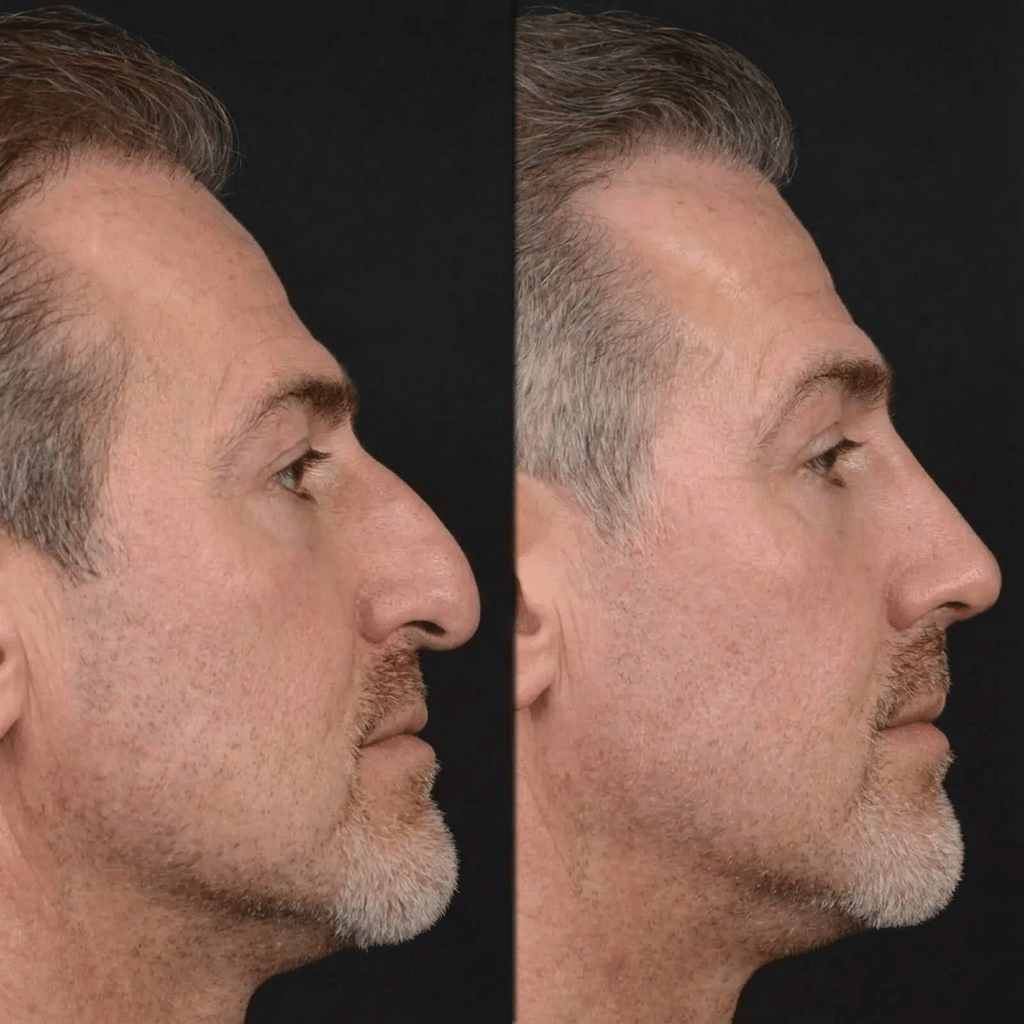
A nose keeps changing for a year. The splint comes off at about a week, obvious swelling settles by three weeks, the bone is stable at six weeks and most residual swelling resolves by three months. But the tip in particular refines slowly and unevenly, and the shape at month three is not the shape you keep.
This matters more when you have travelled, because the distance makes anxiety worse. If you fly home at week two and dislike what you see, that is expected rather than evidence of a problem. No reputable surgeon will discuss a revision before twelve months, and any provider willing to book one at four months is selling you something you do not need.
How to vet a Turkish provider from the UK
- The surgeon is named before you pay a deposit, with credentials you can independently verify.
- Ask how many rhinoplasties that specific surgeon performs annually. Noses, not procedures in general.
- The quote is itemised, covering hotel category, number of nights and the hospital stay.
- The hospital is registered with the Turkish Ministry of Health, ideally with international accreditation.
- The revision policy is written into the contract with a defined window and defined conditions.
- Nobody applies time pressure. A discount expiring today is always a warning sign in medicine.
Frequently asked questions
What is the realistic total cost?
With the package, flights, insurance and a contingency, expect 2,700 to 3,400 euros for a primary rhinoplasty, plus one or two private follow up appointments in the UK at £150 to £300 each.
How long before I can fly home?
Usually the day after the splint is removed, around seven to eight days after surgery, with the surgeon’s clearance. Flying earlier means somebody else removes the splint, which is not ideal.
Will travel insurance cover me?
Standard policies explicitly exclude planned procedures. You need a specialist medical travel policy, and it will still not cover a revision you decide you want.
When can I go back to work?
Desk work at around ten days once the splint is off, though bruising may still be visible and need concealing. Anything physical waits six weeks.
The bottom line
A rhinoplasty in Turkey costs a third to a half of the UK price and the surgical quality at a reputable provider is not the concern. What you are not buying is the twelve months of easy local follow up a UK practice includes, and the ability to walk back into the consulting room when you are worried. Budget for one or two private appointments at home, get the revision terms in writing before you pay, and hold your judgement on the result until twelve months. Do those three things and the saving is real rather than theoretical.