Where Brooklyn Artists Create and Exhibit Beyond the Hype
Where Brooklyn Artists Create and Exhibit Beyond the Hype
Why the Brooklyn Art Scene Still Matters in 2026
The Brooklyn art scene is best explored neighborhood by neighborhood: see murals and DIY galleries in Bushwick, waterfront studios in DUMBO and Red Hook, canal-side projects in Gowanus, and community-rooted spaces across Bed-Stuy, Crown Heights, and Greenpoint. Much of it is free to visit, and the most rewarding stops are often artist-run spaces, open studios, and public art rather than the biggest galleries.
Brooklyn grew into an art center when artists sought lower-cost former factories and warehouses outside Manhattan. In 2026, that history remains visible in large studios, experimental exhibitions, and a culture built around collaboration. But it is also under pressure: commercial rents have risen sharply over the past decade, forcing many artists and organizers to share space, use short leases, and turn vacant storefronts or offices into temporary venues.
That tension is part of the appeal. Brooklyn offers work that can feel less polished, more local, and more willing to take risks than Manhattan’s gallery districts. From the Bushwick Collective’s extensive mural program to Gowanus open studios and borough-wide festivals, art here often spills into the street and invites people in.
I am W.A. Muller, and this guide maps the places, communities, and ideas shaping Brooklyn’s creative life beyond the hype.
Brooklyn art scene glossary:
The Evolution and Resilience of the Brooklyn Art Scene
The story of creative Brooklyn has always been tied to real estate, industrial shifts, and sheer stubbornness. Decades ago, when soaring Manhattan rents began squeezing working artists out of SoHo and the East Village, the cavernous lofts and quiet manufacturing districts of Williamsburg, Greenpoint, and DUMBO became the obvious landing pad. Those raw spaces provided what painters, sculptors, and performance artists needed most: cheap square footage, abundant natural light, and the freedom to make a mess.
Fast forward to 2026, and the borough faces its own intense economic headwinds. Commercial rents across Brooklyn climbed by roughly 40% over the past decade, according to recent urban studies, while the typical working artist’s income remained essentially flat. At the same time, shifting corporate patterns left roughly one out of five commercial spaces empty across the borough last year.

Rather than folding, Brooklyn’s artistic core adapted through creative resilience:
- Short-Term Pop-Ups: Artists negotiate temporary leases in vacant commercial offices and disused retail storefronts, transforming unleased real estate into high-energy exhibition halls.
- Hybrid Space Models: Workspaces pull double duty—operating as daylight woodworking shops or design offices that convert into non-commercial galleries after hours.
- Pooled Risk: Cooperatives and collectives share multi-room warehouse lofts, distributing rising overhead costs among painters, ceramicists, and printmakers.
- Post-Corporate Installations: Spaces like the former industrial conversions on Dean Street invite dozens of artists to stage immersive installations right inside disused office cubicles, utility closets, and HVAC systems.
These adaptive strategies prove that Brooklyn’s cultural life doesn’t depend on polished infrastructure; it thrives wherever community members decide to pool their energy and open a door.
How the Brooklyn Art Scene Differs from Manhattan’s Gallery System
While Manhattan’s Chelsea and Upper East Side galleries remain world centers of commercial art sales, Brooklyn functions as an open research and development lab. Walking into a high-end Chelsea gallery often feels intimidating: pristine white walls, hushed marble reception desks, and an unspoken expectation that you are there to buy.
In contrast, Brooklyn spaces prioritize community incubation, tactile experimentation, and accessible discourse. Exhibitions frequently feature found-object sculptures, site-specific video art, kinetic installations, and community-selected curatorial boards. For those accustomed to the structured elegance of the Manhattan sketch walk, crossing the river offers a refreshingly unpolished counterpoint where the process of creation takes center stage over commercial transactions.
Grassroots Economics in the Underground Brooklyn Art Scene
Underground spaces in Bushwick, Bed-Stuy, and Gowanus sustain themselves through what sociologists call an “economy of refusal.” Instead of chasing blue-chip gallery margins, collectives fund their rents through member dues, day-job paychecks, potluck fundraisers, and small-batch merchandise sales.
We see artist-run projects staging nomadic one-night pop-ups in rented U-Hauls parked under the Brooklyn-Queens Expressway, or transforming modest basement apartments into vibrant experimental venues. When artists do choose to curate original artwork for sale, Brooklyn venues often implement fair-split models that reinvest directly back into studio equipment, darkrooms, and public programming.
Distinct Neighborhood Enclaves: Where Brooklyn Artists Actually Work and Exhibit

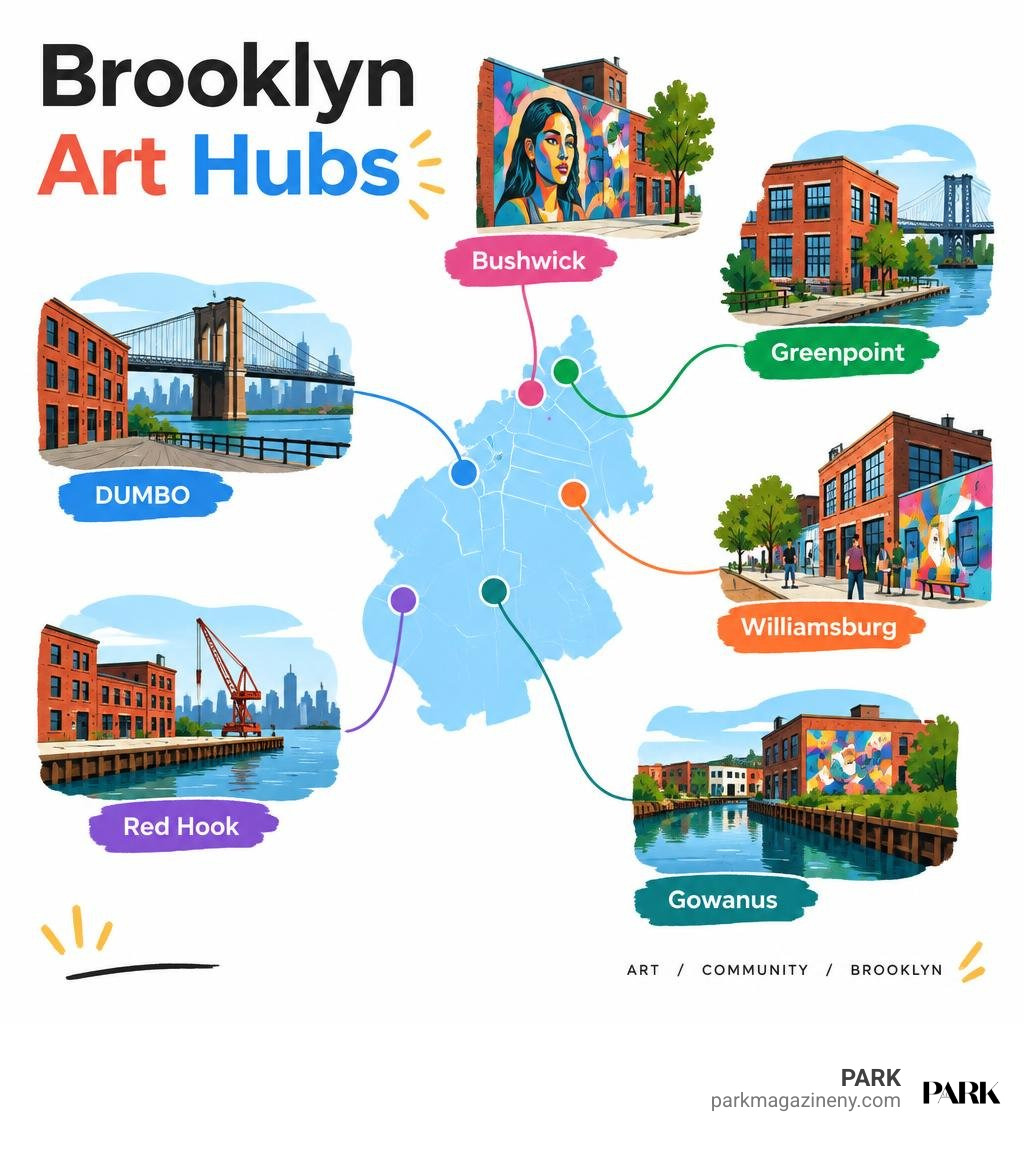
Brooklyn is not a monolith; each neighborhood has forged its own distinct visual identity and exhibition circuit.
| Neighborhood | Vibe & Character | Primary Venue Types | Transit Access |
|---|---|---|---|
| Bushwick | Raw, countercultural, street-art forward | Warehouse studios, mural walls, DIY artist-run spaces | L Train (Morgan / Jefferson / DeKalb) |
| Greenpoint | Relaxed, indie-focused, artisanal | Storefront galleries, print shops, project spaces | G Train (Greenpoint Ave / Nassau Ave) |
| DUMBO | Established waterfront, polished, historic | Nonprofits, institutional centers, loft studios | A/C (High St), F (York St), NYC Ferry |
| Red Hook | Industrial frontier, sprawling, maritime | Large-scale multi-arts complexes, converted docks | B61 Bus, NYC Ferry (South Brooklyn Line) |
| Gowanus | Gritty, community-rooted, activist | Canalside studios, historic factories, ceramics centers | F/G/R Trains (4th Ave-9th St / Union St) |
| Crown Heights | Cultural discourse, diaspora-centered | Community cultural hubs, independent galleries | 2/3/4/5 Trains (Franklin Ave / Nostrand Ave) |
Bushwick and Greenpoint: Murals, Open Studios, and Counterculture
Bushwick remains the pulsing countercultural engine of Brooklyn. Centered around hubs like 56 Bogart Street and the sprawling outdoor gallery created by the Bushwick Collective—which has curated more than 100 monumental street murals from international and local artists—the neighborhood turns building facades into public canvases.
Walking along Troutman Street or Jefferson Street reveals an ongoing dialogue between raw street graffiti, analog sketch exhibitions, and high-concept project rooms. Just to the north, Greenpoint provides a slightly quieter indie haven, where project storefronts and printmaking co-ops thrive along Franklin and Manhattan Avenues.
DUMBO and Red Hook: Waterfront Havens and Large-Scale Installations
Nestled directly under the Manhattan and Brooklyn Bridges, DUMBO balances cobblestone charm with significant institutional weight. The district hosts over 170 working artist studios alongside cornerstone venues like Smack Mellon and A.I.R. Gallery. Its monthly DUMBO First Thursday Gallery Walks bring the waterfront to life with synchronized evening receptions and outdoor architectural projections.
Further south along the harbor, Red Hook leverages its sprawling maritime warehouses to stage monumental work. Pioneer Works anchors the neighborhood with 25,000 square feet of multi-disciplinary programming under 30-foot ceilings, bridging visual arts, music, and scientific inquiry. For those seeking fresh perspectives on collecting and presentation alongside private collection insights, Red Hook’s unhurried, water-bound pace offers unmatched room to breathe.
Gowanus and Crown Heights: Industrial Canals, Superfund Sites, and Emerging Spaces
Gowanus stands as a remarkable case study in creative endurance. For over 27 years, organizations like Arts Gowanus have organized neighborhood studios around the historic canal. Despite the ongoing, multi-year EPA Superfund remediation, artists continue to draw inspiration from the area’s complex industrial heritage.
Spaces like The Old American Can Factory host dozens of painters, ceramicists, and media creators who turn environmental resilience into evocative artwork. During seasonal open studios, over 40 local ateliers open their doors along the canal, showcasing work that addresses urban ecology and community preservation.
Cultural Anchors, Black-Owned Spaces, and Major Borough Events
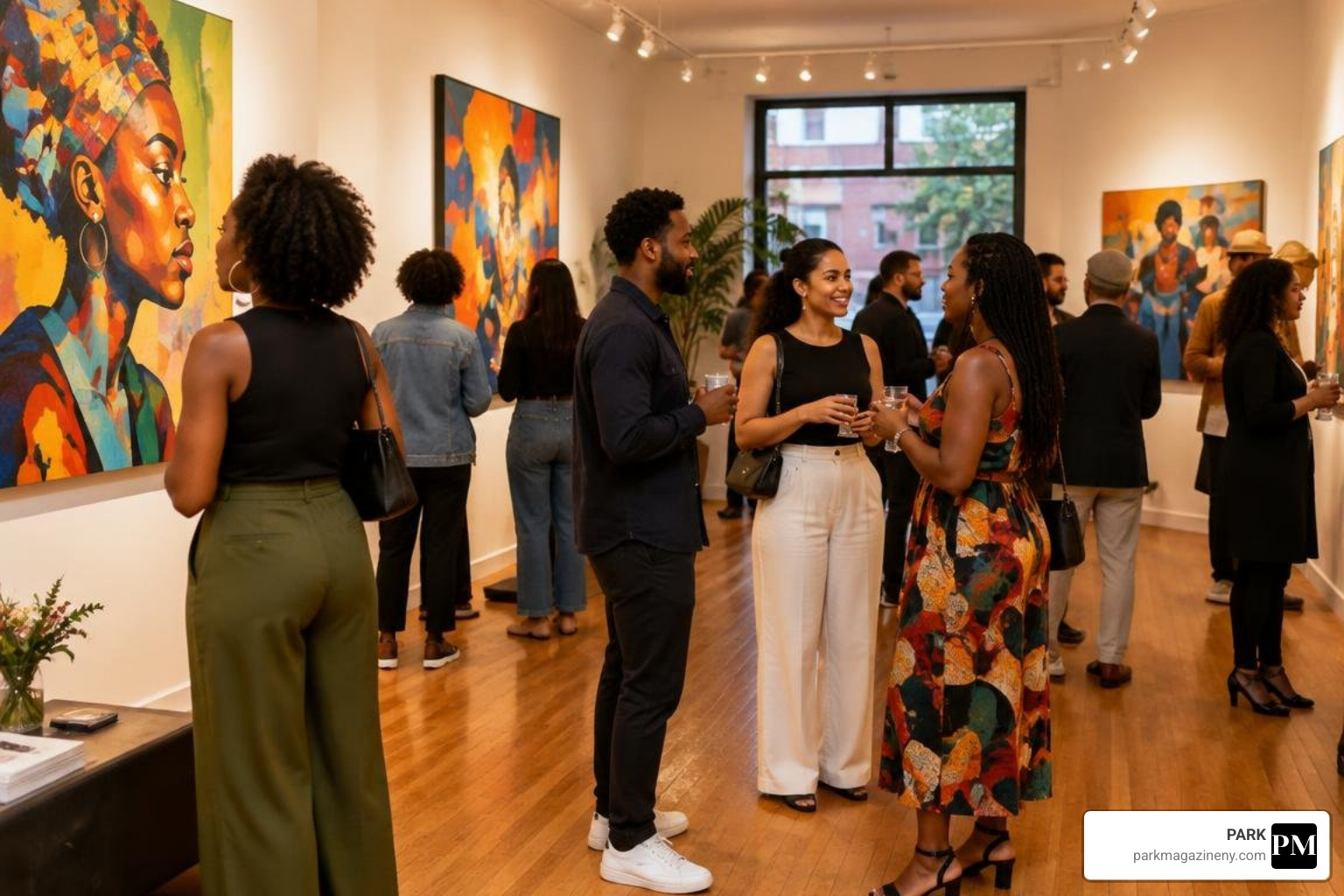
Brooklyn’s cultural strength relies heavily on its historic neighborhoods, Black-owned galleries, and dedicated diaspora platforms that bring vital community narratives to the forefront:
- MoCADA (Museum of Contemporary African Diasporan Arts): Established in Bed-Stuy in 2000, MoCADA engages the African diaspora through socio-political exhibitions and dynamic community-curated programming.
- Richard Beavers Gallery: A bedrock for contemporary urban and Black figurative art, championing artists whose work explores social justice, hip-hop history, and urban heritage.
- The Bishop Gallery: Located in Bed-Stuy, this forward-thinking space curates high-visibility institutional and hotel partnerships to elevate emerging artists from underrepresented backgrounds.
- FiveMyles: A Crown Heights institution dedicated to presenting experimental contemporary works alongside African and diaspora installations.
These spaces expand the visual dialogue, grounding artistic expression in lived experience much like the cultural identity narratives celebrated throughout New York’s creative diaspora. They operate side by side with the world-class Brooklyn Museum exhibition programs, which welcomed 7 million visitors last year while staying deeply engaged with borough-wide social themes.
Key Dates on the 2026 Brooklyn Art Calendar
Mark your calendar for these signature annual gatherings:
- Bushwick Open Studios (Spring / Fall): A weekend where hundreds of artists open their doors across Bushwick and East Williamsburg, paired with pop-up performances and warehouse parties.
- DUMBO First Thursday Gallery Walks (Monthly): Year-round evening gallery walks featuring coordinated openings, street projections, and curator talks across the waterfront.
- Gowanus Open Studios (Fall): A neighborhood-wide open house highlighting dozens of industrial studios, floating installations, and canalside workshops.
- CONDUCTOR Art Fair: A dynamic independent fair bringing together emerging national and international galleries inside unconventional Brooklyn venues.
- ARTMAGEDDON 2026 (September): A massive, borough-wide public arts activation uniting over 500 artists, performers, writers, and organizers across seven designated “Art Villages” and community gardens.
- Brooklyn Museum First Saturdays (Monthly): Free evening admission offering live music, community lectures, film screenings, and after-hours gallery access.
Practical Guide for Exploring Brooklyn Galleries and Studios
Navigating Brooklyn’s widespread arts landscape requires a little planning and an open mind. Here is how to make the most of your gallery walks:
- Visiting Etiquette: Gallery admission in Brooklyn is overwhelmingly free. You do not need an appointment for standard public hours, but always check Instagram or venue websites for weekend schedules. Ask staff before taking flash photography, and feel comfortable asking questions—gallery attendants here are often working artists themselves.
- Transit Strategy: Use the L train to explore the Williamsburg-to-Bushwick corridor (Morgan, Jefferson, and DeKalb stops). Ride the G train for seamless north-south connections linking Greenpoint, Bed-Stuy, and Gowanus. For coastal destinations like Red Hook and DUMBO, take the NYC Ferry or the B61 bus for scenic water views.
- Culinary Pairings: Pair a day of Bushwick gallery hopping with local wood-fired pizza, or cap off an afternoon of coastal art walks with an intimate dinner at culinary stops like Brooklyn omakase tucked into historic side streets.
Frequently Asked Questions About Brooklyn Art
Is gallery admission free across Brooklyn?
Yes. The vast majority of independent, artist-run, and commercial galleries across Bushwick, DUMBO, Greenpoint, and Gowanus are entirely free and open to the public during normal operating hours. Major institutions like the Brooklyn Museum offer free entry programs on selected dates, including monthly First Saturdays.
What is the best way to travel between Brooklyn art neighborhoods?
The New York City subway system offers direct access to prime clusters via the L (Bushwick/Williamsburg), G (Greenpoint/Bed-Stuy), and A/C/F lines (DUMBO/Downtown Brooklyn). For neighborhoods without direct subway stops, such as Red Hook, the NYC Ferry and the B61 bus route provide easy transit.
How can visitors ethically support local Brooklyn artists?
The best way to support artists is by attending open studios, buying prints or original work directly from creator collectives, contributing to nonprofit arts fundraisers, and sharing local shows across your personal networks.
Conclusion
The creative spirit of Brooklyn has never been defined by market trends or pristine exhibition halls. It is powered by the painters stretching canvases in cold-water warehouse lofts, the collectives turning vacant storefronts into vibrant gathering halls, and the neighborhood organizers painting vibrant murals on every available brick wall. As New York’s cultural map continues to shift, Brooklyn stands firm as an irreplaceable home for daring, grassroots artistic expression.
Discover more curated stories, neighborhood guides, and cultural profiles with PARK Ave Magazine.