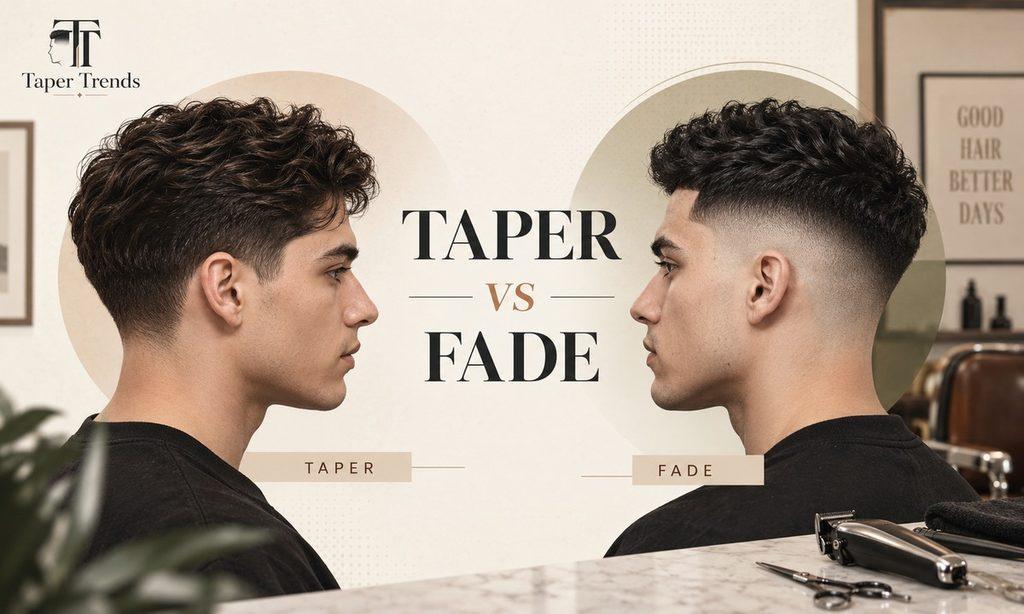
Taper vs Fade: What’s the Difference and Which Should You Get?
Ask three barbers what separates a taper from a fade and you may get three different answers. The core idea still holds. Both cuts shorten the hair gradually as it moves down the head. They differ in how much of the sides and back comes down, and how short the shortest part ends up.
What is the difference between a taper and a fade?
A taper shortens the hair mainly around the sideburns and neckline while most of the length on the sides stays put. A fade carries that shortening farther up the sides and back, and it can finish very close to the scalp. A taper cleans the edges. A fade reshapes the whole side.
The difference shows up in four places: how much area gets blended, how much hair is left at the bottom, how obvious the transition looks, and how the cut grows out. A taper and fade explainer from axis.hair describes the split the same way, while noting that the labels are not applied identically in every shop.
One point worth settling early: a fade does not have to reach skin. Plenty stop at a #1 or #0.5 guard and still read as fades, because of where the blend starts and how much contrast it creates. Skin and bald describe the finish, not the category.
| Feature | Taper | Fade |
| Area blended | Edges only | Sides and back |
| Hair kept on sides | Most of it | Noticeably less |
| Shortest point | Usually visible hair | Very short, sometimes skin |
| Contrast | Soft | Strong |
| Overall look | Classic, understated | Sharp, modern |
| Grow-out | Forgiving | Regrowth shows sooner |
What is a taper haircut?
A taper is a gradual shortening of the hair around the perimeter of the cut, concentrated at the sideburns and neckline. The side panel keeps most of its weight, so the shape of the hair barely changes. It just looks tidier at the borders.
That suits anyone who wants to look groomed without looking freshly barbered. It works under a suit, with curly hair that should not be thinned out, and with a longer top that needs side weight. Common versions include the classic taper, the low taper, and a tapered neckline on a scissor-cut style. A barbershop taper guide from CADMEN Academy describes it the same way: a localized transition rather than a full-side blend.
What is a fade haircut?
A fade blends longer hair at the top into much shorter hair on the sides and back, over a larger area than a taper covers. How it reads depends mostly on where the blend starts, which is what low, mid, and high refer to.
- Low fade. The transition begins just above the ear and around the nape. Subtle enough that people confuse it with a taper, a comparison Taper Trends settles in low taper vs low fade.
- Mid fade. Starts around the temple, roughly halfway up the side.
- High fade. Starts near the top corner of the head, removing most of the side weight and creating heavy contrast.
- Skin fade or bald fade. Describes the shortest point rather than the height. The bottom is taken to the scalp with a foil shaver or zero-gapped clipper.
Height and finish are separate decisions. A low skin fade is possible, and so is a high fade that never goes below a #1. Mixing them up is a common reason people end up with a cut they did not ask for.
Taper or fade: which one should you get?
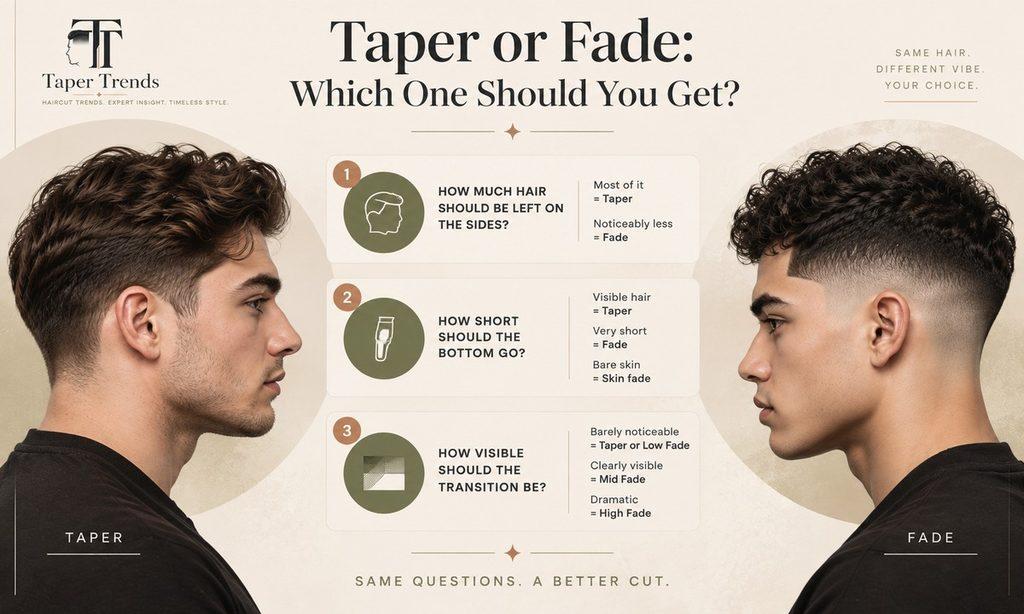
Skip the style names and answer three questions. They point at the right cut more reliably than the label does.
1. How much hair should be left on the sides? Most of it means a taper. Noticeably less means a fade.
2. How short should the bottom go? Visible hair means a taper. Very short means a fade. Bare skin means a skin fade specifically.
3. How visible should the transition be? Barely noticeable means a taper or a low fade. Clearly visible means a mid fade. Dramatic means a high fade.
Two practical notes. Tapers are more forgiving between appointments because there is no hard line to soften, while short and skin fades show regrowth sooner. Fade height also changes the visual balance of the head, which a barber judges better in person than any chart can.
What about a taper fade?
Most of the confusion starts here. “Taper fade” is used inconsistently. Some barbers mean a low, tight fade around the sideburns and neckline. Others mean any cut that combines edge tapering with a fade higher up the side. Neither usage is wrong, which is the problem.
The phrase alone is not enough to book on. Anyone who likes the middle-ground look should specify where the blend starts, how short the bottom goes, and how much side length stays. Taper Trends covers the variations in its taper fade guide.
What to tell your barber
Describe the cut, not just the name. Two examples that work:
“Low taper, please. Keep the length on the sides, just clean up the sideburns and neckline.”
“Low skin fade. Leave the top long, take the bottom to skin, and start the blend just above my ear.”
Cover six things before the clippers start:
- Taper or fade
- Low, mid, or high
- Shortest length (skin, #0.5, #1, #2)
- Top length and styling
- Neckline preference (blocked, rounded, or natural)
- A reference photo
The photo matters more than people expect. Terminology varies between shops, and an image removes ambiguity that words leave behind. B&H Barber Shop advises clients to bring one and to state the blend height and shortest length.
Frequently asked questions
Is a taper or a fade better? Neither is better in general. A taper keeps more length and grows out quietly, which suits conservative settings and longer gaps between cuts. A fade gives sharper contrast and a cleaner silhouette but needs more upkeep. It depends on the contrast wanted and how often someone will sit in the chair.
Is a taper the same as a fade? No. Both use a gradual blend, but a taper is limited to the sideburns and neckline while a fade covers a larger section of the sides and back and usually finishes shorter.
Does a fade always go down to the skin? No. Only a skin fade or bald fade takes the hair to the scalp. Many fades stop at a #0.5 or #1 guard and still look like fades because of the blend height and contrast.
Which lasts longer between haircuts, a taper or a fade? A taper holds its shape longer because there is less contrast to lose as the hair grows. Skin fades show regrowth first, since a few days of stubble breaks the clean finish. Growth rates vary, so treat that as a tendency, not a schedule.
Can a taper work with curly or textured hair? Yes. Tapers work well with texture because they leave the side length intact and only tighten the perimeter. Asking the barber to cut it dry helps, since that is when the curl sits naturally.
Choose based on side length, blend height, shortest finish, and acceptable maintenance. Get those four right and the name on the appointment barely matters.