How to Channel Your Inner Audrey with These Iconic Wardrobe Staples
Audrey Hepburn Attire: The Staples Behind Timeless Elegance
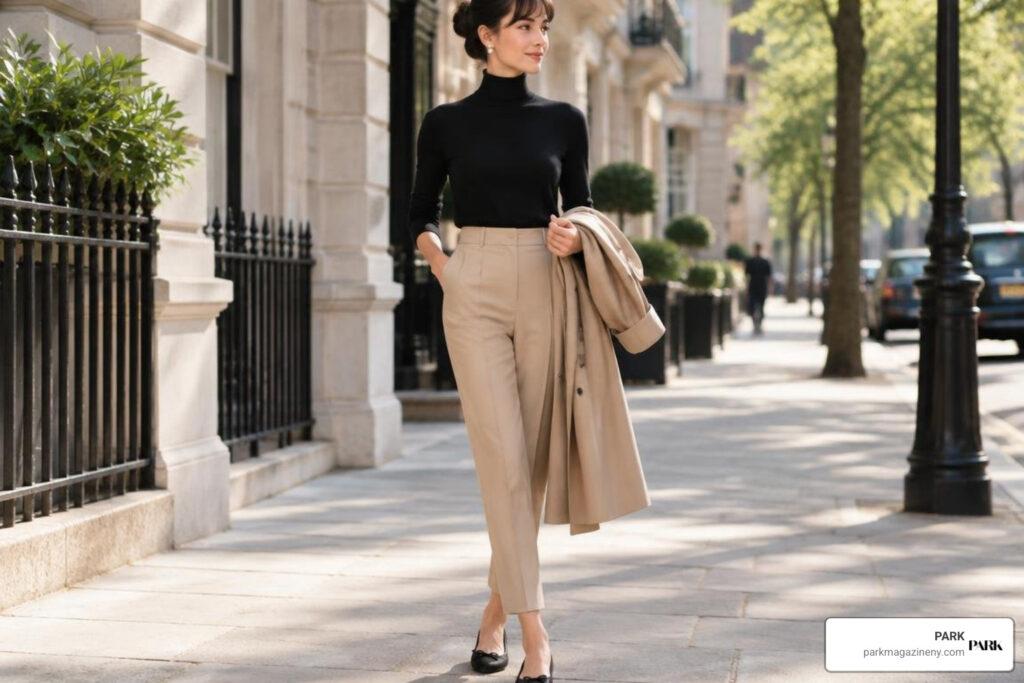
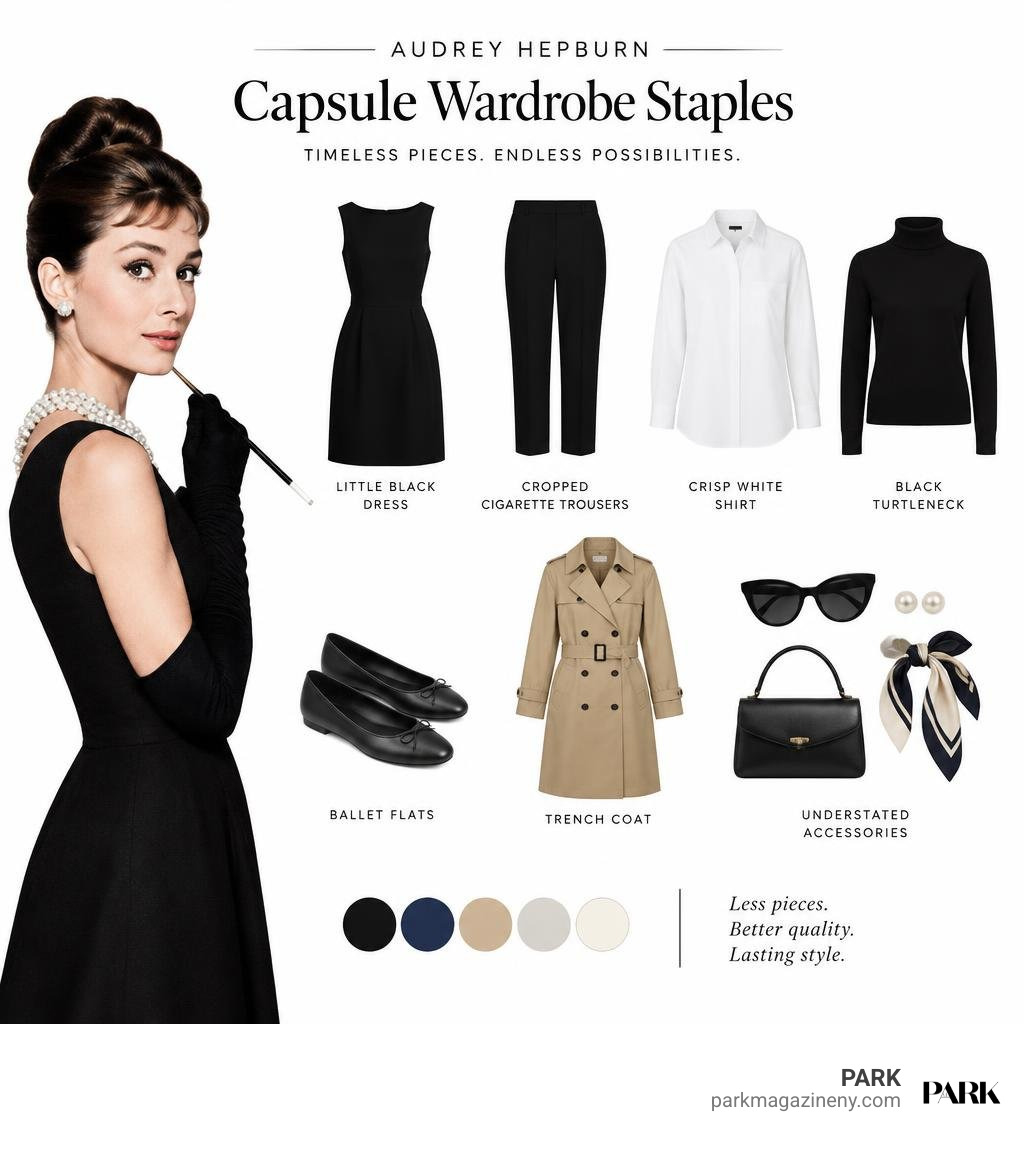
To channel Audrey Hepburn attire today, start with a small set of polished essentials: a little black dress, cropped cigarette trousers, a crisp white shirt, a black turtleneck, ballet flats, a trench coat, and understated accessories. Keep the palette mostly black, white, navy, beige, and soft neutrals. The key is not vintage costume. It is clean fit, simple lines, and choosing fewer pieces of better quality.
Her clothes looked memorable because they gave the wearer room to shine. From Hubert de Givenchy’s sleek evening gowns to her off-duty trousers and silk headscarves, Hepburn made minimal dressing feel personal, modern, and assured.
I am W.A. Muller, and this guide breaks down the iconic pieces that make this classic style easy to adapt for a modern wardrobe.
The Philosophy of Simplicity: What Defined Audrey’s Signature Look?
Audrey Hepburn’s approach to dressing transformed mid-century fashion. At a time when mid-1950s Hollywood celebrated dramatic hourglass figures, heavy padding, and corseted excess, Audrey introduced a fresh, athletic ease rooted in clean lines, architectural tailoring, and an unapologetic sense of comfort.

Central to her signature aesthetic was her lifelong friendship and creative partnership with French couturier Hubert de Givenchy. Their collaboration began in 1953 before the filming of Sabrina. Billy Wilder agreed to send Audrey to Paris to select authentic haute couture. When she arrived at Givenchy’s salon, the 26-year-old designer initially expected Katharine Hepburn. Instead, he met a radiant 24-year-old who gravitated toward off-the-rack pieces from his Spring/Summer 1953 collection. From that initial encounter grew a bond that spanned four decades, shaping cinematic history and earning Hepburn a spot in the International Best Dressed Hall of Fame List in 1961.
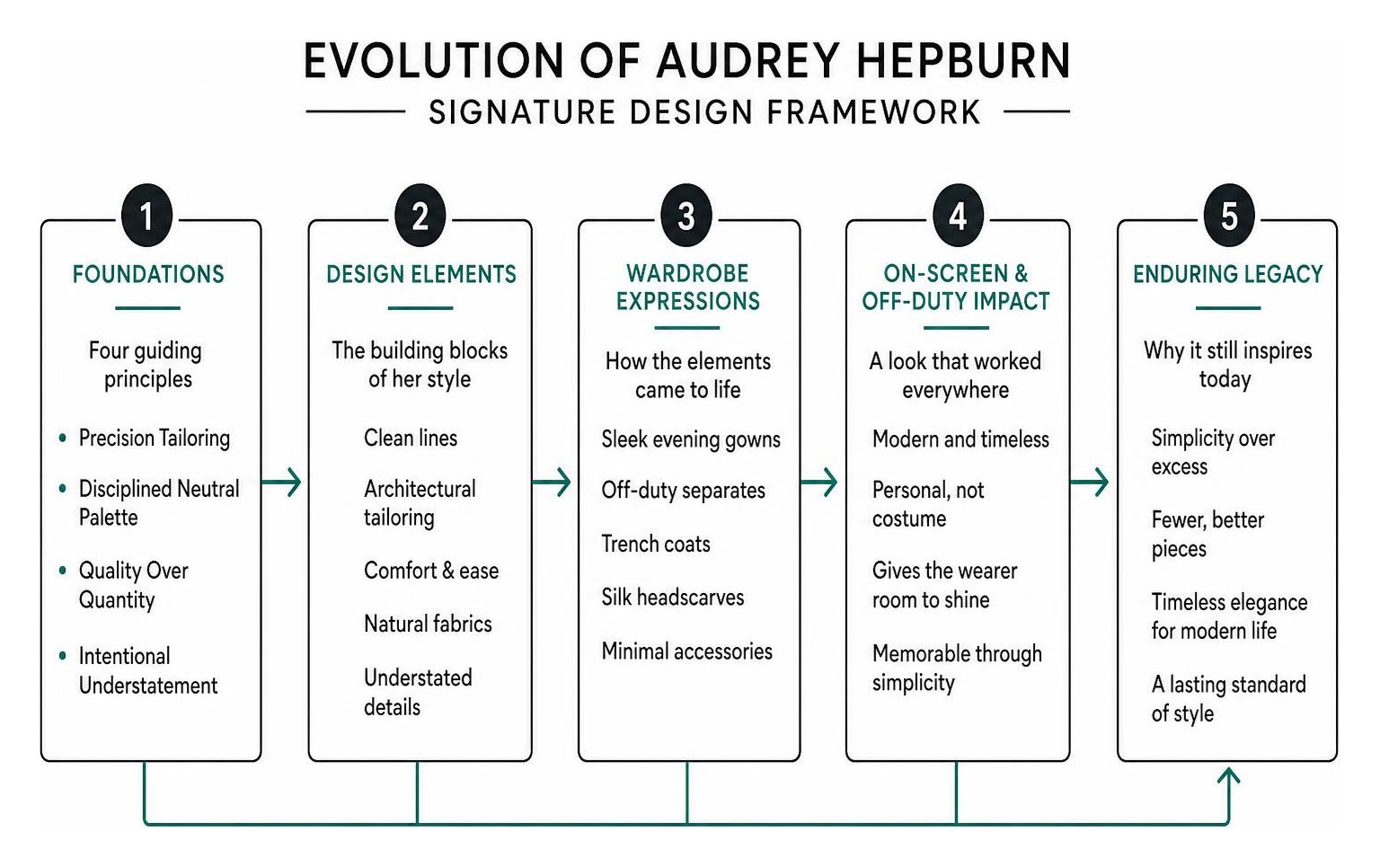
Hepburn believed clothes should serve the person wearing them, not overwhelm them. Her philosophy rested on four clear pillars:
- Precision Tailoring: Every garment was altered to skim the frame without pulling or bunching.
- A Disciplined Neutral Palette: Dominated by crisp white, deep black, navy, camel, beige, and soft blush pink.
- Quality Over Quantity: Investing in fewer, impeccably made garments crafted from breathable natural fibers like silk, wool, and structured cotton poplin.
- Intentional Understatement: Hepburn famously preferred understated elegance over theatrical glamour. She once remarked that it was always better to be the only person in a tailored blazer at a black-tie event than to show up in full black tie at a casual gathering—an ethos that celebrates the art of understatement.
Essential Elements of Classic Audrey Hepburn Attire
To curate a wardrobe inspired by Audrey’s timeless aesthetic, it helps to see how she balanced casual daytime separates with structured formal pieces:
| Wardrobe Category | Classic Audrey Staple | Key Design Features | Modern Styling Context |
|---|---|---|---|
| Daywear Separates | Cropped Cigarette Pants | High-waisted, slim-leg, ankle-grazing hem | Paired with leather loafers and a tucked silk tee |
| Everyday Tops | Black Polo Neck & White Poplin | Fine-gauge knit, boat neckline, or relaxed collar | Layered beneath tailored blazers or trench coats |
| Eveningwear | The Column Little Black Dress | Italian satin, sheath cut, bateau/décolleté back | Worn with kitten heels and delicate pearl studs |
| Outerwear | Belted Double-Breasted Trench | Water-resistant gabardine, wide lapels, cinched waist | Draped over denim or tailored trousers for transitional weather |
| Footwear | Flat Ballet Pumps & Low Heels | Rounded or pointed toe, supple leather, minimal heel | Effortless walking in city settings |
| Accessories | Silk Scarf & Dark Sunglasses | Geometric silk prints, oversized tortoiseshell frames | Tied around the neck or hair for instant polish |
The Little Black Dress and the Bateau Neckline
No garment in film history commands quite as much recognition as the little black dress designed by Hubert de Givenchy for Holly Golightly in the 1961 Paramount classic Breakfast at Tiffany’s. Crafted from shimmering black Italian satin, the gown featured a sleeveless sheath silhouette, a high boat neckline at the front, and a dramatic cut-out décolleté back framed by multi-strand pearl chokers, long opera gloves, and Oliver Goldsmith tortoiseshell sunglasses.
Beyond the famous floor-length gown, Hepburn popularized the bateau (or boat) neckline across both evening and daywear. The horizontal cut accentuates the collarbones and shoulders while offering modest, clean geometry. Whether attending a gala or shopping for everyday cocktail attire, knowing how to choose the perfect dress for every occasion starts with finding silhouettes that rely on cut and structure rather than fleeting ornamentation.
For a deeper dive into the garment’s history, explore The Glamorous Story of Audrey Hepburn’s ‘Breakfast at Tiffany’s’ Dress alongside historical analyses of the Fashion of Audrey Hepburn.
Tailored Cigarette Pants, Crisp White Shirts, and Black Turtlenecks
While her couture moments captivated red carpets, Hepburn’s casual daywear remains her most wearable gift to modern style. In Sabrina (1954) and the bohemian Parisian dance sequence of Funny Face (1957), Audrey established her daily uniform: slim-cut, high-waisted black cigarette trousers paired with a fine-gauge black jersey polo neck and black socks.
She brought that same ease to oversized men’s white poplin shirts—often wearing the cuffs casually rolled, the collar popped, and the hem neatly tucked into gingham capri pants or belted high-waisted shorts. Sourcing authentic vintage garments that capture these structural cuts is easy when exploring NYC’s vintage vaults.
Signature Accessories: Ballet Flats, Headscarves, Belts, and Oversized Sunglasses
Accessories in Audrey’s wardrobe were never afterthoughts; they were structural tools used to polish a look:
- Ballet Flats: Having trained extensively in classical ballet in Amsterdam and London, Hepburn preferred grounded footwear. Italian shoemaker Salvatore Ferragamo designed custom low-heeled suede and calfskin pumps specifically to flatter her 5-foot-7 frame while allowing easy movement.
- Silk Scarves: Worn knotted snugly around the neck with a crisp white shirt or wrapped over hair beneath sunglasses during coastal travel.
- Wide Belts: Used to cinch the waistline on full-skirted shirt dresses and trench coats, creating balanced proportions.
- Tortoiseshell Sunglasses: Dark, slightly oversized geometric sunglasses provided privacy and instant refinement.
Maintaining the crispness of delicate silks and tailored wools requires consistent care; adopting simple care habits that keep formalwear sharp ensures timeless staples retain their drape across seasons.
The Evolution of Her Style: From Silver Screen to Humanitarian Grace
Audrey Hepburn’s personal wardrobe evolved naturally across four distinct chapters, each defined by purpose, practicality, and refinement:
- The 1950s: The Ingenue and High Couture: Starting with her Academy Award-winning breakout in Roman Holiday (1953)—costumed by Edith Head with rolled-sleeve blouses and full circle skirts—Audrey quickly transitioned into Givenchy’s architectural couture. Pieces like her white point d’esprit ball gown from Love in the Afternoon (1957), documented in historical sales at Lot 79 – Audrey Hepburn’s Givenchy haute couture white, showcased hand-embroidered floral motifs and boned bodices that lit up the silver screen.
- The 1960s: Mod Silhouettes and Vibrant Tailoring: Entering the 1960s, her wardrobe embraced modern, streamlined cuts. In Paris When It Sizzles (1964), detailed in retrospective fashion essays like Audrey Hepburn Paris When it Sizzles – Her Sizzling 1960s Fashion – Classic Critics Corner, she wore mint-green skirt suits, pastel linen shifts, and structured kitten heels. Later in Two for the Road (1967), she embraced mod vinyl coats, geometric Paco Rabanne shift dresses, and bold knitwear.
- The 1970s and 1980s: Relaxed Continental Elegance: Living in Rome and Switzerland, Audrey prioritized comfort. Her son Sean Hepburn Ferrer recalled her everyday uniform of tailored winter pea-coats, square-toed leather boots, and knit turtlenecks. When she married Italian psychiatrist Andrea Dotti in 1969, she wore a pale blush-pink Givenchy mini dress paired with a matching headscarf, proving bridal style could be modern and personal.
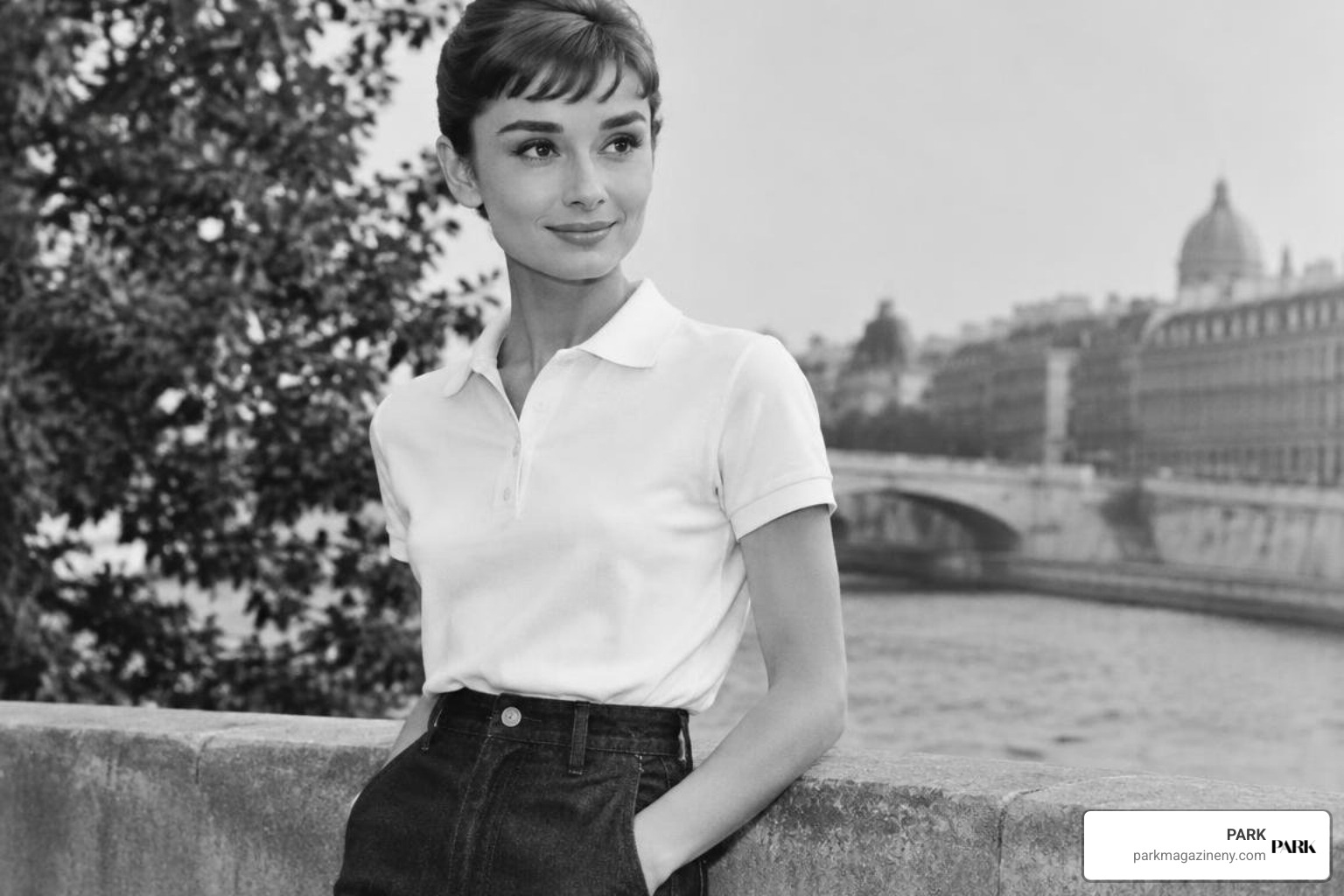
- The 1980s to 1990s: Humanitarian Utilitarianism: In her final years as a UNICEF Goodwill Ambassador, Hepburn stripped away all ornamentation. Visiting field missions across Latin America, Africa, and Asia, her wardrobe consisted of high-waisted indigo jeans, comfortable khaki slacks, polo shirts, and utilitarian cotton button-downs. Her poise remained unchanged because her style was rooted in character rather than trend.
The Modern Style Guide: Bringing Classic Hollywood into 2026
Capturing this aesthetic in 2026 does not mean wearing period costumes. It means curating an intentional, versatile capsule wardrobe built on clean lines, neutral colors, and balanced proportions.
Recreating Audrey Hepburn Attire for Everyday Wardrobes
Here is how we style classic Hepburn elements for contemporary city life:
- For the Office: Pair cropped black cigarette trousers with a crisp, tucked-in white poplin shirt. Add flat leather pointed mules or ballet pumps, a slender leather belt, and subtle pearl studs.
- For the Weekend: Combine straight-leg indigo denim with a fine-gauge black knit turtleneck, a double-breasted trench coat, and classic dark tortoiseshell sunglasses.
- For Evening Cocktails: Opt for a sleeveless black sheath dress with a bateau neckline. Skip elaborate jewelry in favor of delicate diamond or pearl studs and a small, structured handbag.
For curated styling perspectives and modern capsule recommendations, explore resources like Audrey Hepburn Style: Iconic Looks and How to Dress Like … and design collections such as The Audrey Hepburn Collection.
How Audrey Hepburn Attire Continues to Influence Contemporary Designers
Audrey’s fashion legacy remains a guiding light across the global fashion landscape. Modern fashion houses consistently reference her clean silhouettes, while contemporary celebrities channel her iconic looks on global red carpets:
- Natalie Portman donned an original Givenchy archive dress for the cover of Harper’s Bazaar.
- Beyoncé paid homage to Holly Golightly in Tiffany & Co. campaigns wearing archival diamonds and black evening columns.
- Meghan Markle chose an open bateau neckline designed by Clare Waight Keller for Givenchy for her 2018 royal wedding gown.
- Ariana Grande fronted Givenchy’s Fall/Winter campaign recreating Audrey’s signature high ponytail, tailored suit, and emerald statement earrings.
Her aesthetic laid the foundation for today’s “quiet luxury” movement: dressing with understated confidence, investing in tailoring, and letting personal grace take center stage.
Frequently Asked Questions About Audrey Hepburn’s Fashion
What made the Breakfast at Tiffany’s little black dress so historic?
Hubert de Givenchy designed three original copies of the black Italian satin gown for the 1961 production of Breakfast at Tiffany’s. One resides in the Givenchy archives in Paris, one is housed at the Museum of Costume in Madrid, and the third was auctioned at Christie’s London in December 2006.
Detailed in historical archival lot essays such as Breakfast At Tiffany’s, 1961/Audrey Hepburn | Christie’s and Audrey Hepburn Breakfast At Tiffany’s, 1961 | Christie’s, the auctioned gown commanded a record-breaking £467,200 (approximately $604,000). The proceeds were donated by Monsieur de Givenchy to the City of Joy Aid charity to support schools in India. The gown remains an enduring symbol of minimalist glamour.
Why did Audrey Hepburn frequently wear ballet flats instead of high heels?
Having trained rigorously as a ballerina during her youth in the Netherlands and London, Hepburn valued proper posture, alignment, and comfort. At 5-foot-7, she felt taller than many of her mid-century leading men and found that flat shoes offered a grounded, natural gait. Working closely with Italian master shoemaker Salvatore Ferragamo, she made the round-toed and pointed ballet pump an essential element of modern women’s footwear.
What are the core pieces needed to build an Audrey-inspired capsule wardrobe?
To build an authentic Audrey-inspired capsule wardrobe, focus on these seven essentials:
- A Tailored Little Black Dress: A sheath cut with a high boat or scoop neckline.
- Cropped Black Cigarette Pants: Ankle-grazing with a clean, high waist.
- An Oversized Crisp White Button-Down: High-thread-count poplin with structured cuffs.
- A Fine-Knit Black Turtleneck: Lightweight cashmere, silk-blend, or merino wool.
- A Double-Breasted Trench Coat: Tailored in classic khaki, camel, or navy.
- Leather Ballet Flats: High-quality black or nude leather pumps.
- Tortoiseshell Sunglasses: Subtle cat-eye or geometric dark frames.
Conclusion
Audrey Hepburn’s attire endures because it was never about chasing fleeting trends. It was about knowing herself, understanding her proportions, and choosing garments that allowed her natural warmth, intelligence, and poise to shine through.
By investing in clean tailoring, embracing neutral palettes, and choosing simplicity over excess, you can easily channel her timeless elegance into your everyday wardrobe. Discover more curated style edits, seasonal trends, and designer profiles by exploring PARK Magazine’s fashion edit.