Drone with Camera for Real Estate Listings: What It Takes to Get Usable Shots
Aerial footage can make a real estate listing feel more complete, but simply putting a drone above a property does not guarantee useful results. The shots still need to show the home clearly, explain its surroundings and fit naturally alongside ground-level photography.
For most listings, the goal is not to create dramatic cinematic footage. It is to help potential buyers understand the property: its scale, lot, approach, outdoor spaces and relationship to nearby features. That requires the right camera, but it also depends heavily on light, framing, movement and flight planning.
Start With the Shots the Listing Actually Needs
Before takeoff, decide what information the aerial images should add.
A strong basic shot list might include a higher establishing view showing the entire property, a lower three-quarter angle that makes the building itself easy to read, one or two views of the backyard or outdoor amenities, and wider shots that provide neighbourhood context.
Video should be equally deliberate. Slow approaches, gentle lateral movements and controlled rises are usually more useful than fast or complicated manoeuvres. Buyers need time to understand what they are seeing.
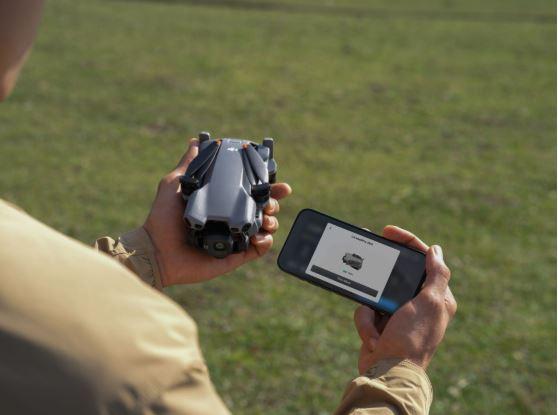
This is also where choosing a capable drone with camera matters. Stable three-axis gimbal footage, sufficient dynamic range and reliable exposure control can save considerably more time than trying to repair poorly captured footage later.
Wide Is Useful, but Wider Is Not Always Better
Real estate photographers often want a wide field of view because it allows more of the building and lot into the frame. But excessive distance or an overly wide-looking composition can make the property feel small.
A good approach is to begin with a wide establishing image and then move closer for photographs that give the building more visual weight.
Multiple focal lengths can be particularly useful. A moderate telephoto view can compress distance slightly, separate the property from a busy background and create cleaner architectural compositions. It can also highlight details such as a terrace, pool, waterfront edge or façade without flying unnecessarily close.
This is one reason camera flexibility can matter more than simply choosing the drone with the highest headline resolution.
Dynamic Range Matters More Than Perfect Weather
Real estate shoots often combine difficult exposures. A bright sky may sit above a shaded front façade, while white roofs, snow or reflective windows can make the contrast even harder.
The camera therefore needs enough exposure flexibility to retain usable information in both highlights and shadows. Shooting RAW photographs is valuable when the final images will be edited, while automatic exposure bracketing can help photographers create a more balanced result from challenging scenes.
Time of day matters too. Midday light can produce harsh shadows under rooflines and balconies. Earlier or later light is often more flattering, although the best direction depends on which way the property faces.
For video, consistency is important. Constant automatic exposure changes during one continuous movement can look distracting, so locking exposure once the scene is evaluated can often produce a cleaner clip.
Stable Movement Beats Fast Movement
A mechanically stabilised camera helps, but pilot input is just as important.
Real estate footage generally benefits from slow acceleration and predictable paths. Instead of combining forward flight, rotation, altitude changes and gimbal movement all at once, simplify each shot. A clean reveal from behind trees, a controlled rise above the roofline or a slow sideways move across the façade is easier for an editor to use.
It is also worth recording each important movement for longer than seems necessary. Several seconds of stable footage before and after the main movement gives an editor room to create clean transitions.
DJI Mini 5 Pro: A Practical Choice for Routine Listings
For photographers who want a compact system without giving up strong image quality, DJI Mini 5 Pro is particularly well suited to regular residential work.
Its main camera uses a 1-inch CMOS sensor with 50MP resolution and an f/1.8 aperture. It supports 4K/60fps HDR video and RAW photography, giving photographers useful latitude when dealing with bright skies and darker building façades.
For real estate work, its small size is also meaningful. With the standard Intelligent Flight Battery, DJI lists the aircraft at 249 g. In Canada, drones under 250 g fall into the microdrone category and do not require drone registration or a pilot certificate, although pilots must still operate safely and comply with airspace, privacy and other applicable rules. Adding equipment that takes the operating weight to 250 g or above changes the regulatory situation.
The Mini 5 Pro also includes omnidirectional obstacle sensing and a gimbal capable of 225° roll rotation. The latter is more useful than it may initially sound: it gives photographers greater freedom to adjust composition without relying entirely on aircraft movement.
DJI rates the standard battery for up to 36 minutes of flight under its specified controlled test conditions. Actual time will vary with wind, temperature, flight style and other factors, so professional shoots should still be planned with a comfortable battery reserve.
For ordinary detached homes, townhouses, vacation properties and smaller commercial listings, this is likely to be enough drone for many photographers.
DJI Air 3S: Better When One Perspective Is Not Enough
For more demanding listings, DJI Air 3S adds something especially useful for real estate: two genuinely different camera perspectives.
Its wide camera combines a 1-inch CMOS sensor with a 24mm-equivalent lens and 50MP resolution. Beside it is a 70mm-equivalent medium tele camera using a 1/1.3-inch sensor with 48MP resolution.
That second camera can change how a property is presented. The wide lens is the natural choice for establishing the home and its grounds, while the 70mm camera can isolate architectural details or create a more compressed view of a home against mountains, a skyline or other surroundings.
This gives a photographer more composition options without depending on digital cropping.
Air 3S also offers omnidirectional vision sensing supplemented by forward-facing LiDAR, and DJI rates its maximum flight time at 45 minutes under specified test conditions. At 724 g, however, it sits firmly above Canada’s 250 g threshold, so registration and the appropriate pilot certification and operating rules need to be considered before using it on a job.
For photographers shooting higher-value homes regularly, the extra camera flexibility can justify that more involved setup.
DJI Mavic 4 Pro for High-End Property Production
Luxury residential and commercial property work can demand more than a straightforward aerial overview. The footage may be part of a full promotional film, with extensive colour grading, multiple perspectives and large-format stills.
That is where DJI Mavic 4 Pro makes more sense.
Its main 4/3 CMOS Hasselblad camera captures up to 100MP stills and 6K/60fps HDR video. It is joined by 70mm-equivalent and 168mm-equivalent tele cameras, creating a much broader range of compositions than a single-camera drone.
For real estate, the benefit is not simply having more zoom. A photographer can move from an expansive property overview to compressed architectural views and distant contextual details without trying to make one wide-angle camera perform every job.
Its Infinity Gimbal can also tilt upward by up to 70° and supports 360° rotation, opening up more architectural compositions. DJI specifies up to 51 minutes of flight time under controlled test conditions, which provides additional flexibility when scouting and capturing several planned angles.
For routine listings, that capability may be unnecessary. For luxury estates, resorts, large commercial sites or productions where aerial footage is a major part of the final marketing package, it provides significantly more creative headroom.
Choose the Drone Around the Listing
A useful real estate drone is not simply the model with the largest sensor or longest specification sheet.
For frequent residential listings where portability and straightforward operation matter, DJI Mini 5 Pro offers a particularly strong balance of camera quality and compact size. If varied focal lengths and more sophisticated compositions are important, DJI Air 3S is the more versatile step up. For premium productions where aerial imagery needs to carry a large part of the visual story, Mavic 4 Pro offers the most complete camera system of the three.
Whichever model you use, the fundamentals remain the same: plan the property before flying, shoot in favourable light, move slowly, capture several useful perspectives and leave enough room for editing.
The drone provides the viewpoint. Good planning is what turns that viewpoint into footage a real estate listing can actually use.