How Better Commercial Cleaning Protects Daily Operations
Commercial cleaning is often judged by what people see first: floors, glass, washrooms, and waste bins. Its larger value is operational. A dependable program helps spaces remain ready for employees, customers, deliveries, and the next business day.
Poor cleaning can create interruptions through spills, overflowing waste, unavailable washrooms, unpleasant odours, or premature wear. These problems may seem minor individually, but repeated friction affects staff time and how visitors experience the organization.
When comparing commercial cleaning services in Calgary, decision-makers should examine how each provider protects business continuity, not only how many tasks appear on a checklist.
Entrances set the pattern
Entrances collect outdoor soil and shape the facility’s first impression. Moisture, grit, dust, and debris can move quickly from the doorway into corridors and work areas when entry controls are weak.
An entrance plan may include effective matting, scheduled checks, spot cleaning, glass care, and attention to corners where debris gathers. Weather changes can justify temporary increases in frequency without redesigning the entire contract.
Removing grit early also protects floors. Hard particles can act like abrasives under shoes and carts, gradually dulling finishes and increasing the need for restorative work.
Washrooms affect trust
Washrooms are among the most noticed areas in a commercial property. Empty dispensers, odours, residue, and overflowing waste can influence how employees and visitors judge the care of the entire facility.
Reliable washroom service combines cleaning with inspection and replenishment. Fixtures, partitions, touchpoints, floors, mirrors, dispensers, and waste all need a consistent sequence, along with a process for reporting leaks or damage.
Frequency should follow real use. A washroom serving a busy public area may require daytime checks, while a smaller staff-only room can follow a different schedule. Static assumptions often create gaps during peak periods.
Floors influence safety
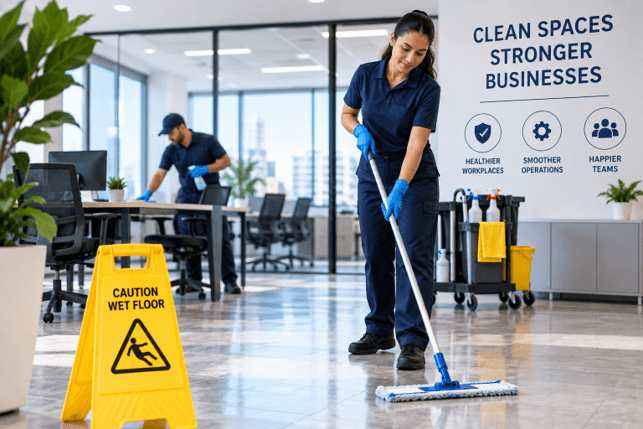
Floor care is both an appearance task and a risk-control activity. Spills, loose debris, winter moisture, and incorrect product use can affect traction. Cleaning methods should match the surface and allow safe drying before normal traffic resumes.
Useful controls include:
- Prompt spill response and clear temporary signs
- Separate equipment for heavily soiled zones
- Correct dilution to avoid sticky or slippery residue
- Periodic detailed care based on the flooring system
Cleaning teams should also report lifted edges, damaged tiles, leaks, or worn mats. Those conditions require maintenance, but cleaners may be the first people to notice them during quieter service hours.
Scheduling reduces disruption
The best service window balances access with business activity. Loud equipment, wet floors, blocked corridors, and waste movement can interfere with customers or staff if the schedule ignores operational peaks.
Some work fits after hours, while touchpoint checks, washroom service, and spill response may need daytime coverage. A blended schedule can protect presentation without placing the full workload inside one narrow window.
Commercial cleaning Calgary businesses depend on should understand opening hours, shift changes, deliveries, recurring meetings, and special events. These details help place work where it causes the least friction.
Communication prevents escalation
Small issues become expensive when nobody owns the response. A named site contact, a simple reporting channel, and clear urgency levels help cleaners communicate spills, damage, supply shortages, or access problems before they affect operations.
Requests should include the exact location and desired deadline. Photographs can clarify a problem, while recurring concerns should be logged so the cause can be reviewed rather than corrected repeatedly without explanation.
Communication works both ways. Facility managers should provide notice about events, construction, unusual occupancy, or restricted rooms. Cleaning teams should confirm changes and explain any effect on the planned scope.
Measure useful outcomes
A long checklist is not the same as good quality control. Measurements should focus on whether priority spaces are ready, supplies are available, floors are safe, waste is controlled, and recurring concerns are resolved.
Trend data is more useful than isolated complaints. If the same entrance, washroom, or lunchroom repeatedly falls below standard, the schedule or method may be wrong even when staff completed the written task.
Periodic reviews should connect cleaning performance to building changes. Increased occupancy, new flooring, longer hours, or renovations can all alter workload. Updating the plan early protects both service quality and budget predictability.
Prepare for unusual days
Routine schedules are designed for normal operations, but commercial properties also face events, construction, seasonal peaks, inspections, and unexpected closures. Each can change traffic, waste volume, access, and the acceptable completion time.
A simple event plan should identify affected areas, expected attendance, food service, setup and teardown times, additional supplies, and the person authorized to approve extra work.
Post-construction conditions need particular care. Fine dust can settle repeatedly, and debris or trade waste may fall outside normal janitorial scope. The facility should confirm that hazardous or specialist materials have been removed before general cleaning begins.
Emergency response also needs boundaries. Cleaning staff can isolate a minor spill and notify the site contact, but unknown substances, sewage, sharps, or biological hazards may require trained specialist handling.
Plan everything
Planning these exceptions protects the everyday program. Temporary demands can be priced, staffed, and reviewed separately instead of overwhelming routine tasks and lowering standards across the whole building.
After an unusual day, review what changed and what worked. Notes about labour, supplies, access delays, waste volume, and occupant feedback make the next event easier to plan. A short debrief can turn a one-time disruption into useful operational knowledge without permanently expanding the normal cleaning schedule.
The facility can then keep proven adjustments ready for future peaks while returning ordinary rooms to their appropriate routine frequencies.
Conclusion
Better commercial cleaning supports daily operations by protecting entrances, washrooms, floors, schedules, and communication pathways. The work matters most when it quietly keeps the facility ready and prevents small problems from interrupting larger priorities.
A strong program is specific, responsive, and aligned with the building’s real use. When scope and accountability are clear, cleaning becomes a dependable part of facility management rather than a recurring source of uncertainty.