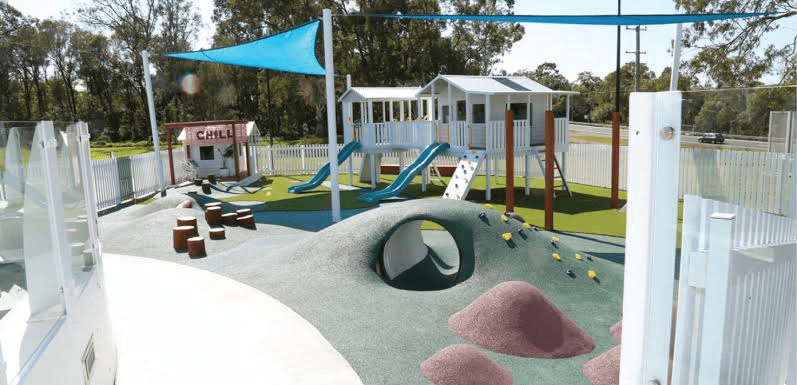
Outdoor Playground Equipment: Creating Safe, Engaging, and Active Play Spaces
Outdoor play provides children with valuable opportunities to move, explore, socialize, and develop important physical and cognitive skills. A thoughtfully designed play area can turn an ordinary outdoor space into an environment where children can be active while discovering new ways to interact with their surroundings. Choosing the right outdoor playground equipment is an important part of creating such a space because equipment should provide age-appropriate challenges while supporting safety, accessibility, durability, and long-term enjoyment.
Playground equipment is available in many forms, including swings, slides, climbing structures, balance features, activity panels, playhouses, tunnels, spinners, and combination systems. Each option offers different experiences and can contribute to children’s development in different ways. The ideal selection depends on the age group, available space, expected number of users, maintenance requirements, and the overall goals of the play area.
Whether a playground is being created for a residential property, school, childcare facility, community setting, or recreational environment, careful planning can make a significant difference. The goal should be to create a space that encourages children to participate actively while providing an environment that is thoughtfully designed and properly maintained.
Understanding the Importance of Outdoor Play
Outdoor play gives children opportunities to participate in activities that may be difficult to replicate indoors. Running, climbing, swinging, balancing, jumping, and sliding allow children to use different muscle groups while developing coordination and body awareness.
Outdoor environments can also encourage children to make independent choices. They may decide which equipment to use, create games with other children, or explore different ways of moving through the play area. These experiences can support confidence and problem-solving.
Social development is another important benefit. Playground activities often encourage children to communicate, cooperate, take turns, and negotiate shared spaces. A well-designed playground can therefore support more than physical activity; it can become a setting for learning and social interaction.
Choosing Equipment for Different Age Groups
Children of different ages have different physical abilities, coordination levels, and play preferences. Equipment should therefore be selected according to the intended users.
Younger children may benefit from low platforms, gentle slides, simple climbing features, interactive panels, and appropriately designed swings. These elements can introduce movement and exploration without presenting challenges beyond their abilities.
Older children may enjoy taller climbing structures, more complex play systems, challenging balance equipment, and equipment that allows multiple forms of movement. The objective is to provide opportunities for challenge without creating unnecessary hazards.
Age-appropriate design also helps prevent situations in which younger children attempt to use equipment intended for larger or more physically capable users. Separating play zones by age or ability can sometimes improve organization and safety.
Swings and Their Benefits
Swings remain one of the most recognizable pieces of playground equipment. They provide a rhythmic movement that children often find enjoyable while encouraging balance, coordination, and body control.
Different swing designs can serve different purposes. Traditional belt swings are common, while specialized seats can provide additional support for younger children or users with different mobility needs.
Swing placement requires careful planning because moving equipment needs adequate clearance. The surrounding surface should also be appropriate for the potential impact area.
Regular inspections are important because chains, seats, fasteners, and connection points can experience repeated movement and wear. Damaged components should be repaired or replaced promptly.
Slides for Active Play
Slides provide children with an opportunity to climb, balance, and descend while experiencing controlled movement. They are available in different heights, lengths, shapes, and configurations.
A slide should be selected according to the age and ability of the intended users. The platform, ladder, steps, handrails, and exit area all need to be considered as part of the complete system.
The landing area should remain clear of obstacles, and the surrounding surfacing should provide suitable protection in case of falls.Slides can also be incorporated into larger play structures, allowing children to combine climbing and sliding with other activities. This can make a play system more engaging than a standalone feature.
Climbing Equipment and Physical Development
Climbing structures encourage children to use their arms, legs, hands, and core muscles while navigating different surfaces and heights. Climbing can also involve decision-making because children need to determine where to place their hands and feet as they move.
Climbing equipment comes in many forms, including ladders, nets, walls, arches, and integrated climbing panels. Different designs can provide different levels of challenge.
The equipment should be appropriate for the intended age group. Handholds and footholds need to be designed carefully, and elevated areas should include appropriate protective features.Providing multiple routes through a play structure can also encourage exploration and reduce congestion.
Balance and Coordination Features
Balance equipment can add another dimension to a playground. Stepping platforms, balance beams, bridges, and similar features encourage children to control their movements while navigating changing surfaces.
These activities can support coordination and body awareness while offering challenges that are different from climbing or swinging.Balance equipment should be designed with appropriate heights and spacing for the intended users. Younger children may benefit from lower features, while older children can use more challenging configurations.
Including different types of movement within a playground helps create a more varied experience and encourages children to use different physical skills.
Creative and Imaginative Play
Not all playground activities need to involve climbing or running. Imaginative play can be equally valuable. Playhouses, themed structures, tunnels, activity panels, pretend storefronts, and interactive features can encourage children to create stories and role-play scenarios.
Imaginative equipment can support language development, cooperation, creativity, and social interaction. Children can transform a simple structure into a house, shop, vehicle, fort, or other setting through their own ideas.Combining imaginative features with physical equipment can create a more versatile play environment that appeals to children with different interests.
Inclusive Playground Design
Accessibility should be considered when planning a playground so that children with different abilities can participate meaningfully. Inclusive design can involve accessible routes, appropriate transfer points, ground-level activities, sensory features, and equipment that accommodates different physical needs.
The objective is not simply to provide one accessible feature but to create a play environment where children can interact with one another as naturally as possible.Accessible pathways can also benefit caregivers, younger children, and anyone who has difficulty navigating uneven surfaces.
Inclusive design should be incorporated from the beginning of the planning process rather than added as an afterthought. Equipment manufacturers and qualified playground designers can help identify suitable options.
Playground Safety and Protective Surfacing
Safety should be a central consideration when selecting outdoor playground equipment. Even well-designed equipment can involve falls, so appropriate protective surfacing is essential.
Depending on the playground design and applicable standards, surfacing may include engineered wood fiber, rubber materials, synthetic systems, sand, or other suitable products. The appropriate option depends on the equipment, fall heights, drainage, maintenance requirements, and local regulations.Hard surfaces such as concrete and asphalt are generally inappropriate directly beneath equipment where children may fall.
Surfacing should also be maintained over time. Materials can become displaced, compacted, worn, or damaged. Regular inspection and replenishment may be necessary to preserve the intended protective performance.
Planning the Playground Layout
A playground should be arranged so that children can move between activities comfortably without creating unnecessary conflicts. Equipment with moving components needs adequate clearance, while climbing and sliding areas require appropriate access and landing zones.
Visibility is also important. Caregivers should ideally be able to observe children across significant portions of the play area. Avoiding unnecessary visual obstructions can make supervision easier.
Paths should connect different parts of the playground while reducing congestion. Seating for caregivers can be positioned near the play area without interfering with children’s movement.The layout should also account for maintenance access, drainage, shade, and future equipment replacement.
Selecting Durable Materials
Playground equipment is exposed to weather and repeated use, so material quality matters. Common materials include coated metal, treated wood, plastics, composites, and other engineered products.
Metal components should have appropriate protective finishes to help resist corrosion. Wooden components need to be designed and maintained to withstand outdoor conditions. Plastic components should be suitable for prolonged exposure to sunlight and changing temperatures.
Fasteners, connectors, chains, bearings, and other hardware also need to withstand repeated use and environmental exposure.Durability does not mean maintenance is unnecessary. Even high-quality materials can deteriorate if they are neglected, so routine inspections remain important.
Weather and Environmental Considerations
Outdoor equipment must withstand the conditions of its environment. Sun exposure can affect certain plastics, coatings, and surfaces, while rain and humidity can contribute to corrosion or deterioration.
Shade can make playgrounds more comfortable during hot weather and may reduce direct solar exposure on some equipment surfaces. However, shade structures should be selected and installed appropriately so they do not create additional hazards.
Drainage is another consideration. Standing water around equipment can damage surfaces and create slippery conditions. Proper grading and drainage can help keep the play area usable after rain.Seasonal inspections can identify problems caused by weather changes and heavy use.
Maintenance and Routine Inspections
Regular maintenance is essential for keeping a playground safe and functional. Inspections should look for loose bolts, damaged surfaces, cracked components, corrosion, worn chains, unstable structures, sharp edges, and other potential hazards.
Moving parts deserve particular attention because repeated use can cause wear. Swings, rotating equipment, hinges, and other components may need lubrication, adjustment, or replacement according to manufacturer recommendations.Protective surfacing should also be inspected. Displacement around swing sets and slide exits is common and may require redistribution or replenishment.
Keeping maintenance records can help property managers track inspections and identify recurring issues. A consistent maintenance schedule is more effective than waiting until visible problems become severe.Playgrounds are shared environments, so cleanliness is another important consideration. Equipment surfaces can collect dirt, dust, pollen, and other contaminants.
Routine cleaning can help keep equipment pleasant to use and can also reveal damage that may otherwise be hidden by accumulated dirt.
The appropriate cleaning products depend on the materials. Harsh chemicals should not be used unless they are approved for the specific equipment because they may damage coatings, plastics, or other surfaces.High-touch components may require additional attention in environments with heavy use.
Choosing Equipment for Available Space
The size of the available area should influence equipment selection. Installing too much equipment in a small space can create congestion and reduce safe movement.
A larger playground can accommodate several activity zones, such as climbing, swinging, imaginative play, balancing, and quiet sensory activities.
Space planning should include not only the footprint of the equipment but also required clearance zones. Manufacturers generally provide installation information that identifies how much space is needed around specific components.Planning these requirements before purchasing equipment can prevent expensive layout changes later.
Budgeting for a Playground Project
The cost of outdoor playground equipment varies considerably depending on materials, size, complexity, accessibility features, surfacing, installation, site preparation, and additional amenities.
A lower initial purchase price does not necessarily mean lower long-term costs. Equipment that requires frequent repairs or replacement may become more expensive over time.Budgeting should therefore include installation, protective surfacing, site preparation, drainage, shade, seating, signage, and ongoing maintenance where applicable.
Property owners and facility managers should consider the entire project rather than budgeting only for the equipment itself.Proper installation is essential for playground safety and performance. Equipment needs to be anchored correctly, assembled according to manufacturer instructions, and positioned on an appropriately prepared surface.
Incorrect installation can create instability, improper clearances, or other hazards. Some playground systems also require specialized tools and knowledge.
Professional installers can help ensure that components are assembled correctly and that the finished installation is suitable for its intended use.After installation, the playground should be inspected before children are allowed to use it. Any deficiencies should be corrected promptly.
Creating an Engaging Play Environment
A successful playground should offer variety. Children are more likely to remain engaged when they have multiple activities to choose from.
A balanced play environment might combine climbing, swinging, sliding, balancing, imaginative play, and interactive features. Different activity types can encourage different physical and cognitive skills.The environment around the equipment also matters. Landscaping, seating, shade, pathways, and open areas can make the space more comfortable and functional.
Natural elements can sometimes complement manufactured equipment by providing opportunities for exploration and sensory experiences, provided that they are incorporated safely.One common mistake is choosing equipment based only on appearance. A visually impressive structure may not be suitable for the intended age group or available space.
Another mistake is underestimating the importance of surfacing. Protective ground materials are a critical part of the overall playground system and should be planned alongside the equipment.
Failing to account for maintenance can also create long-term problems. Equipment should be selected with realistic expectations about cleaning, inspections, repairs, and replacement components.Poor layout planning is another issue. Crowded equipment, inadequate clearance, limited visibility, or poorly positioned entrances can reduce both safety and usability.
Making a Smart Equipment Selection
When evaluating outdoor playground equipment, decision-makers should consider safety, age appropriateness, accessibility, durability, maintenance, available space, and budget. Manufacturer documentation can provide important information about installation requirements, recommended users, materials, and maintenance.
It is also useful to think about how the playground will be used throughout the day. A school playground may experience intense use during short periods, while a residential play area may have fewer users but different supervision patterns.
The best equipment is not necessarily the largest or most expensive option. It is the equipment that fits the needs of the children, the environment, and the people responsible for maintaining the space.
Final Thoughts on Outdoor Playground Equipment
Choosing outdoor playground equipment is an opportunity to create a space where children can exercise, socialize, explore, and use their imagination. A successful playground combines engaging activities with thoughtful design, appropriate protective surfacing, accessibility, durable materials, and consistent maintenance.
Before purchasing equipment, property owners and facility managers should evaluate the intended age group, available space, budget, installation requirements, and long-term maintenance needs. Equipment should be installed according to manufacturer instructions and applicable safety requirements, while the completed playground should be inspected regularly throughout its service life.
A well-planned playground can offer lasting value because it supports many different forms of development while encouraging children to spend more time outdoors. By selecting appropriate equipment and taking a proactive approach to safety and maintenance, communities, schools, childcare facilities, and families can create play spaces that remain enjoyable, functional, and inviting for years to come.