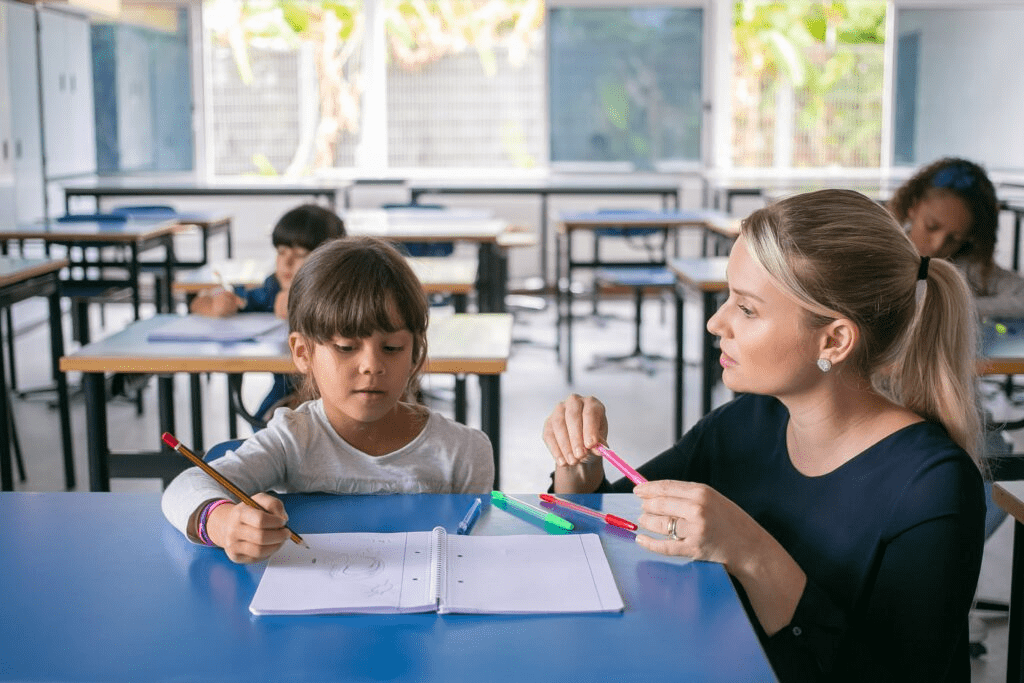
In-School ABA Support: How Behavioral Guidance Can Help Students Thrive in the Classroom
School is an important environment for learning, social development, communication, independence, and emotional growth. For some students, however, participating fully in a classroom can be challenging because they may need additional support with communication, transitions, social interaction, attention, self-management, or everyday routines. In school ABA support can provide individualized behavioral assistance that helps students develop practical skills while participating in their natural educational environment. When thoughtfully coordinated with teachers, families, and other professionals, this approach can support meaningful progress without separating the student unnecessarily from classroom activities.
Applied Behavior Analysis, commonly known as ABA, is an evidence-based approach that focuses on understanding how behavior is influenced by environmental factors and using structured strategies to teach useful skills. In a school setting, ABA support can be adapted to the student’s educational goals, developmental needs, classroom routines, and existing support plan. The objective is not simply to reduce behaviors that adults find challenging. Effective support should help students communicate, participate, learn, interact with others, and become increasingly independent.
Understanding ABA Support in a School Environment
ABA support in schools involves applying behavioral principles within the routines and activities that students experience every day. Instead of teaching every skill in an isolated setting, professionals can work with students during classroom instruction, group activities, transitions, recess, lunch, and other naturally occurring situations.
The specific approach varies according to the student’s needs. One student may need help communicating requests, while another may need support with following classroom routines or completing multi-step activities. Some students may benefit from strategies designed to improve social participation, task engagement, or independence.
A major advantage of school-based support is that skills can be practiced where they are actually needed. Learning how to wait, ask for help, follow instructions, or transition between activities can become more meaningful when those skills are practiced during real classroom experiences.
Individualized Support for Each Student
Students do not all learn in the same way, and behavioral support should reflect individual differences. A qualified professional can evaluate a student’s strengths, challenges, preferences, communication style, learning patterns, and current skills before developing an appropriate intervention approach.
Individualization is important because a strategy that works well for one student may not work equally well for another. Some students respond positively to visual supports, while others may benefit from verbal prompts, modeling, structured choices, reinforcement, or hands-on activities.
A student’s existing abilities should also be considered. Building on strengths can help make instruction more effective and support a positive learning experience.
Supporting Communication Skills
Communication is one of the most important areas that school-based behavioral support can address. Students may have difficulty expressing needs, asking questions, responding to others, participating in conversations, or understanding classroom expectations.
Support may focus on helping students communicate through speech, gestures, pictures, communication devices, or other appropriate methods. The goal should be functional communication that allows the student to express wants, needs, preferences, concerns, and ideas as effectively as possible.Improved communication can also reduce frustration because students have more appropriate ways to respond when they need assistance or want something to change.
Helping Students Follow Classroom Routines
Classrooms contain many predictable routines. Students may be expected to enter the room, organize materials, begin assignments, participate in instruction, transition between activities, and prepare for dismissal.
For some students, these routines can be difficult to understand or remember. ABA-based strategies can break complex routines into smaller, manageable steps.
Visual schedules, task analysis, modeling, prompting, and reinforcement may be used when appropriate. Over time, the level of support can be adjusted as the student becomes more independent.The goal should be to help the student participate in classroom routines with as little unnecessary assistance as possible.
Supporting Transitions
Transitions can be challenging for students who have difficulty shifting attention from one activity to another. Moving from a preferred activity to a less preferred task, changing classrooms, preparing for lunch, or leaving school may trigger frustration or resistance.
Behavioral support can help make transitions more predictable. Visual schedules, advance warnings, timers, transition cues, and clear expectations may be useful depending on the individual student.Consistency is often important. When teachers and support professionals use similar cues and expectations, students may find transitions easier to understand.
Encouraging Positive Classroom Participation
Participating in classroom activities requires many skills, including listening, responding, waiting, remaining engaged, following directions, and interacting appropriately with peers.
ABA support can help identify which specific skills are interfering with participation and teach alternatives. For example, a student who frequently leaves an activity may need support with requesting a break, understanding the task, communicating difficulty, or gradually increasing participation.
Breaking activities into manageable steps can make expectations more achievable. Reinforcement can also be used to encourage meaningful engagement and skill development.School provides numerous opportunities for social interaction. Students may need to share materials, take turns, join group activities, respond to peers, ask questions, or recognize social cues.
ABA-based instruction can provide structured opportunities to practice these skills. Modeling, role-play, prompting, reinforcement, and natural practice may all be incorporated depending on the student’s goals.Social support should be respectful of individual differences. The purpose should be to help students communicate and participate successfully rather than forcing them to behave according to arbitrary social expectations.
Teaching Independence
One of the most valuable goals of behavioral support is increased independence. Students may initially require considerable assistance with tasks that eventually become routine.
Support professionals can use techniques such as task analysis and systematic prompting to teach multi-step activities. As the student develops competence, assistance can gradually be reduced.
Independence may involve academic routines, organizing materials, requesting help, navigating transitions, managing personal belongings, or participating in self-care activities appropriate to the student’s age and educational setting.
The focus should remain on functional skills that improve the student’s ability to participate meaningfully in school life.
Positive Reinforcement in the Classroom
Positive reinforcement is an important concept within ABA. It involves providing something meaningful after a desired behavior or skill so that the behavior is more likely to occur again.
In a school setting, reinforcement should be individualized and appropriate to the student’s age and preferences. It might involve praise, access to a preferred activity, recognition, a choice, or another meaningful consequence.
Effective reinforcement is not simply about rewarding students for doing what adults want. It should be part of a broader teaching strategy that helps students understand expectations and develop useful skills.Reinforcement can also become more natural over time as students experience the inherent benefits of communication, learning, social participation, and independence.
Understanding Challenging Behavior
Some students display behaviors that interfere with learning or participation. These may include aggression, self-injury, property destruction, elopement, prolonged refusal, disruptive behavior, or other responses that create safety or educational concerns.
ABA emphasizes understanding why a behavior occurs rather than simply reacting to it. A behavior may serve a function such as gaining attention, accessing an item or activity, escaping a difficult situation, communicating discomfort, or meeting another need.
Understanding the function can help professionals teach a safer and more effective alternative.For example, if a student engages in a challenging behavior when an assignment becomes difficult, the intervention may involve teaching the student to request help or a break rather than simply attempting to suppress the behavior.
Functional Behavior Assessment
When significant behavioral concerns occur, a Functional Behavior Assessment, or FBA, may be used to better understand patterns surrounding the behavior. This process examines factors that occur before and after the behavior and considers the circumstances in which it is more or less likely to occur.
An FBA can help identify possible behavioral functions and guide the development of appropriate interventions.School-based behavioral planning should be based on objective information whenever possible. Data can help professionals determine whether an intervention is working and whether changes are needed.
Successful school-based support requires collaboration. ABA professionals should work with teachers rather than operating independently from the classroom team.Teachers understand classroom routines, academic expectations, peer dynamics, and curriculum requirements. Behavioral professionals can contribute expertise in behavior assessment, skill acquisition, prompting, reinforcement, and data collection.
When these perspectives are combined, support can become more practical and consistent.Communication between professionals should also be respectful and efficient. Strategies should fit naturally within classroom activities instead of unnecessarily disrupting instruction.
Working With Families
Families provide valuable information about a student’s communication, preferences, strengths, routines, and behavior outside school. Collaboration with families can help professionals understand whether skills are transferring across environments.
Families should be kept informed about relevant progress and changes in support strategies. When appropriate, schools and families can coordinate goals so that students receive consistent opportunities to practice important skills.
At the same time, each environment has different expectations and resources. Strategies should be adapted rather than assuming that exactly the same approach will work everywhere.
Although ABA is often associated with behavior support, behavioral principles can also be applied to academic skill development. Students may receive support with task completion, following directions, responding to questions, reading, writing, mathematics, or other educational activities.Academic support should complement the student’s educational program rather than replacing appropriate instruction from qualified teaching professionals.
Behavioral strategies can help identify barriers to learning and increase opportunities for successful practice. Reinforcement, prompting, shaping, and task analysis may be used to support skill acquisition.
Using Data to Monitor Progress
Data collection can help school teams determine whether a behavioral intervention is producing meaningful results. Depending on the goal, professionals may track frequency, duration, accuracy, independence, latency, or other relevant measures.
For example, if the goal is independent task completion, data might measure how many steps the student completes without assistance. If the goal involves communication, data might track appropriate requests across relevant opportunities.Data should be useful rather than excessive. The information collected should directly support decision-making and help professionals determine whether strategies should continue, change, or be faded.
Prompts can be useful when teaching a new skill, but students should not become unnecessarily dependent on adult assistance. Prompt fading is therefore an important consideration.
A professional may initially provide more support and gradually reduce it as the student demonstrates competence. The exact process depends on the skill and the student’s learning profile.The ultimate goal is meaningful independence. Students should have opportunities to use skills without waiting for an adult to tell them what to do at every step.
Supporting Inclusive Education
School-based ABA support can be particularly valuable when it helps students participate in inclusive classroom environments. Instead of removing students from activities whenever they experience difficulty, support can sometimes be delivered within the classroom.
This approach can allow students to practice skills alongside peers and participate in naturally occurring social and academic opportunities.Inclusion should be individualized, however. Some students may benefit from additional instruction in a quieter environment for particular skills. The focus should be on providing appropriate access to learning while respecting the student’s needs.
Behavioral support should always consider the student’s dignity, autonomy, preferences, and well-being. Effective intervention is not simply about making a student appear easier for adults to manage.
Students should have appropriate ways to communicate refusal, request breaks, express discomfort, and make choices. Support should prioritize safety and meaningful participation while avoiding unnecessary control.This is especially important when selecting behavioral goals. Goals should be functional and relevant to the student’s life rather than focused only on making behavior appear more typical.
Creating Consistent Strategies
Students can become confused when expectations change dramatically between adults or activities. Consistency can help make behavioral expectations easier to understand.Teachers, support professionals, and other school staff can coordinate around key strategies, communication methods, reinforcement systems, and prompting approaches.
Consistency does not mean every adult must respond identically in every situation. Rather, the team should have a shared understanding of the student’s goals and the general strategies being used.Students encounter many changes throughout their educational experience. New teachers, classrooms, schedules, classmates, and school activities can all require adjustment.
Behavioral support can help students practice coping with changes and learning flexible responses. Visual information, advance preparation, social narratives, practice opportunities, and gradual exposure may be useful depending on the student.Developing flexibility can help students manage unfamiliar situations with greater confidence and independence.
Choosing Appropriate ABA Support
When families and schools consider ABA services, they should look for qualified professionals who understand both behavioral principles and educational environments.It is useful to ask about credentials, experience, supervision, communication practices, data collection, collaboration with teachers, and the approach to individualized goals.
Families may also want to understand how progress will be evaluated and how interventions will be adjusted if they are not producing meaningful results.A strong provider should be willing to explain strategies clearly and discuss the student’s goals in practical terms.
Successful school-based ABA should be evaluated based on meaningful improvements in the student’s life. Reducing challenging behavior can be important, particularly when it improves safety or access to learning, but it should not be the only measure of success.
Other outcomes may include improved communication, greater independence, increased participation, successful transitions, stronger academic engagement, or improved ability to interact with peers.Progress should be evaluated over time and adjusted according to the student’s changing needs.
Conclusion
School can provide valuable opportunities for learning, communication, social development, and independence, but some students require additional individualized assistance to take full advantage of those opportunities. In school ABA support can provide structured behavioral strategies within the student’s everyday educational environment, helping develop practical skills while supporting participation in classroom activities.
Effective support begins with understanding the individual student rather than applying a one-size-fits-all approach. Communication, transitions, classroom participation, social interaction, independence, academic engagement, and challenging behavior may all be addressed when they are relevant to the student’s needs.
Collaboration is equally important. Teachers, families, behavioral professionals, and other members of the educational team can contribute different perspectives that help create a more consistent and useful support plan. Data collection can guide decision-making, while individualized reinforcement and carefully faded prompts can help students develop greater independence.
Most importantly, behavioral support should respect student dignity and focus on meaningful outcomes. The goal should not simply be compliance or making a student appear more typical. Instead, support should help students communicate effectively, participate safely, access learning, build useful skills, and have greater control over their everyday experiences.
When thoughtfully designed and implemented, in school ABA support can become a valuable component of a student’s educational experience. With individualized goals, qualified professionals, collaborative planning, ongoing evaluation, and a commitment to student well-being, behavioral strategies can help create more accessible and supportive learning environments.