AC Maintenance for Homeowners: Everything You Need to Know About Seasonal Tune-Ups, Cleaning, Inspections, and Preventive Care
Air conditioning plays an essential role in maintaining a comfortable indoor environment, particularly during periods of high temperatures and humidity. Whether installed in a home, office, retail property, or larger commercial building, an air conditioning system needs regular attention to operate efficiently and reliably. Without proper care, dust, dirt, clogged filters, refrigerant issues, electrical problems, and neglected components can gradually reduce performance. Routine maintenance AC services can help identify developing problems, improve system efficiency, support consistent cooling, and potentially extend the useful life of important equipment.
Many people only think about their air conditioning system when it stops working. However, waiting for a complete breakdown can lead to inconvenient repairs, uncomfortable indoor conditions, and potentially higher costs. Preventive maintenance takes a different approach by focusing on regular inspections, cleaning, testing, and adjustments before minor concerns become major failures. Understanding what AC maintenance involves and why it matters can help property owners make more informed decisions about their cooling systems.
Understanding the Importance of AC Maintenance
An air conditioning system contains several components that must work together to provide effective cooling. Filters, coils, fans, electrical connections, condensate drains, thermostats, refrigerant systems, and other components all influence performance.
Over time, dust and debris can accumulate inside the system. Filters can become clogged, coils can become dirty, and drainage lines can develop blockages. Even when the system continues to run, these problems can reduce efficiency and place additional strain on components.
Regular maintenance allows potential issues to be identified before they become severe. A technician can inspect the system, clean appropriate components, test performance, and recommend repairs when necessary.
Preventive care is particularly valuable because air conditioning systems are often expected to operate for long periods during hot weather. A system that has been neglected may be more likely to experience problems when it is under the greatest demand.
What Does AC Maintenance Include?
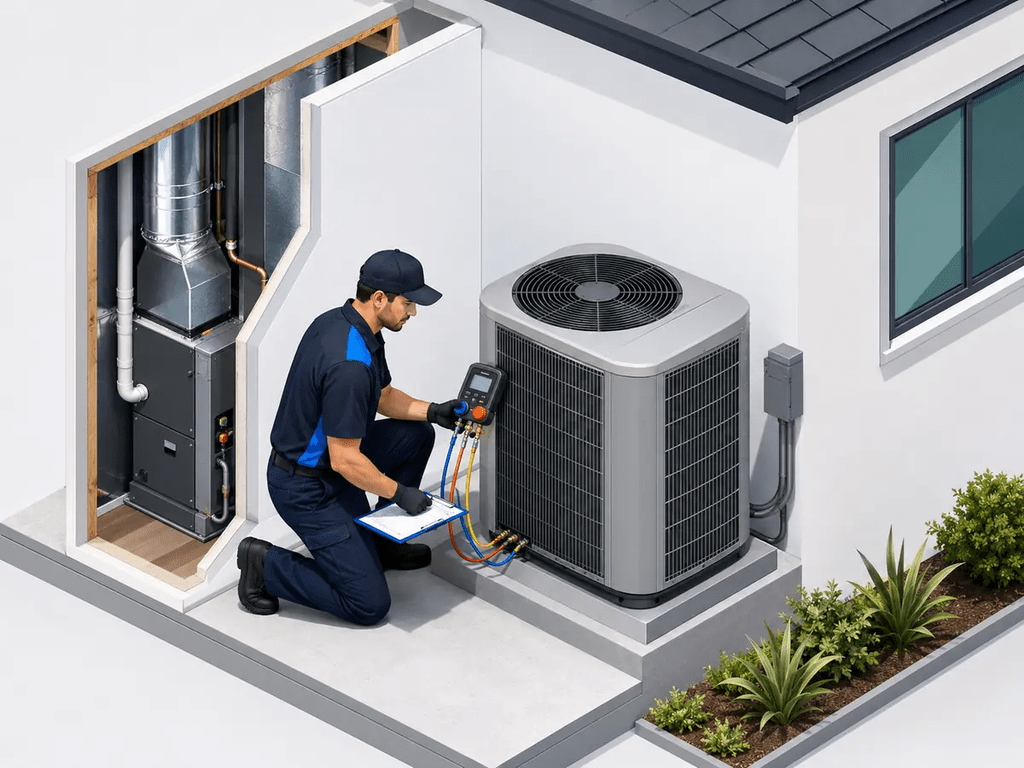
The exact maintenance process depends on the type of air conditioning system, its age, condition, and manufacturer recommendations. However, a professional service may include several common tasks.A technician may inspect filters, coils, fans, electrical connections, thermostats, condensate drains, refrigerant-related components, and other accessible parts. The system may also be tested to determine whether it is operating within expected performance ranges.
Cleaning is another important part of maintenance. Dust and debris can interfere with airflow and heat transfer, making the system work harder than necessary.The technician may also look for unusual noises, vibration, leaks, damaged components, or signs of wear. Identifying these issues early can make repairs more manageable.
The Importance of Clean Air Filters
Air filters are among the simplest components to maintain, yet they can have a significant effect on system performance. Filters collect airborne particles before they enter certain parts of the HVAC system.As filters become dirty, airflow can become restricted. The system may then need to operate for longer periods to achieve the desired indoor temperature.
Restricted airflow can also affect comfort by creating uneven temperatures throughout a building. In some cases, it may contribute to additional stress on the equipment.Filter requirements vary depending on the system, filter type, indoor environment, and manufacturer’s recommendations. Homes with pets, construction activity, or high levels of airborne dust may require more frequent attention.
Cleaning AC Coils
Coils are important because they participate in the transfer of heat that allows an air conditioning system to cool indoor spaces. When dirt accumulates on coil surfaces, heat transfer can become less effective.A dirty coil may contribute to reduced cooling performance and increased energy consumption. Keeping appropriate components clean can help the system operate more efficiently.
Coil cleaning should be performed using methods suitable for the specific equipment. Aggressive cleaning techniques or inappropriate chemicals can potentially damage components.Professional maintenance can help determine whether the coils require cleaning and which method is appropriate.
Checking Refrigerant-Related Components
Refrigerant plays a critical role in the cooling process. A properly functioning system should maintain the appropriate refrigerant charge according to its design and specifications.
If refrigerant levels are incorrect, the system may not cool effectively. However, adding refrigerant without identifying the underlying cause may not resolve the problem permanently.A qualified technician can inspect the system for signs of leaks or other refrigerant-related issues and determine whether further repair is required.
Because refrigerant systems involve specialized equipment and procedures, this aspect of maintenance should generally be handled by an appropriately trained professional.Air conditioners rely on electrical components to operate motors, controls, fans, compressors, and other equipment. Loose connections, damaged wiring, or worn electrical components can affect reliability and may create safety concerns.
During maintenance, a technician can inspect accessible electrical components and look for signs of deterioration, overheating, corrosion, or other abnormalities.Electrical work should not be treated as a casual DIY task. If a problem involves wiring, capacitors, disconnects, circuit components, or other electrical equipment, qualified assistance is appropriate.
Maintaining Condensate Drainage
Air conditioning systems can produce condensation during normal operation. This moisture needs to drain away properly.A blocked condensate drain can cause water to accumulate and potentially result in leaks, property damage, or system shutdowns depending on the equipment and installation.
During routine maintenance, drainage components can be inspected and cleaned when necessary. Keeping the drainage system clear is especially important for systems located above finished ceilings or near sensitive equipment.Signs of a drainage problem can include water around the indoor unit, unusual moisture, unpleasant odors, or unexpected system shutdowns.
The thermostat controls the desired indoor temperature and communicates with the air conditioning system. If the thermostat is inaccurate or malfunctioning, the system may not maintain comfortable conditions efficiently.Maintenance may include checking thermostat operation and confirming that the system responds appropriately to temperature settings.
Upgrading an older thermostat may also provide additional control and scheduling features, depending on the property and HVAC system.A properly functioning thermostat can help prevent unnecessary cooling cycles and make indoor temperature management easier.
Improving Energy Efficiency
One of the primary reasons property owners schedule AC maintenance is to support efficient operation. An air conditioning system that is dirty, restricted, or experiencing mechanical problems may consume more energy than necessary.
Routine cleaning and inspection can help the system operate closer to its intended performance. This does not guarantee a specific reduction in energy bills, but a well-maintained system is generally better positioned to operate efficiently than one that has been neglected.
Energy efficiency also depends on insulation, building design, thermostat settings, ductwork, outdoor temperatures, and other factors. AC maintenance should therefore be viewed as one part of a broader approach to managing energy use.
Reducing Unexpected Breakdowns
Unexpected air conditioning failures can be particularly inconvenient during hot weather. A minor component failure may prevent the entire system from operating properly.
Regular inspections can reveal warning signs such as unusual sounds, vibration, worn components, electrical abnormalities, or reduced cooling performance. Addressing these concerns early may reduce the likelihood of a sudden breakdown.Preventive maintenance cannot eliminate every possible failure. Mechanical and electrical components can still fail unexpectedly. However, regular professional attention can improve the chances of identifying developing problems before they become emergencies.
Extending Equipment Life
Air conditioning equipment represents a significant investment. Replacing a complete system can be expensive and disruptive, so many property owners want to maximize the useful life of their existing equipment.Routine maintenance can support this goal by reducing unnecessary strain and ensuring that important components remain clean and properly adjusted.
For example, restricted airflow can force equipment to work harder, while dirty coils can interfere with heat transfer. Addressing these issues can help reduce avoidable stress.The actual lifespan of an AC system depends on equipment quality, installation, usage, climate, maintenance, and other factors, but preventive care remains an important part of responsible equipment management.
Property owners should pay attention to changes in system behavior. Unusual noises, weak airflow, inconsistent temperatures, frequent cycling, unpleasant odors, water leaks, or unexpected increases in energy consumption can indicate potential problems.A system that takes much longer than usual to cool the building may also require inspection.
These signs should not automatically be interpreted as proof of a specific fault. Instead, they indicate that further evaluation may be appropriate.Ignoring warning signs can allow relatively minor issues to become more complicated. Prompt attention can sometimes make diagnosis and repair easier.
Seasonal Maintenance Planning
Many property owners benefit from scheduling maintenance before periods of heavy AC use. Preparing the system before high-demand weather arrives gives technicians an opportunity to identify problems before the equipment is needed continuously.
Seasonal maintenance may include cleaning, inspection, performance testing, and replacement of appropriate consumable components.
The best maintenance schedule depends on the equipment and operating environment. Systems used heavily throughout the year may require more frequent attention than systems used only occasionally.Following the manufacturer’s maintenance recommendations and consulting a qualified technician can help establish an appropriate schedule.
Maintenance for Commercial Buildings
Commercial air conditioning systems may be larger and more complex than residential units. Offices, stores, warehouses, restaurants, and other facilities can have multiple units, extensive ductwork, rooftop equipment, or centralized systems.For commercial properties, HVAC performance can affect employees, customers, inventory, equipment, and daily operations. An unexpected cooling failure may disrupt business activities.
A structured maintenance program can help commercial property managers keep track of inspections, filter changes, repairs, equipment condition, and service history.Maintaining accurate records can also help identify recurring problems and support long-term replacement planning.
The outdoor portion of an air conditioning system is exposed to weather, dust, leaves, vegetation, and other environmental conditions. The surrounding area should remain reasonably clear so that airflow is not unnecessarily restricted.Plants, branches, debris, and stored items should not obstruct appropriate ventilation around outdoor equipment.
A technician can also inspect the outdoor unit for signs of damage, corrosion, unusual noise, or other concerns. Cleaning should be performed using methods suitable for the specific equipment.Property owners should avoid attempting repairs on outdoor electrical components without appropriate training and qualifications.
The Value of Professional AC Maintenance
Some basic maintenance tasks, such as checking or replacing an accessible filter, may be suitable for property owners. More complex work requires specialized knowledge and equipment.
Professional technicians can evaluate electrical components, refrigerant systems, coils, drainage, motors, controls, and other parts that may not be practical or safe for an untrained person to inspect.
Professional maintenance also provides an opportunity to identify issues that may not be obvious from everyday operation. A system can continue producing cool air while developing a problem that could eventually cause a larger failure.
Working with a qualified professional can therefore provide greater confidence in the condition of the equipment.
Choosing an AC Maintenance Provider
When selecting a maintenance provider, property owners should consider experience, qualifications, communication, service availability, pricing, and reputation.
A good provider should explain what the maintenance visit includes rather than offering only a vague promise to “check the AC.” Customers should understand which components will be inspected, which cleaning tasks are included, and whether any repairs are charged separately.
It is also useful to ask whether the provider offers maintenance plans for recurring service. A structured plan can make it easier to remember scheduled inspections and maintain service records.Property owners should be cautious of professionals who recommend expensive replacements without clearly explaining the condition of the existing equipment.
Understanding Maintenance Costs
Maintenance costs vary depending on the type of air conditioning system, equipment size, service requirements, accessibility, and provider. Routine maintenance is generally less complicated than major repairs or full system replacement, but prices can differ significantly.When comparing service options, customers should consider what is included. A low-cost visit that involves only a quick visual inspection may not provide the same value as a comprehensive maintenance appointment.
Property owners should ask about additional charges for filters, parts, refrigerant-related work, emergency service, or repairs discovered during the inspection.A clear explanation of pricing can help prevent misunderstandings and make it easier to budget for future maintenance.
Keeping Maintenance Records
Maintaining a record of AC inspections and repairs can be surprisingly useful. Documentation can show when filters were replaced, when major components were serviced, and what problems have occurred in the past.
For older equipment, service records can help technicians understand its history and identify recurring problems. They can also help property owners decide when continued repairs are becoming less practical than replacement.
Records may include service dates, technician recommendations, replaced components, equipment model information, and warranty details.Keeping this information organized can support better long-term planning.
When Replacement May Be Better Than Repair
Maintenance can extend equipment life, but it cannot prevent aging indefinitely. Eventually, an air conditioning system may become inefficient, unreliable, or expensive to repair.Frequent breakdowns, repeated repair costs, significant deterioration, or obsolete components may indicate that replacement should be considered.
A professional evaluation can help compare the condition and expected future costs of an existing system with the potential benefits of a newer model.Replacement should not be recommended solely because a system is old. Its actual condition, efficiency, repair history, and operating requirements should all be considered.
Property owners can take several basic steps between professional maintenance visits. Keeping accessible filters clean or replacing them according to the appropriate schedule is one of the simplest.The area around outdoor equipment should remain clear of unnecessary debris and vegetation. Indoor vents and registers should not be blocked by furniture or stored items when the system relies on them for airflow.
It is also helpful to pay attention to unusual changes in performance. Early recognition of problems can make professional diagnosis easier.These habits do not replace professional maintenance, but they can support better everyday operation.
Conclusion
Air conditioning systems work hard to maintain comfortable indoor environments, and regular care can play an important role in keeping them reliable and efficient. Maintenance AC services provide an opportunity to inspect, clean, test, and address important components before minor problems develop into costly or disruptive failures.
From replacing filters and cleaning coils to inspecting electrical connections, checking drainage, evaluating refrigerant-related issues, and testing overall performance, proper maintenance involves several important steps. Each component contributes to the system’s ability to deliver consistent cooling.
Property owners should avoid waiting for a complete breakdown before paying attention to their AC equipment. Seasonal inspections, regular filter care, professional servicing, and attention to warning signs can support better performance and help extend equipment life.
Choosing a qualified maintenance provider is equally important. Customers should look for clear communication, appropriate experience, transparent pricing, and a detailed explanation of the services included in each visit. Maintaining service records can also make long-term equipment management easier.
Ultimately, maintenance AC is an important part of responsible property care. A proactive approach can help reduce avoidable problems, support indoor comfort, improve operational efficiency, and provide property owners with a clearer understanding of their cooling system’s condition. With regular attention and professional support when needed, an air conditioning system can remain a dependable part of a comfortable and well-maintained property.