The Complete Guide to Mold Inspection, Prevention, and Property Maintenance
Mold can become a serious property maintenance concern when moisture is allowed to remain in an area for an extended period. It can develop in damp spaces, around leaks, beneath flooring, inside walls, near plumbing fixtures, and in other areas where moisture and poor ventilation create favorable conditions. Because some mold growth may occur in hidden locations, simply looking around the property may not always reveal the full extent of a problem. A professional mold inspection can help identify visible and potentially hidden signs of moisture-related growth while providing property owners with useful information about areas that may require further attention. Early investigation can be particularly valuable because addressing moisture problems promptly may help prevent additional damage. Understanding the inspection process and the factors that contribute to mold growth can help property owners take a more proactive approach to maintaining a clean and healthy indoor environment.
Why Mold Inspection Is Important
Mold is a type of fungus that can grow when moisture, suitable temperatures, and organic materials are present. Small amounts may develop unnoticed in areas that are difficult to access, while larger problems can become visible through discoloration, musty odors, or damaged materials. A professional mold inspection can provide a systematic assessment of areas where moisture problems or suspected mold growth may exist. Inspectors may examine visible surfaces, investigate areas with signs of water intrusion, and look for conditions that could support continued growth. The purpose of an inspection is generally to understand the condition of the property and identify areas that deserve further investigation or corrective action. Having reliable information can help property owners avoid ignoring a potential issue or attempting unnecessary work without first understanding the underlying cause.
Common Causes of Mold Growth
Moisture is one of the most important factors contributing to mold growth inside buildings. Plumbing leaks, roof leaks, condensation, flooding, poor ventilation, and water intrusion around windows can all create conditions where mold may develop. Bathrooms, basements, kitchens, laundry areas, crawl spaces, and other areas with elevated moisture can require particular attention when investigating potential problems. A professional mold inspection can help identify visible evidence of moisture and may reveal environmental conditions that could contribute to future growth. However, removing visible mold without addressing the source of moisture may not solve the underlying problem. Property owners should therefore focus not only on identifying mold but also on understanding why moisture is present and taking appropriate steps to control it.
Signs That May Indicate Mold
Mold does not always appear as a large, obvious patch on a wall or ceiling. Depending on the type of growth and the material involved, it may appear as dark spots, greenish discoloration, fuzzy patches, staining, or unusual surface changes. A persistent musty odor can also indicate that microbial growth or moisture may be present somewhere nearby, particularly when the source cannot be easily identified. A professional mold inspection can be useful when unexplained odors, recurring moisture, or suspicious discoloration are present. Other warning signs may include bubbling paint, warped materials, water stains, damaged drywall, or areas that remain damp for unusually long periods. Recognizing these signs early can encourage property owners to investigate before a small moisture problem develops into a larger property maintenance concern.
Hidden Mold and Difficult-to-Reach Areas
One of the challenges associated with mold is that it can grow in locations that are not immediately visible. Growth may occur behind drywall, beneath flooring, inside wall cavities, around insulation, under cabinets, or near concealed plumbing. Simply cleaning the visible surface may not reveal whether moisture has affected materials behind or underneath it. Professional mold inspection can help determine whether visible evidence is consistent with a larger moisture-related concern and whether additional evaluation may be appropriate. Inspectors may pay particular attention to areas surrounding known leaks, previous water damage, or materials that show signs of prolonged moisture exposure. Because hidden conditions can vary significantly from property to property, a careful inspection is often more useful than assuming that the visible portion represents the entire situation.
The Role of Moisture Detection
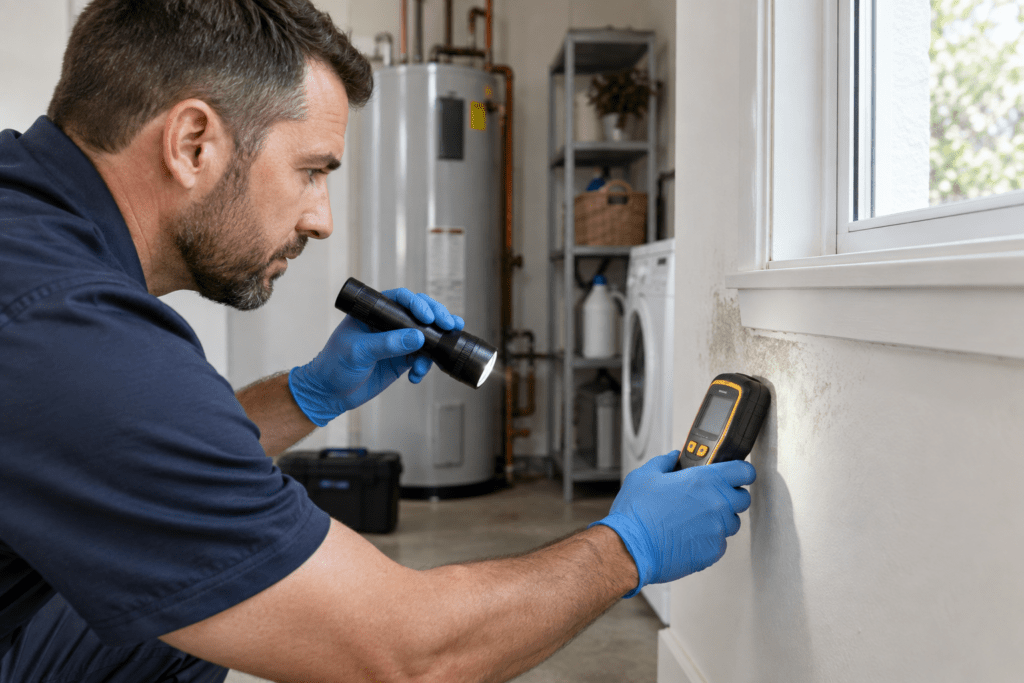
Finding the source of moisture is an important part of investigating potential mold problems. Even if visible growth is removed, continued moisture can create conditions that allow new growth to develop. Depending on the situation, professionals may use moisture meters, thermal imaging equipment, visual examination, or other inspection methods to investigate areas of concern. A professional mold inspection can help connect visible signs such as staining or discoloration with possible moisture-related conditions. Identifying damp areas may also help property owners prioritize repairs, such as fixing plumbing leaks, improving ventilation, addressing roof problems, or correcting water intrusion. The goal is not simply to locate mold but to understand the environmental conditions that may be contributing to its presence.
Mold Inspection During Property Transactions
Property inspections can become particularly important when buying or selling a building. Prospective buyers may want to understand whether there are visible signs of moisture, water damage, or suspected mold before completing a transaction. A professional mold inspection may provide additional information when there are concerns that go beyond a standard property inspection. Sellers can also benefit from identifying and addressing moisture-related problems before placing a property on the market, particularly when there are noticeable odors or visible signs of water damage. Inspection findings can help the parties involved make more informed decisions about maintenance, repairs, or further evaluation. Because inspection standards and disclosure requirements can vary, property owners should also follow applicable professional and legal guidance when dealing with suspected mold conditions during a transaction.
Preventing Future Mold Problems
Preventing mold is generally easier when moisture is controlled before it creates favorable conditions for growth. Property owners can take practical steps such as repairing leaks promptly, improving ventilation in damp areas, controlling indoor humidity, and ensuring that wet materials are properly dried. Regularly checking plumbing fixtures, roofs, windows, basements, and other areas vulnerable to water intrusion can also help identify problems earlier. A professional mold inspection can be especially useful when a property has experienced repeated water problems or when there are concerns about recurring moisture. Prevention should focus on correcting the conditions that support mold rather than relying solely on surface cleaning products. Consistent maintenance and moisture management can reduce the likelihood of repeated problems and help preserve building materials over time.
The Importance of Professional Assessment
Mold-related concerns can vary significantly depending on the size of the affected area, the materials involved, the moisture source, and the location of the suspected growth. Attempting to make conclusions based solely on appearance can sometimes lead to incorrect assumptions about the extent of the problem. A professional mold inspection provides a structured approach to evaluating visible conditions and identifying areas that may require additional investigation. Inspectors can document observations and explain what they find, helping property owners understand whether further assessment or remediation may be appropriate. In situations involving significant water damage or extensive suspected growth, professional guidance can be particularly valuable. The inspection process should be focused on gathering useful information rather than creating unnecessary concern or recommending services that are not supported by the observed conditions.
What Happens During an Inspection
The exact inspection process can vary depending on the property and the concerns being investigated, but it commonly begins with a discussion about the property’s history and any known moisture issues. The inspector may then conduct a visual assessment of accessible areas, looking for water stains, discoloration, odors, damaged materials, condensation, and other signs associated with moisture. Depending on the circumstances, additional tools may be used to identify areas with elevated moisture or unusual temperature patterns. A professional mold inspection may also involve documenting findings and identifying locations that deserve further attention. Property owners should understand that an inspection and mold remediation are different services, with the inspection focused primarily on assessment rather than removal. If significant contamination is suspected, appropriate remediation recommendations may be provided based on the findings and applicable professional guidance.
Maintaining a Property After Water Damage
Water damage can create conditions where mold becomes a concern if affected materials are not properly dried and repaired. Even when a leak appears to have been resolved, moisture may remain trapped behind walls, beneath flooring, or inside other building materials. Property owners should pay close attention to areas that have experienced flooding, plumbing failures, roof leaks, or prolonged condensation. A professional mold inspection can provide useful information when there are lingering odors, stains, dampness, or other concerns after a water-related incident. Promptly addressing damaged materials and correcting the original source of moisture can help reduce the likelihood of continuing problems. Keeping records of repairs and maintenance can also make it easier to understand the property’s history if similar concerns arise in the future.
Choosing an Inspection Professional
Selecting an appropriate inspection professional is an important step when investigating suspected mold or moisture concerns. Property owners should look for professionals who clearly explain their inspection process, document findings, and distinguish between assessment and remediation services. Experience with moisture-related building problems can also be valuable because mold concerns often involve underlying leaks, ventilation issues, or damaged materials. A reputable mold inspection provider should avoid making unsupported claims and should communicate findings in a clear and understandable manner. It can also be useful to ask what areas will be inspected, what tools may be used, and what type of report or documentation will be provided. Choosing a qualified professional can help ensure that decisions about further testing, repairs, or remediation are based on the actual conditions observed at the property.
Final Thoughts
Mold concerns should be approached as part of a broader moisture and property maintenance strategy rather than as a problem that can always be solved through surface cleaning alone. Leaks, condensation, flooding, poor ventilation, and hidden moisture can all contribute to conditions that support mold growth. A professional mold inspection can help property owners identify visible warning signs, investigate moisture-related concerns, and better understand whether additional evaluation may be necessary. Early attention can be valuable because addressing the source of moisture is an important part of preventing recurring problems. Property owners should also remember that inspection, testing, and remediation are separate processes and that the appropriate approach depends on the specific circumstances. By monitoring moisture, maintaining vulnerable areas, responding promptly to water damage, and seeking professional assessment when concerns arise, property owners can take practical steps toward protecting their buildings and maintaining a better indoor environment.