A Complete Guide to Preparing Your Property for Every Season
Seasonal changes can have a noticeable effect on lawns, gardens, trees, walkways, patios, and other outdoor areas. As one season ends and another begins, leaves, branches, weeds, dead plants, fallen debris, and accumulated dirt can quickly make a property look neglected. Regular outdoor cleanup is therefore more than a cosmetic task because it can also support healthier plants, improve safety, protect outdoor surfaces, and make future maintenance easier. A well-organized seasonal routine gives property owners an opportunity to remove unwanted debris, inspect outdoor features, and prepare landscapes for the conditions ahead. Understanding what should be addressed during each transition can make these tasks more manageable and help maintain an attractive outdoor environment throughout the year.
Why Seasonal Cleanup Matters
Seasonal cleanup provides an opportunity to address the natural accumulation of organic debris and other materials that occur throughout the year. Leaves can cover grass, branches can collect beneath trees, and dead vegetation can remain in garden beds after plants finish their growing cycles. If these materials are left in place for extended periods, they may block sunlight, retain excessive moisture, encourage certain pests, or create conditions that interfere with healthy plant growth. Removing unnecessary debris allows lawns and planting areas to receive better air circulation and sunlight. It also gives property owners a chance to identify damaged plants, drainage concerns, broken landscape features, and other problems that might otherwise remain hidden.A thorough spring & fall cleanup routine can also improve the overall organization of an outdoor space. Spring work generally focuses on removing debris left behind by colder conditions and preparing plants for active growth, while fall work concentrates on clearing leaves, trimming appropriate vegetation, and preparing outdoor areas for the next dormant period. Although the tasks may differ, both seasons provide valuable opportunities to inspect the property carefully. Instead of waiting until problems become obvious, owners can use seasonal transitions to address minor issues early. This proactive approach can reduce the amount of intensive work required later and help maintain a healthier landscape.
Preparing Lawns for Seasonal Changes
Lawns often require special attention during seasonal transitions because grass responds directly to changes in temperature, moisture, sunlight, and foot traffic. In spring, accumulated leaves, small branches, and other debris should be removed so grass can receive sufficient sunlight and airflow. Areas that appear thin or bare can then be inspected to determine whether they need additional attention. Soil compaction, drainage problems, winter damage, or excessive shade may be responsible for weak growth. Identifying these conditions early allows property owners to make informed decisions about aeration, seeding, fertilization, watering, or other appropriate lawn care practices.Fall lawn preparation has a different emphasis because the goal is to leave grass in a healthy condition before colder weather arrives. Leaves should be removed regularly rather than allowing thick layers to remain on the turf for long periods. Heavy leaf coverage can restrict light and airflow, particularly when leaves become wet and compacted. Fall is also a useful time to inspect the lawn for weeds, bare patches, compacted soil, and other concerns. Addressing these issues before winter can give grass a stronger foundation for recovery when active growth returns. A clean and well-maintained lawn is also easier to inspect and care for during the following season.
Clearing Leaves and Organic Debris
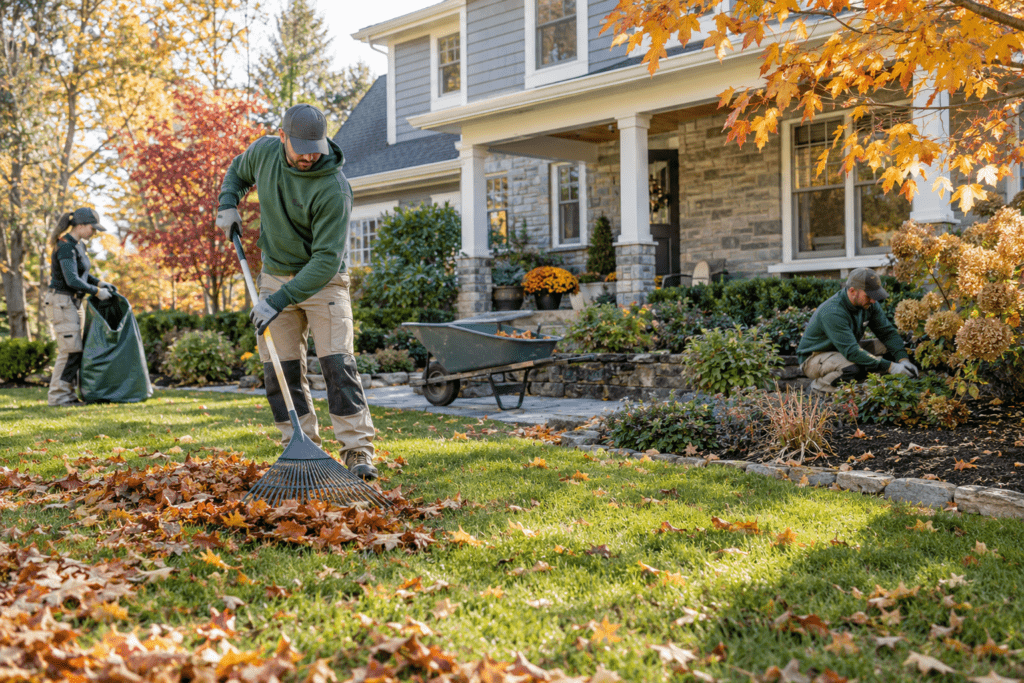
Leaves are among the most noticeable materials associated with seasonal outdoor cleanup. While leaves can provide natural organic matter when managed appropriately, thick accumulations can create problems for lawns, drainage areas, walkways, and garden beds. Wet leaves can become heavy and slippery, creating potential hazards on steps, paths, driveways, and patios. They may also block drains and gutters if they are allowed to accumulate around drainage points. Regular removal keeps outdoor surfaces safer and reduces the likelihood of moisture-related problems. Collected leaves can sometimes be composted or processed according to available waste-management options instead of simply being discarded.Branches, twigs, seed pods, dead flowers, and other plant debris should also be addressed during seasonal cleanup. Storms and strong winds can leave broken branches scattered throughout a property, while trees and shrubs naturally shed material as seasons change. Small debris can interfere with mowing and other maintenance equipment, while larger branches may create obstacles or damage surfaces if left unattended. Removing this material makes the property easier to maintain and improves its overall appearance. It is also an opportunity to identify damaged trees or shrubs that may require additional attention.
Caring for Garden Beds
Garden beds can become crowded with dead foliage, weeds, fallen leaves, and other debris as the seasons change. Spring cleanup provides an opportunity to remove dead plant material and assess which perennial plants are returning. Weeds should be addressed before they become deeply established and compete with desirable plants for water, nutrients, and sunlight. Soil surfaces can also be inspected for erosion, compaction, or exposed roots. When appropriate, adding suitable organic material or mulch can help improve soil conditions and create a more finished appearance. Care should be taken around emerging plants so that new growth is not accidentally damaged during cleanup.Fall garden preparation focuses on removing diseased or excessively damaged plant material, clearing unwanted weeds, and organizing beds before colder conditions arrive. Not every plant should be cut back at the same time, as some species benefit from being left intact through part of the dormant period. Property owners should therefore understand the requirements of the specific plants in their landscape before performing extensive pruning. Healthy plant material may sometimes be composted, while diseased material may need separate disposal to reduce the possibility of spreading problems. A carefully prepared garden bed can be easier to manage when the next growing season begins.
Inspecting Trees and Shrubs
Seasonal transitions are ideal times to inspect trees and shrubs for signs of damage, disease, broken branches, or structural concerns. Trees can sustain damage from storms, heavy winds, insects, and changing weather conditions, and some problems may not be immediately visible from a distance. Broken or hanging branches can present safety concerns, particularly when they are located near structures, paths, or areas where people regularly walk. Shrubs can also become overgrown or develop damaged sections that affect their appearance and health. A careful inspection helps determine whether pruning or professional evaluation is necessary.Pruning should be performed with an understanding of the plant’s growth pattern and seasonal requirements. Removing branches simply for appearance without considering plant health can sometimes create unnecessary stress. Property owners should also avoid attempting to remove large or dangerous branches without appropriate equipment and experience. Professional assistance may be appropriate when trees are tall, damaged, located near structures, or otherwise difficult to work around safely. Seasonal inspection is valuable even when no immediate work is required because it creates an opportunity to monitor changes over time and respond before minor issues become serious.
Cleaning Patios, Walkways, and Outdoor Surfaces
Outdoor hard surfaces can collect leaves, dirt, moss, algae, mud, and other debris throughout the year. These materials can make patios, walkways, decks, steps, and driveways look neglected while also creating slippery conditions. Seasonal cleaning helps restore the appearance of these surfaces and can improve safety. Sweeping, appropriate washing, and removing organic material from cracks and drainage areas can make outdoor spaces easier to use. Property owners should select cleaning methods that are suitable for the material because excessive pressure or inappropriate products can damage certain surfaces.Spring cleaning can reveal cracks, loose pavers, damaged edging, or other issues that developed during colder weather. Identifying these problems early makes it easier to schedule repairs before outdoor activity increases. Fall cleaning can help prevent leaves and other organic material from accumulating in wet areas where they may become slippery or difficult to remove later. Keeping hard surfaces clear also reduces the chance that debris will be carried onto lawns or into drainage systems. A clean outdoor surface contributes to both the appearance and functionality of the entire property.
Maintaining Gutters and Drainage Areas
Water management is an important part of seasonal property care. Leaves and small debris can accumulate in gutters, downspouts, drains, and other water-management features, potentially restricting the movement of rainwater. When drainage systems become blocked, water may overflow near foundations, walkways, planting beds, or other areas where excess moisture can create problems. Seasonal inspections help property owners identify blockages before periods of heavier rainfall. Keeping drainage pathways clear can also reduce erosion and prevent standing water from developing in unwanted locations.Drainage areas around lawns and gardens should be checked for signs of pooling, erosion, or soil displacement. Seasonal storms can expose weaknesses that were not apparent during drier periods. If water repeatedly collects in one area, the problem may require more than simply removing debris. Grading, soil conditions, downspout placement, and other factors may need to be evaluated. Addressing drainage concerns as part of seasonal cleanup can protect plants and outdoor surfaces while reducing the likelihood of more expensive landscape problems in the future.
Preparing Outdoor Equipment
Seasonal cleanup is also a good time to inspect and organize outdoor tools and equipment. Mowers, trimmers, blowers, rakes, hoses, irrigation components, and other equipment are regularly exposed to dirt and moisture. Cleaning tools after use and storing them appropriately can extend their useful life and make future maintenance easier. Before storing equipment for an extended period, property owners should follow the manufacturer’s recommendations for cleaning, maintenance, and storage. Damaged tools should be repaired or replaced before they are needed for the next season.Spring provides an opportunity to inspect equipment before regular outdoor work begins. Mower blades may need sharpening, hoses may have cracks, and irrigation components may require testing. Preparing tools in advance reduces interruptions once the growing season becomes active. Fall provides a similar opportunity to clean equipment and prepare items for storage. An organized storage area also makes it easier to locate tools and reduces the likelihood of outdoor equipment being left exposed to weather conditions that could shorten its lifespan.
Managing Weeds and Unwanted Growth
Weeds can become especially noticeable during seasonal transitions because changing weather often encourages new growth. Spring is an important period for identifying weeds before they become deeply established or produce seeds. Removing weeds while they are small can make future management easier. However, it is important to distinguish desirable plants from unwanted growth, particularly in garden beds where perennial plants may be emerging. Improving soil conditions, maintaining healthy turf, and using appropriate mulch can also reduce opportunities for weeds to dominate planting areas.Fall weed management can help reduce problems during the following growing season. Some weeds may continue growing after other plants begin slowing down, so ignoring them can allow additional seeds to enter the soil. Removing weeds and clearing affected areas before winter can reduce the amount of unwanted growth that appears later. Any treatment products should be used responsibly and according to their specific directions. Mechanical removal and improved landscape practices can also play an important role in long-term weed prevention, particularly when the goal is to maintain a healthy and balanced outdoor environment.
Benefits of Professional Seasonal Services
Large properties can require substantial time and physical effort to prepare properly for seasonal changes. Leaves, branches, garden debris, and other materials can accumulate quickly, especially after storms or periods of heavy growth. Professional services can provide equipment, labor, and experience that make extensive cleanup more efficient. Professionals can also recognize potential concerns such as damaged trees, blocked drainage areas, excessive debris, or landscape conditions that may require additional attention. This can be especially useful for property owners who have limited time or who want a thorough cleanup completed within a specific timeframe.A professional provider can also help create a recurring seasonal schedule so important tasks are not overlooked. Instead of treating cleanup as an emergency after debris has accumulated, property owners can plan services around the natural maintenance cycle of the landscape. A structured approach makes it easier to coordinate lawn care, pruning, debris removal, garden preparation, and other outdoor tasks. When choosing a provider, customers should consider experience, communication, equipment, service scope, and the provider’s ability to handle the specific requirements of the property.
Making Cleanup More Efficient
Good organization can make seasonal cleanup considerably easier. Rather than attempting to complete every task simultaneously, property owners can divide the work into logical categories such as lawn debris, garden beds, trees and shrubs, hard surfaces, drainage, and equipment. Starting with larger debris can make it easier to work around the property, while completing smaller tasks afterward creates a more finished appearance. It is also useful to gather the necessary tools before beginning so work is not interrupted by repeated trips to storage areas. A clear plan reduces wasted effort and helps ensure that important areas are not forgotten.Environmental considerations should also be part of the cleanup process. Organic debris can sometimes be composted or reused where appropriate, while recyclable materials should be separated when practical. Branches and other woody materials may have specific disposal or processing options depending on available services. Avoiding unnecessary waste can make seasonal cleanup more sustainable. At the same time, safety should remain a priority when handling heavy branches, wet leaves, sharp tools, ladders, or powered equipment. Tasks that involve significant risks should be handled by individuals with the appropriate knowledge and equipment.
Creating a Year-Round Maintenance Plan
Seasonal cleanup works best when it is connected to a broader property maintenance plan. Spring can be used to evaluate winter damage, prepare planting beds, restore lawn areas, and organize outdoor equipment. Summer maintenance can then focus on mowing, watering, weed control, pruning, and monitoring plant health. Fall provides another major opportunity to remove debris, inspect outdoor structures, prepare gardens, and protect the landscape before colder conditions. This cycle creates a continuous approach rather than treating each cleanup as an isolated project.A written maintenance schedule can make this process even easier. Property owners can record important tasks, note recurring problems, and identify areas that need special attention during the next season. This information becomes increasingly useful over time because it shows how the property responds to weather and maintenance practices. A consistent schedule can also help prevent small problems from being forgotten. With regular observation and timely action, seasonal work becomes a manageable part of property ownership rather than a major project that must be completed all at once.
Final Thoughts
Seasonal outdoor cleanup is an essential part of keeping a property attractive, functional, and easier to maintain. Removing leaves and debris, inspecting lawns, caring for garden beds, checking trees, cleaning hard surfaces, and maintaining drainage areas can all contribute to a healthier outdoor environment. Each season presents different challenges, so the work should be adjusted according to current conditions and the specific needs of the landscape. A proactive approach also makes it easier to identify damage, safety concerns, and maintenance issues before they become more difficult or expensive to address.Consistent spring & fall cleanup can provide long-term benefits by keeping outdoor spaces organized and giving plants better conditions for healthy growth. Professional assistance can be valuable when the property is large, debris is extensive, trees require specialized attention, or owners simply do not have enough time to complete the work themselves. Ultimately, successful seasonal care depends on planning, regular observation, responsible debris management, and timely maintenance. By treating each seasonal transition as an opportunity to inspect and improve the property, owners can enjoy cleaner, safer, and more attractive outdoor spaces throughout the year.