All About Queen Elizabeth II: Her Life and Legacy
Queen Elizabeth II: A Life That Defined Modern Monarchy
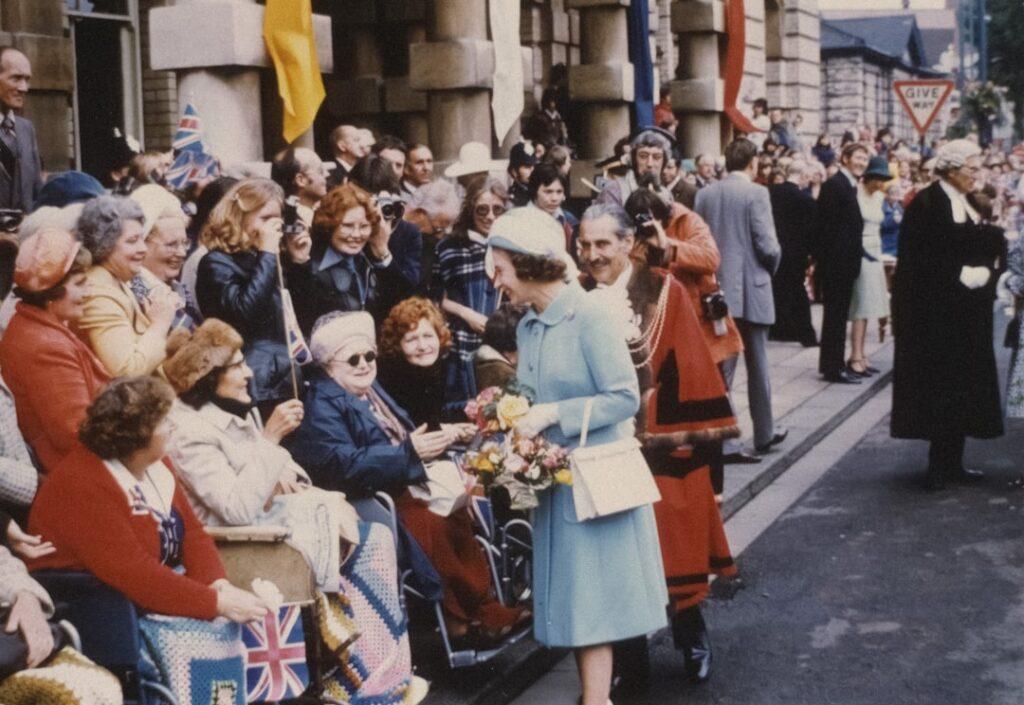
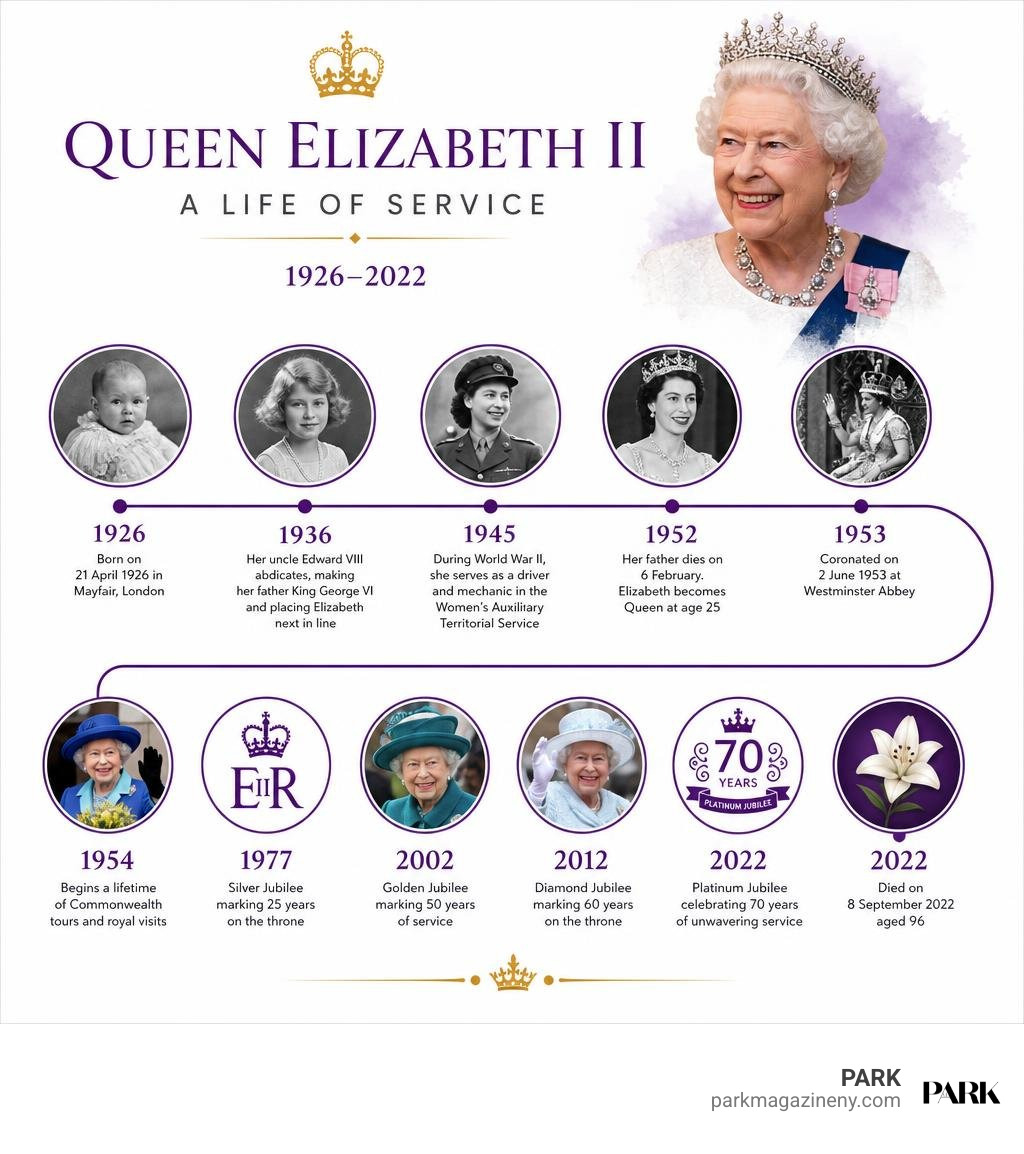
Queen Elizabeth II was Britain’s longest-reigning monarch, serving from 6 February 1952 until her death on 8 September 2022. Her 70-year, 214-day reign carried the monarchy through postwar recovery, decolonisation, major political change, and the growth of the modern Commonwealth.
Born in Mayfair, London, on 21 April 1926, Elizabeth was not expected to become queen. The 1936 abdication of her uncle, Edward VIII, made her father King George VI and placed her next in line. She later became a symbol of steadiness: politically neutral, deeply committed to public duty, and instantly recognisable around the world.
Her story is also about change. From wartime service as a driver and mechanic to a televised coronation in 1953 and a Platinum Jubilee in 2022, Elizabeth II helped shape how a constitutional monarchy could remain relevant in a fast-moving age.
I am W.A. Muller, and this guide explores the key moments, duties, style, and long-lasting influence of Queen Elizabeth II.
Easy queen elizabeth glossary:
Early Life, Wartime Service, and Accession
When Princess Elizabeth Alexandra Mary was born on 21 April 1926 at 17 Bruton Street in Mayfair, London, her destiny seemed relatively quiet. As the elder daughter of Prince Albert, Duke of York, and Elizabeth Bowes-Lyon, Duchess of York (later Queen Elizabeth The Queen Mother), she occupied a secondary position in the line of succession. Her uncle, Edward, Prince of Wales, was young, charismatic, and expected to marry and produce heirs.
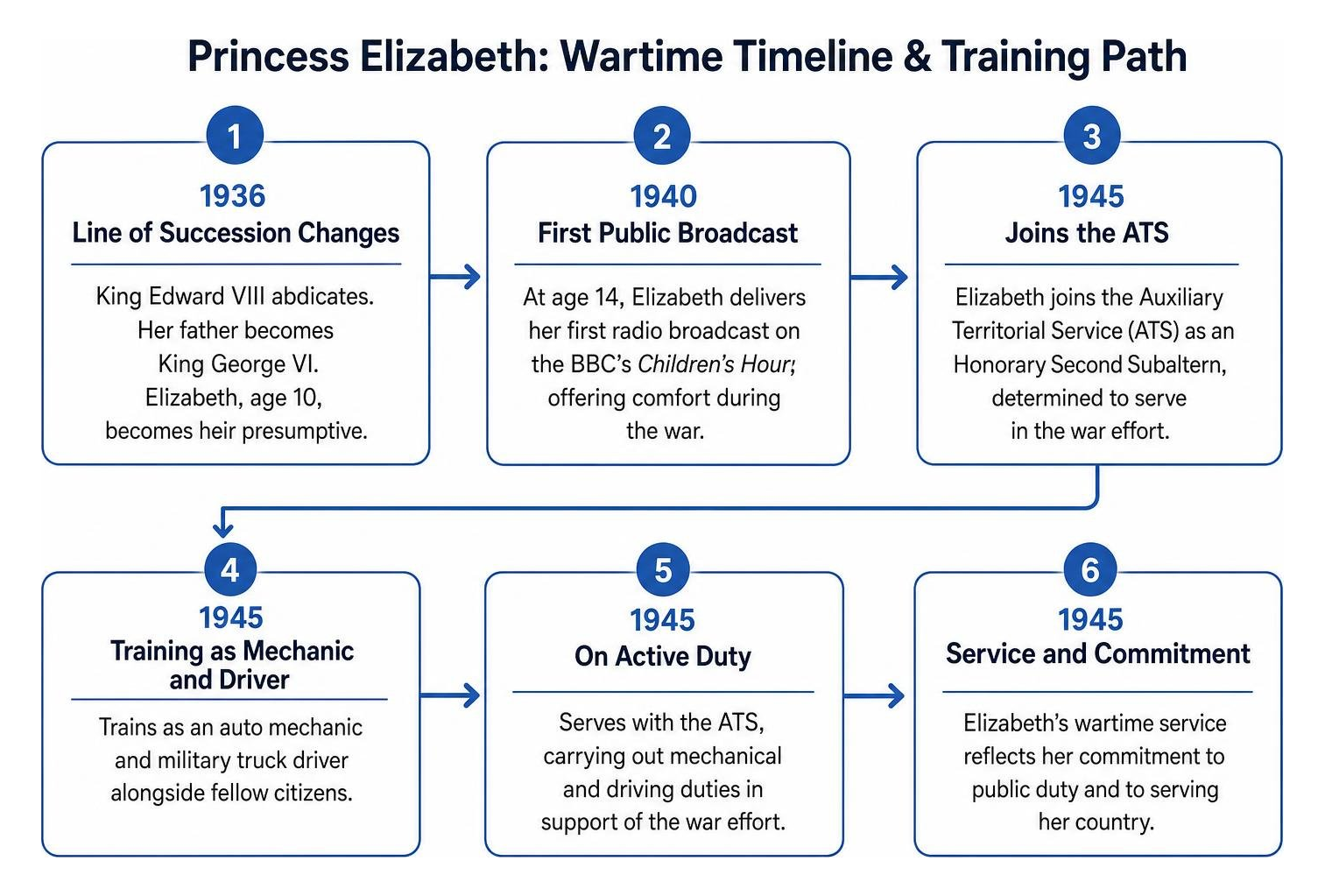
However, royal history took a sudden turn in December 1936. King Edward VIII abdicated the throne to marry Wallis Simpson. Overnight, Princess Elizabeth’s father ascended as King George VI, and the ten-year-old princess became the heir presumptive.
Early Life and How Queen Elizabeth Ascended the Throne
Growing up in the royal household, Elizabeth received a comprehensive private education focusing on constitutional history, law, French, and literature. Her childhood combined strict preparation for future sovereignty with the quiet routines of family life.
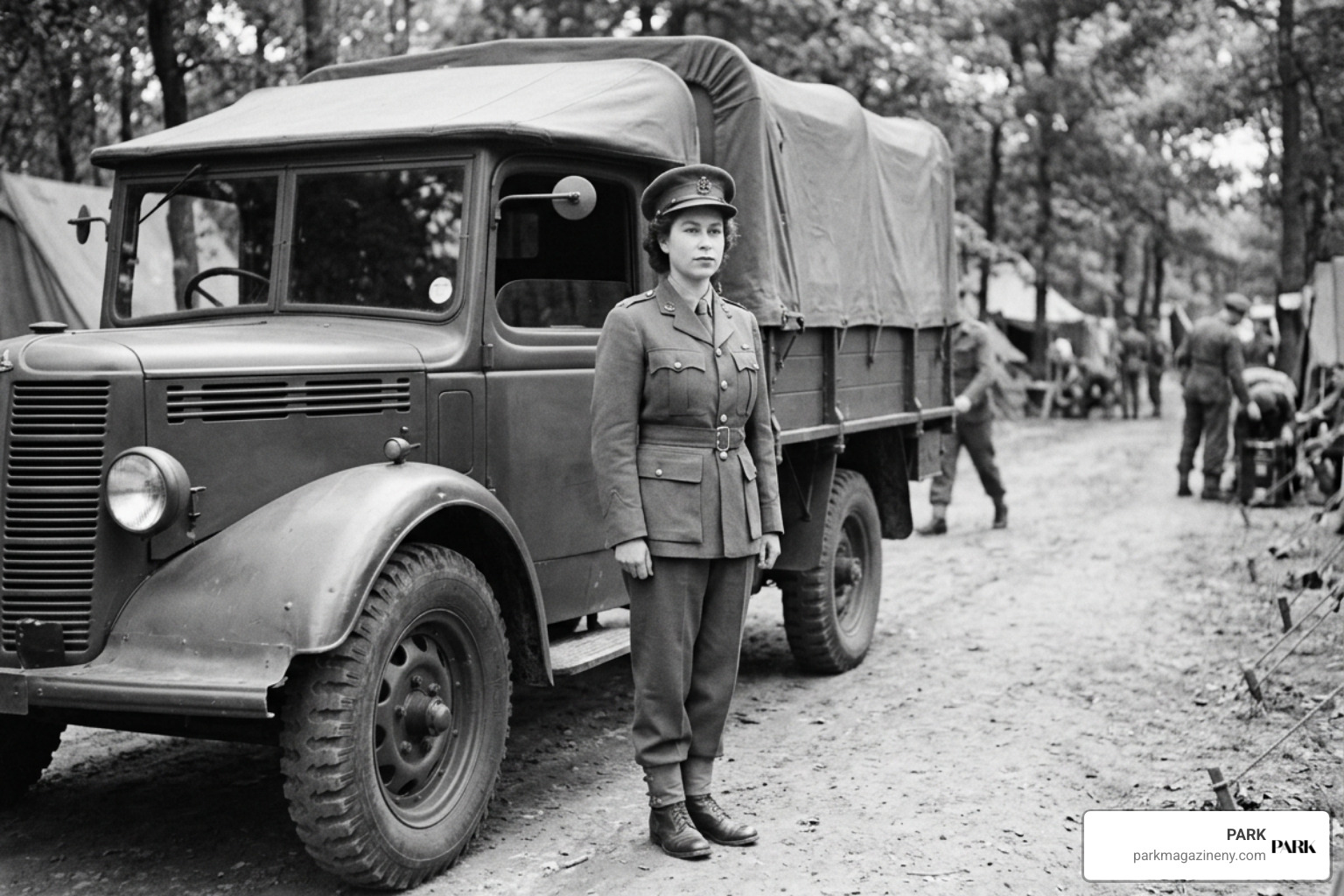
During the Second World War, Elizabeth demonstrated her commitment to public service. In 1940, at just 14 years old, she gave her first radio broadcast on the BBC’s Children’s Hour, offering comfort to thousands of children evacuated to the countryside or overseas. In 1945, determined to participate directly in the war effort, she joined the Auxiliary Territorial Service (ATS) as an Honorary Second Subaltern, training alongside fellow citizens as an auto mechanic and military truck driver.
On 20 November 1947, she married Philip Mountbatten, Duke of Edinburgh, at Westminster Abbey. In early 1952, while representing her ailing father on a tour of Kenya, news arrived that King George VI had passed away on 6 February. At age 25, she acceded to the throne, beginning the longest reign in British history. Her formal coronation on 2 June 1953 at Westminster Abbey was the first to be fully televised, welcoming hundreds of millions of global viewers into the ancient ritual, as chronicled in Queen Elizabeth II’s Life and Reign.
Royal Family Dynamics and Public Duty
Balancing the demands of the Crown with private life defined Elizabeth’s day-to-day existence. Together with Prince Philip, she raised four children: Charles (born 1948), Anne (born 1950), Andrew (born 1960), and Edward (born 1964). Over the decades, the family expanded to include eight grandchildren and twelve great-grandchildren.
Her retreats to Balmoral Castle in the Scottish Highlands and Sandringham House in Norfolk provided rare moments of respite, where she pursued her lifelong passion for horses, country walking, and her beloved Pembroke Welsh Corgis (she owned more than 30 throughout her life). Yet, public service remained paramount. Throughout her reign, she was linked to over 500 charitable organizations and armed forces bodies, championing community causes, medical research, and education across the globe.
The 70-Year Reign of Queen Elizabeth and Modern Constitutional Monarchy
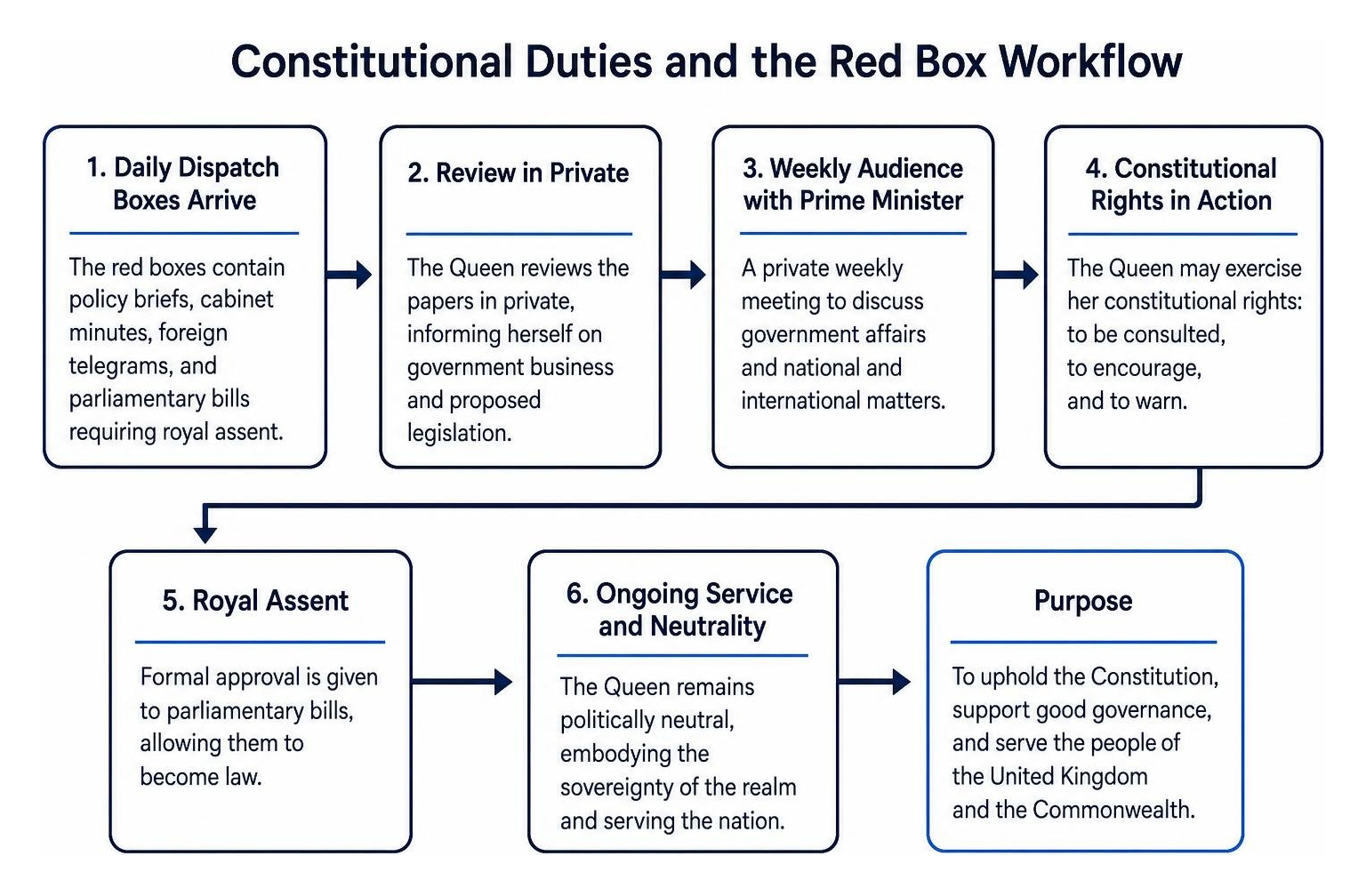
Queen Elizabeth II served as Head of State within a constitutional framework, embodying the sovereignty of the realm while adhering strictly to political neutrality. Her daily routine was anchored by the arrival of the red leather dispatch boxes, containing policy briefs, cabinet minutes, foreign telegrams, and parliamentary bills requiring royal assent.
Constitutional Role and Relations with Prime Ministers
The Queen held weekly private audiences with 15 British Prime Ministers, starting with Sir Winston Churchill in 1952 and concluding with Liz Truss in September 2022. These confidential meetings allowed her to exercise the classic constitutional rights famously articulated by Walter Bagehot: the right to be consulted, the right to encourage, and the right to warn. Her extensive institutional memory made her an invaluable sounding board during decades of shifting political tides, economic crises, and international diplomacy.
| Milestone Jubilee | Year Celebrated | Key Milestones & Public Events | Global Context |
|---|---|---|---|
| Silver Jubilee | 1977 | 36-county UK tour; million-person London river progress | Postwar economic stabilization |
| Golden Jubilee | 2002 | Pop concert at Buckingham Palace; 50-nation Commonwealth tour | Millennium modernization |
| Diamond Jubilee | 2012 | 1,000-boat Thames pageant; London 2012 Olympic Games cameo | Modern digital era |
| Platinum Jubilee | 2022 | Trooping the Colour; national lighting of beacons; Platinum Party | Post-pandemic unity |
Transforming the Commonwealth and Global Diplomacy
One of the defining achievements of her reign was the modernization of the Commonwealth. As imperial structures dissolved, the Queen championed the transition into a voluntary association of 54 independent member nations representing 2.5 billion people. Her travels took her to every continent, building diplomatic goodwill across diverse political landscapes. Her deep commitment to international diplomacy and multilateral relations is reflected in Elizabeth II.
Cultural Impact, Iconic Style, and Global Ties
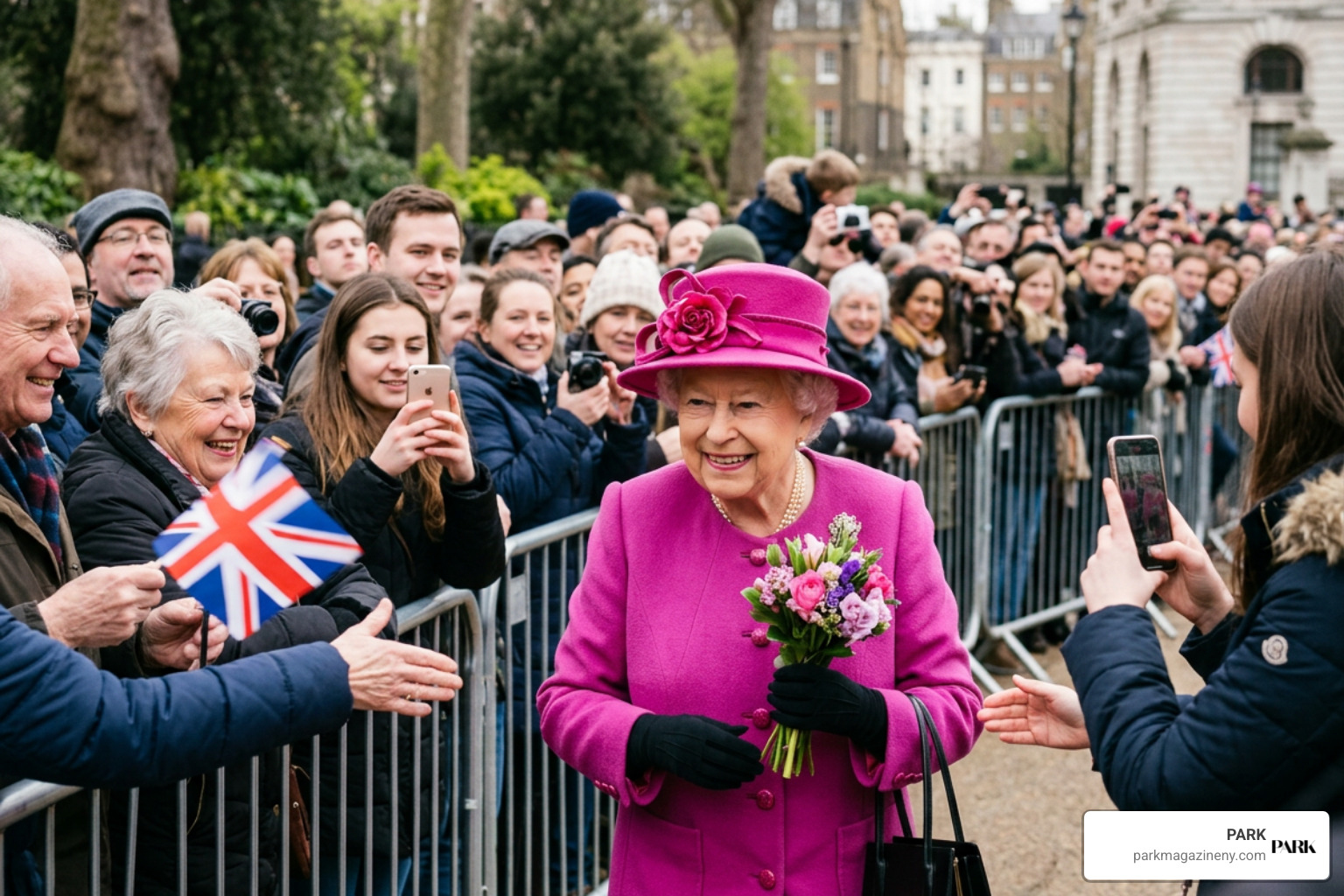
Queen Elizabeth II occupied a unique space in contemporary culture, bridging timeless ceremonial heritage with modern popular media. From Andy Warhol screenprints to television dramas, her visual iconography remained steady, elegant, and instantly recognizable.
Diplomatic Engagements and Queen Elizabeth in New York
The transatlantic relationship held special significance throughout the Queen’s reign. Her visits to New York City showcased the profound cultural and diplomatic connections between the United Kingdom and the United States.
In October 1957, during her first official state visit to the U.S. as monarch, Queen Elizabeth II received an enthusiastic ticker-tape parade up Lower Broadway in Manhattan, followed by an address to the United Nations General Assembly and a civic reception at the Waldorf Astoria. Her subsequent visits—including the 1976 American Bicentennial tour and her 2010 address to the UN—further solidified these bonds.
Following the tragic events of September 11, 2001, she ordered the playing of the American national anthem during the Changing of the Guard at Buckingham Palace. Her historic support for the city culminated in the dedication of the Queen Elizabeth II September 11 Garden in Hanover Square, Manhattan, honoring the British and Commonwealth victims. The deep historic records of these visits can be explored at The Queen and the City, while the commemorative green space is maintained by Home | Queen Elizabeth II. For further details on royal itineraries, visit Queen Elizabeth | The Royal Family.
Royal Wardrobe, Cultural Patronage, and Enduring Iconography
Her wardrobe was an intentional masterclass in diplomatic dressing. By selecting vibrant, monochrome ensembles—rich magentas, bold yellows, and vivid blues—she ensured she was easily visible to crowds of thousands. Her structured Launer London handbags, custom Fulton umbrellas, and heirloom brooches conveyed subtle messages of respect to host nations and civic bodies. Beyond fashion, her patronage supported British performing arts, classical music, and historical preservation, securing the cultural fabric for future generations.
The Final Years, State Funeral, and Succession
In June 2022, the United Kingdom and the Commonwealth celebrated the Queen’s Platinum Jubilee, honoring 70 years of dedicated service. Despite declining mobility, she appeared on the balcony of Buckingham Palace to greet cheering crowds. On 6 September 2022, she performed her final official constitutional duty at Balmoral Castle, appointing her 15th Prime Minister.
Two days later, on 8 September 2022, Queen Elizabeth II passed away peacefully at Balmoral at the age of 96. Her death marked the close of Britain’s second Elizabethan era.
Following a period of national mourning and lying-in-state at Westminster Hall, her state funeral took place at Westminster Abbey on 19 September 2022. Attended by world leaders, monarchs, and millions of viewers across the globe, the service honored her lifelong pledge of duty. Her eldest son immediately succeeded to the throne as King Charles III, preserving the continuity of the Crown. For additional historical coverage on her life and passing, see Queen Elizabeth II, Britain’s longest-reigning monarch, dies aged 96 | Queen Elizabeth II | The Guardian and the official biographical portal at Elizabeth II.
Frequently Asked Questions about the Late Monarch
When did Elizabeth II become monarch and how long did she reign?
She ascended to the throne on 6 February 1952 following the death of King George VI. Her reign lasted 70 years and 214 days until her passing on 8 September 2022, making her the longest-reigning monarch in British history.
How did Elizabeth II influence the modern Commonwealth?
She served as Head of the Commonwealth, guiding its transition from an empire into a voluntary association of 54 independent sovereign nations focused on international cooperation, democracy, and development.
What was Elizabeth II’s historic connection to New York City?
She made several high-profile official visits to Manhattan, including a famous 1957 ticker-tape parade, addresses to the United Nations General Assembly, and the dedication of the Queen Elizabeth II September 11 Garden in Hanover Square. Highlights of these historic milestones can be viewed through NYC and Queen Elizabeth II: How Many Times Did She Visit?. (The city also shares historical maritime ties with the famous ocean liner RMS Queen Elizabeth – Wikipedia.)
Conclusion
Queen Elizabeth II’s extraordinary reign left an indelible stamp on modern global history. Through decades of rapid social change, technological transformation, and geopolitical shifts, she provided an unwavering anchor of service, dignity, and continuity. Her life remains a study in public devotion and timeless elegance.
For discerning collectors and history enthusiasts inspired by royal heritage and timeless heirlooms, exploring the ultimate luxury investments worth considering offers a sophisticated look at tangible assets, fine jewelry, and enduring historical treasures.