OUTERclé: Extending the Language of Interior Design to Outdoor Spaces
Open the doors from a carefully considered living room onto a patio finished with anonymous gray paving, and the transition can feel surprisingly abrupt.
Inside, every material may have been chosen for a reason: the grain of the timber, the movement in a stone countertop, the scale of the floorboards, the texture of a plaster wall. Outside, those same design instincts have traditionally been replaced by a much shorter checklist of what can survive rain.
That divide is beginning to disappear. Patios, terraces, pool surrounds, and garden rooms are increasingly being approached as architectural spaces in their own right.
The goal is not to make the outdoors resemble an interior room. It is to apply the same level of thought to proportion, material, color, texture, and construction.
The outdoor room is becoming part of the architecture
A successful outdoor room starts with the same question as a successful interior: how should this space feel?
That might mean quiet and monolithic, warm and Mediterranean, graphic and energetic, or deeply connected to the surrounding landscape. Once that direction is established, surfaces become much more than a practical backdrop.
Inside the home, tiles are increasingly shaping modern interiors and architecture through scale, texture, pattern, and material character. The same thinking translates naturally beyond the exterior doors.
The connection does not require matching an indoor floor tile to an outdoor version exactly. In fact, a literal match can sometimes feel forced. A more sophisticated approach is to repeat a material quality: a warm mineral tone, an aggregate texture, an elongated proportion, or a restrained geometric rhythm.
This creates continuity without ignoring the fact that the exterior has different technical demands.
Surface is where interior thinking moves outside
Indoor designers rarely choose flooring only because it is durable. They think about how it responds to light, how its scale relates to the room, and how it sits beside other materials.
Outdoor surfaces deserve the same consideration.
Outdoor surfaces deserve the same level of consideration. Instead of treating patio flooring as a purely practical layer, designers can use material, texture, and variation to give the space its own identity. The thinking is reflected in the outdoor tiles for patio from OUTERclé, which span expressive terracotta, terrazzo, cement, brick, and ceramic surfaces suited to different outdoor moods and architectural styles.
Rather than treating patio tile as a single utilitarian category, the collection allows the surface to contribute a distinct design idea. Dolce Vita Terrazzo brings aggregate movement and a distinctly Italian material reference, while Eastern Expression introduces terracotta and more visible variation. Other collections move toward graphic cement, brick, or more restrained stone-like surfaces.
The aim is not to make the patio feel decorative, but to choose a surface with enough character to become part of the architecture itself.
For OUTERclé founder Deborah Osborn, the principle is straightforward: “outdoor spaces should be as compelling as, if not more than, their interior ones.” It is a useful way to think about patios and terraces, not as secondary spaces to furnish after the fact, but as environments where the permanent materials establish the design from the ground up.
Small variations in tone, texture, aggregate, or finish often give an exterior more presence than adding another layer of furniture or accessories.
Think in materials, not matching sets
One of the most useful lessons from interior design is that a room rarely succeeds because everything matches.
Materials need contrast.
A textured patio floor can sit beside smooth powder-coated metal. Warm terracotta can temper clean contemporary architecture. Terrazzo can provide movement beneath restrained furniture. Brick can introduce scale and repetition next to looser planting.
That broader approach is also what makes hardscaping a defining part of an outdoor space. Patios, walkways, retaining walls, and other fixed surfaces establish the structure long before cushions, planters, or decorative objects enter the picture.
The most effective palette usually has hierarchy. Decide which material should lead, which should support it, and where contrast is useful. If the patio floor has pronounced color or pattern, furniture may need to become quieter. If the tile is restrained, the architecture or planting can carry more visual weight.
This is exactly the kind of editing that happens inside a well-designed home.
Scale and layout deserve as much attention as color
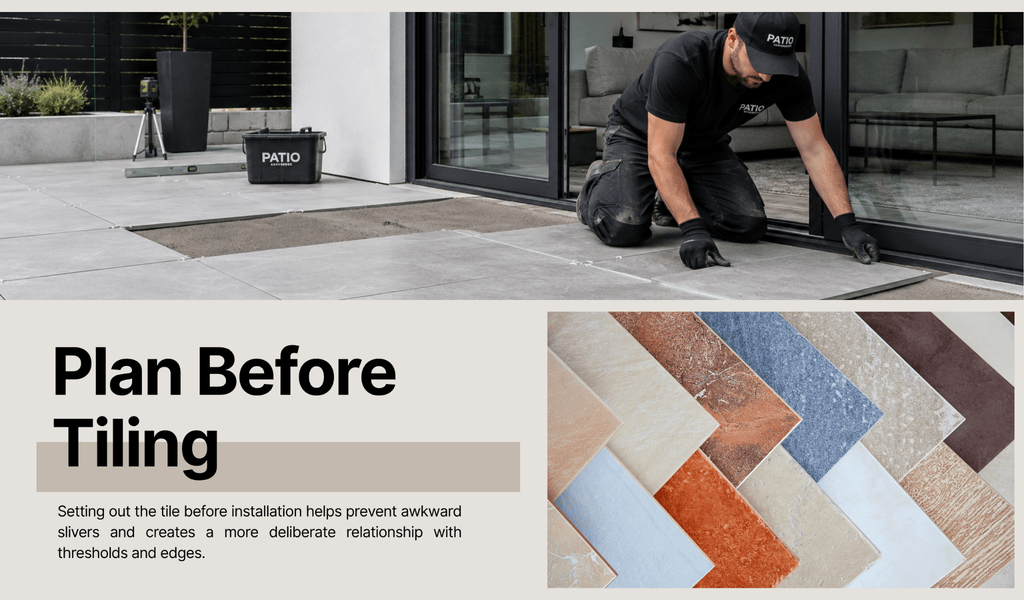
Tile selection is only half the design decision. Layout changes how the material is perceived.
Large formats can create a calm, expansive field, particularly on contemporary terraces. Smaller formats introduce more repetition and can suit courtyards, brick architecture, or areas where surface rhythm is part of the design.
Then there is the installation grid itself.
Before setting begins, the installer should establish how the tile will meet door thresholds, steps, walls, drainage points, and visible patio edges. Moving a layout by only a few inches can sometimes prevent an awkward narrow cut from running along the most prominent side of the space.
Patterns such as running bond, herringbone, or geometric layouts also influence movement. A directional pattern can visually lead someone from an interior doorway toward a garden, pool, or dining area.
These details are not decorative extras. They determine whether the finished surface feels planned.
Outdoor performance is part of good design
Exterior design becomes less convincing when appearance is separated from performance.
A tile may look perfect beside the architecture, but it still needs to be suitable for the actual exposure conditions. The manufacturer should approve the specific tile for exterior use, while local climate, water exposure, freeze-thaw conditions, and expected foot traffic all need to be considered.
OUTERclé describes its Gather surfaces around durability, hard-wearing performance, and slip resistance, while specifically advising buyers to check freeze-thaw requirements, including for covered exterior areas.
The installation below the tile matters just as much.
Exterior systems need a stable substrate and a way to move water away from the installation. Setting materials must be appropriate for exterior exposure, and movement needs to be accommodated as temperatures change. The Tile Council of North America similarly emphasizes exterior-rated tile, drainage, appropriate substrates and setting materials, and properly designed movement accommodation.
For homeowners, that means the installer conversation should happen before the order is placed, not after the tile arrives.
Let the threshold connect the two spaces
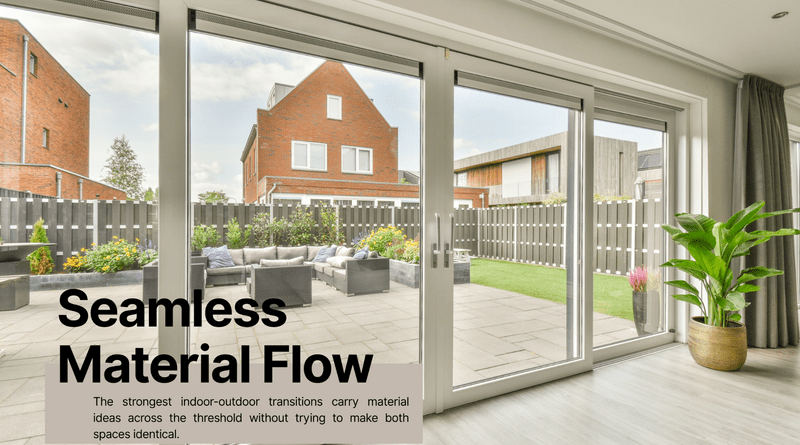
The threshold between inside and outside is one of the most important moments in the entire scheme.
When glass doors are open, both surfaces are visible at once. Differences in undertone, scale, grout color, or pattern can become more noticeable than they appeared on separate sample boards.
Lay indoor and outdoor samples beside one another in the actual doorway whenever possible. Look at them in morning light, direct afternoon sun, and shade. A color that reads softly indoors may become far brighter outside.
As indoor-outdoor living becomes a more integral part of residential design, these transition points carry more responsibility. The terrace is no longer visually separate from the living room simply because one side has a roof.
The strongest projects acknowledge the difference between the environments while allowing them to speak the same visual language.
The exterior does not need more decoration, it needs better decisions
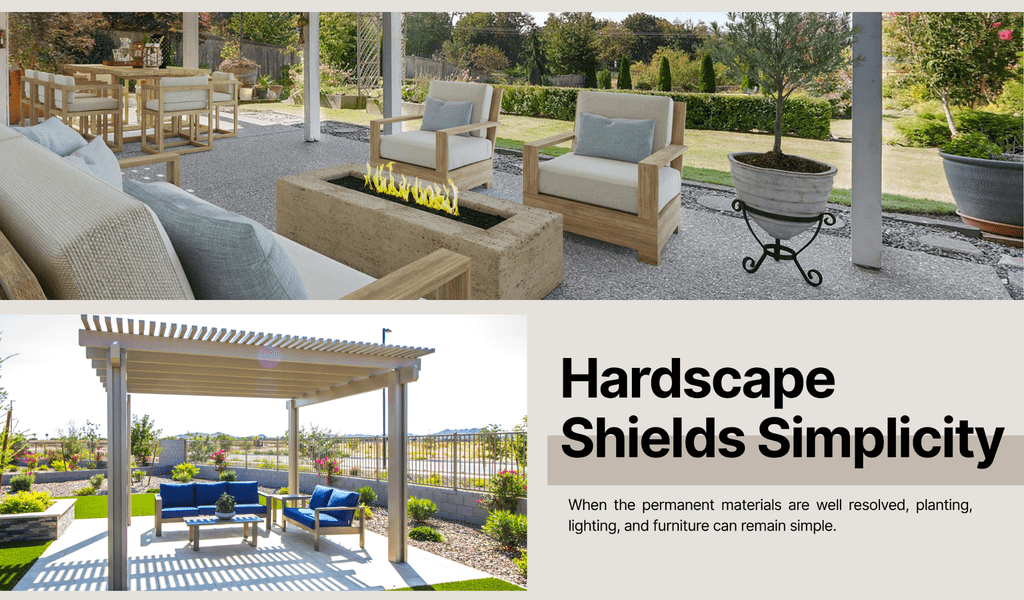
A well-designed patio should still look convincing when the cushions are stored away and the dining table is empty.
That is the clearest sign that the architecture and surfaces are doing enough.
OUTERclé’s wider exterior approach reflects this shift toward treating outdoor materials with the same curiosity usually reserved for interiors. Its current ranges move across patio tile, garden pavers, pool surfaces, exterior walls, fireplaces, and other outdoor applications rather than reducing the exterior to one generic paving category.
For homeowners, the larger lesson is useful regardless of style: start with the permanent materials.
Consider how the floor meets the house, how the surface changes under sunlight, how its scale relates to the patio, what it will look like after weather exposure, and whether the installation underneath it has been designed correctly.
Once those decisions are resolved, furniture and planting have far less work to do.
That is when an outdoor space begins to feel less like a decorated patio and more like a genuine extension of the home.